Lake Plastiras: Travel guide, what to see, what to do and where to stay
Villages overlooking the water, the forests of Agrafa and routes that change character with the seasons. A comprehensive guide to sights, activities, food and accommodation at Lake Plastira.
Από Travelo Team
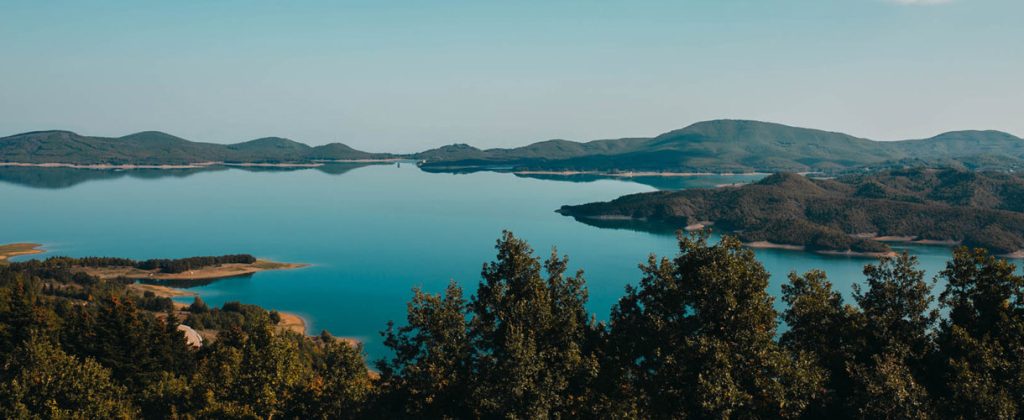
Lake Plastira is worth visiting for its combination of water and mountains: in a single day, you can walk along the shore, head up into a fir forest and eat in a village overlooking the peaks of the Agrafa mountains. Its appeal does not rest on a single attraction. The pleasure lies in the short journeys, the stops along the way and the time you leave between them.
Two nights are enough for a first visit, but three or four days allow for a more leisurely circuit, an organised activity and visits to more villages. A car makes exploring much easier, as the places of interest are scattered around the area. The guide below helps you plan a trip in any season, without relying on either snow or summer weather.
Why go
The lake lies in the Karditsa Regional Unit, at an altitude of around 750 metres, on the Nevropoli plateau. The Agrafa mountains rise to the west, while to the east the mountainous terrain slopes down towards the Thessalian plain. This setting explains the striking changes in scenery: wooded slopes, open meadows, small bays and villages that either sit close to the water or look down on it from above.
Although it often looks like a natural lake, it is a reservoir. It was created by the construction of a dam on the Tavropos river, also known as the Megdovas, in the late 1950s. Nikolaos Plastiras, who came from Morfovouni, was closely associated with the idea of harnessing the area's water resources. The older name, ‘Lake Tavropos’, still appears on maps and in descriptions.
The project was not built for tourism. It served electricity generation, irrigation and water supply, but gradually transformed the local economy and the landscape. Water levels fluctuate, so the shoreline is not always the same. A photograph showing lush green meadow right down to the water does not guarantee that you will find exactly the same scene when you visit.
The area retains its rural, mountain character, even in the most popular villages. There is no continuous waterfront lined with a promenade and shops. Instead, there are separate villages, small clusters of visitor facilities and plenty of stretches in between where woodland dominates. Kalyvia Pezoulas is convenient for those wanting easy access to activities, while Neochori offers more of a village experience high above the lake.
The western shore has many of the best-known places to stay and eat, but there is no need to confine yourself to it. The route towards the dam and the eastern shore offer different views and quieter places to stop. A full circuit is around 60 kilometres, depending on any detours. It looks short on the map, but with photo stops, sightseeing and a meal, it easily fills a day.
This is a destination that suits couples, families and groups with different fitness levels. Some can opt for a mountain hike, others for a short stroll and a long coffee break. Nature is the common draw, rather than nightlife or a packed itinerary of visitor attractions. Even without strenuous activities, there is enough of interest to fill a three-day stay.
For a first glimpse of the scenery, see our feature on Lake Plastira as a mountain escape. Keep your plans flexible, though: mist, clouds and light can quickly transform the view, so a spot you passed in the morning may be worth returning to in the afternoon.
How to get there
From Athens, allow around 330 to 360 kilometres and 4 to 4.5 hours of driving, depending on the village where you are staying, via the A1 and E65 towards Karditsa. From Thessaloniki, the distance is around 240 to 270 kilometres, taking roughly 3 to 3.5 hours. These times do not include long stops and will increase in bad weather or heavy traffic.
Karditsa is the main gateway to the area. From there, it usually takes 30 to 50 minutes to reach the main villages, depending on the route. The final stretch is winding, with changes in elevation, so the distance alone does not tell you how long the journey will take.
If travelling by public transport, check KTEL Karditsa's services from Athens or Thessaloniki and confirm local connections to your village directly with the operator. Do not assume there is a frequent service around the lake. Without a car, arrange taxis or transfers in advance and choose accommodation close to places to eat. If you are arriving late, our guide to where to stay in Karditsa can help you plan an overnight stop along the way.
What to see
The lake dam
At the southern end, the arch dam is the landscape's most distinctive man-made structure. From here, you get a clearer sense of how the water is held back and the drop on the downstream side. Stop only where permitted and watch out for traffic: this is a road crossing, not a dedicated pedestrian area.
Neochori and the Botanical Garden
Neochori is one of the best places to stop for panoramic views, coffee and a meal. Further downhill is the Botanical Garden, which showcases the flora of the wider area. Before setting off, check whether it is open to visitors and confirm its opening hours, particularly outside peak periods.
Kalyvia Pezoulas and Kalyvia Fylaktis
Here you will find easy access to the lake and bases for outdoor activities. The main attractions are the open landscape, walks near the shore and the chance to combine a stroll with a coffee. Accessible spots vary depending on the water level and ground conditions.
Panagia Pelekiti Monastery
Above Karitsa, the monastery stands on a steep, rocky site and is an important religious monument in the Agrafa mountains. A visit also offers a scenic mountain drive and views of the surrounding area. Confirm visiting hours, dress appropriately and do not treat the journey there as a quick detour from the lakeside.
Morfovouni
The home village of Nikolaos Plastiras adds historical depth to your trip. It is worth a stroll for its connection with the man who envisaged harnessing the potential of the Nevropoli plateau. Combine it with a visit to the northern side of the lake to avoid unnecessary backtracking during the day.
Activities
Walking is the most reliable year-round option, though the demands vary with the seasons. For a relaxed outing, choose short walks near the villages and along the shore. Routes into the higher reaches of the Agrafa mountains require experience, a map, suitable equipment and often a guide. Do not assume that every forest track leads to a waymarked footpath.
Organised canoeing and kayaking outings, pedalo hire and, depending on the operator, other gentle activities are available on the lake. There are also opportunities for cycling, archery and horse riding in the wider area. Ask about seasonal availability, age restrictions, life jackets and cancellations due to wind. Cycling around the lake by road requires a good level of fitness and care around traffic.
Rafting does not take place on the lake itself. Trips on rivers in the wider mountain region require a separate journey and confirmation of conditions from a specialist operator. Likewise, do not plan a trip on the assumption that there is an operating ski resort beside the lake. In winter, the safest choice may simply be a short walk along a clear road rather than a climb through the snow.
The destination through the seasons
Spring: The meadows turn green, deciduous trees come into leaf and walks become particularly enjoyable. Rain leaves paths and shores muddy, while snow may linger in the higher mountains. Bring a waterproof jacket and a spare pair of shoes.
Summer: Long days allow for more stops and time on the water. The altitude helps keep temperatures down, but the midday sun is still strong. Choose morning walks and keep a light jacket handy for the evening. Do not treat the lake as a designated swimming beach with visitor facilities.
Autumn: The changing colours of the deciduous forests make drives particularly scenic. It is a good time for photography and meals in the villages, but shorter days limit longer outings. Fog can obscure the views and make driving difficult.
Winter: Cold weather, crackling fires and snow-covered peaks transform the atmosphere, though snow in the villages is not guaranteed. Check the forecast and road conditions before setting off. For a stay focused on relaxation, explore the options for hotels with spas at Lake Plastira, and confirm that the facilities will be open.
3-day itinerary
Day 1
Arrive and settle in without planning to drive all the way round the lake. If you are staying on the western side, head to Kalyvia Pezoulas for a walk, then continue to Neochori for the views and a meal. Have an early night, especially if you have spent several hours driving. In fine weather, time your final stop to catch the late afternoon light.
Day 2
Set aside the day for a full circuit of the lake, starting towards the dam. Include Pelekiti Monastery only if you have confirmed that you can visit and have enough time. Continue along the eastern and northern sides, stopping at Morfovouni. Allow time for a proper meal break rather than a series of brief stops between stretches of driving.
Day 3
Book a water-based activity or choose a walk suited to your fitness level. Before heading home, you could stop in Karditsa for a meal and a stroll around the centre. These suggestions for things worth doing in Karditsa will help you choose one or two stops, rather than plan another full day's itinerary.
What to eat
The local cuisine centres on what you would expect from mountainous Thessaly: pies, meat, cheese and slow-cooked dishes. Look for wild greens pie or cheese pie, trahana when available, lamb or goat, and seasonal stews. Plastos and batzina are traditional Thessalian pies and are worth trying wherever they are made, but do not assume that every taverna serves them daily.
Ask what has been cooked that day and which ingredients are locally sourced. Mushrooms and game are not available in every season or on every menu. If you prefer fish, ask where it comes from rather than assuming it was caught in the lake. Budget around €18-30 per person for a taverna meal, depending on your order and drinks. Booking ahead is advisable at weekends, especially for a large group.
Where to stay
Kalyvia Pezoulas is convenient for activities and getting around the western shore. Neochori suits those who prioritise views and places to eat within the village. Fylakti and the more remote mountain locations offer peace and quiet, but involve more driving. For a more detailed comparison of areas, see where to stay at Lake Plastiras.
The following ranges are guide prices per night for two people, not confirmed offers. The final price varies according to dates, room type, meal plan and cancellation terms.
1. Titagion Hotel
Located in the Agios Athanasios area, near Lamberi, this is an option for a base on the eastern side of the lake. It suits travellers with a car who want to explore different parts of the reservoir.
- Average cost: €80-140 per night (guide price)
2. Naiades Hotel Resort & Conference
Located in Neochori, one of the most convenient bases for exploring the western side. It is an option for those who want to combine day trips with time in the village.
- Average cost: €100-180 per night (guide price)
3. Chrisopeleia - Chrisopeleia Lake View
This guesthouse is in Neochori, facing towards the lake. Before booking, check the specific room category and the view stated in its description.
- Average cost: €75-130 per night (guide price)
4. Montanema Handmade Village
Set in a wooded mountain location near Anthochoria, this is quite different from staying right beside the lake. It is better suited to those who want time in the mountains and do not mind longer drives to places around the lake.
- Average cost: €180-320 per night (guide price)
5. Archontiko Zakoni
Located in Neochori, this makes a useful base for exploring the western side. Its location suits those who prefer staying in a village rather than a remote mountain setting.
- Average cost: €85-150 per night (guide price)
6. Ipsivaton Mountain Resort
Located in Moucha, on the southern side of the lake, it is well placed for trips towards the dam. Bear its location in mind when planning daily journeys to Kalyvia Pezoulas and Neochori.
- Average cost: €100-180 per night (guide price)
Practical tips
- Fill up with fuel before long mountain drives and download maps for offline use. Mobile coverage is not equally reliable everywhere.
- In winter, carry suitable snow chains or other traction equipment and know how to fit them. Follow the current traffic police guidance.
- Bring shoes with good grip, even for easy walks. Receding water can leave soft mud along the shore.
- Do not light fires outdoors, and take all your rubbish with you. Respect fences, grazing land and animals.
- If you are bringing a pushchair or have limited mobility, ask your accommodation and the places you plan to visit for specific access information.
If you have more time, you can continue to Kalambaka and Meteora. Treat this as a separate part of your trip, not an essential addition to your three-day itinerary. Read why Meteora is famous and compare areas to stay in Kalambaka and Kastraki if you want to avoid a rushed day trip.
Frequently asked questions
How many days do you need at Lake Plastiras?
Three days with two overnight stays will cover the main villages, the dam and one activity. With more time, you can add mountain routes and longer breaks without feeling rushed.
When is the best time to visit?
Spring and autumn are ideal for walks and photography. Summer offers more hours outdoors, while winter suits a quiet stay, with closer attention to the weather.
Do you need a car?
A car is particularly useful if you want to explore the area fully. Without one, you will need to choose your base carefully and book transfers in advance, as there is no frequent public transport service around the lake to give you that flexibility.
Is it suitable for families with children?
Yes, with short journeys, regular stops and age-appropriate activities. Children need constant supervision near the water, while organised activities have their own participation restrictions.
Can you swim in the lake?
Do not plan your visit as a swimming trip. This is not a designated bathing beach, and the depth, temperature and ground conditions vary. Opt for organised activities with suitable equipment instead.
How long does it take to drive around the lake?
Allow around two hours of relaxed driving without stops for the roughly 60-kilometre circuit. With sightseeing, photo stops and a meal, set aside at least half a day, ideally a full day.
Σύγκριση
Τα καταλύματα με μια ματιά
Τύπος καταλύματος
Τα φίλτρα σας αποθηκεύονται αυτόματα για αυτόν τον προορισμό.
| Κατάλυμα | Περιοχή | Τύπος | Τιμή από | Βαθμολογία | Λίστα |
|---|---|---|---|---|---|
| Titagion Hotel | Where to stay | Ξενοδοχείο | — | — | |
| Naiades Hotel Resort & Conference | Where to stay | Resort | — | — | |
| Chrisopeleia - Chrisopeleia Lake View | Where to stay | Ξενοδοχείο | — | — | |
| Montanema Handmade Village | Where to stay | Βίλα | — | — | |
| Archontiko Zakoni | Where to stay | Ξενοδοχείο | — | — | |
| Ipsivaton Mountain Resort | Where to stay | Resort | — | — |
Οι τιμές είναι ενδεικτικές, όπως αναφέρονται στο άρθρο, και αλλάζουν ανά εποχή. Η λίστα σας αποθηκεύεται τοπικά στη συσκευή σας. Οι σύνδεσμοι είναι affiliate links, χωρίς επιπλέον χρέωση για εσάς.

Η συντακτική ομάδα
Travelo Team
Συντακτική ομάδα του Travelo.gr
Πολυταξιδεμένη συντακτική ομάδα με πάνω από 15 χρόνια στον ταξιδιωτικό δημοσιογραφικό χώρο και περισσότερους από 45 προορισμούς σε Ελλάδα και Ευρώπη. Έχουμε διανυκτερεύσει σε εκατοντάδες καταλύματα — από μικρά οικογενειακά ξενοδοχεία και παραδοσιακούς ξενώνες μέχρι resorts 5 αστέρων — και δοκιμάζουμε προσωπικά περιοχές, μεταφορές και υπηρεσίες πριν προτείνει κάτι.
- 45+ προορισμοί επί τόπου
- 500+ καταλύματα σε αξιολόγηση
- 15 χρόνια ταξιδιωτικής αρθρογραφίας
Πώς δουλεύουμε: κάθε οδηγός βασίζεται σε επιτόπια εμπειρία, διασταύρωση αξιολογήσεων επισκεπτών και έλεγχο διαθεσιμότητας/τοποθεσίας κάθε καταλύματος. Ορισμένοι σύνδεσμοι είναι συνεργατικοί (affiliate) — αν κάνετε κράτηση μέσω αυτών, στηρίζετε το Travelo.gr χωρίς καμία επιπλέον χρέωση για εσάς, και δεν επηρεάζουν τις προτάσεις μας. Τελευταία ενημέρωση οδηγού: 11 Οκτωβρίου 2026.
Πού να μείνω — Επίσης