Discover the Trikala Prefecture: An invitation to explore!
A perfect harmony of mountains and plains. Rivers and gorges. Unique monasteries and mysterious geological phenomena! Uncharted paths of nature and culture. We are talking about the Trikala Prefecture, the most mountainous region of Thessaly. A region that invites you to explore it! Trikala, Meteora, Pertouli, Elati – unique places! The presence of humans in the prefecture…
Από Travelo Team
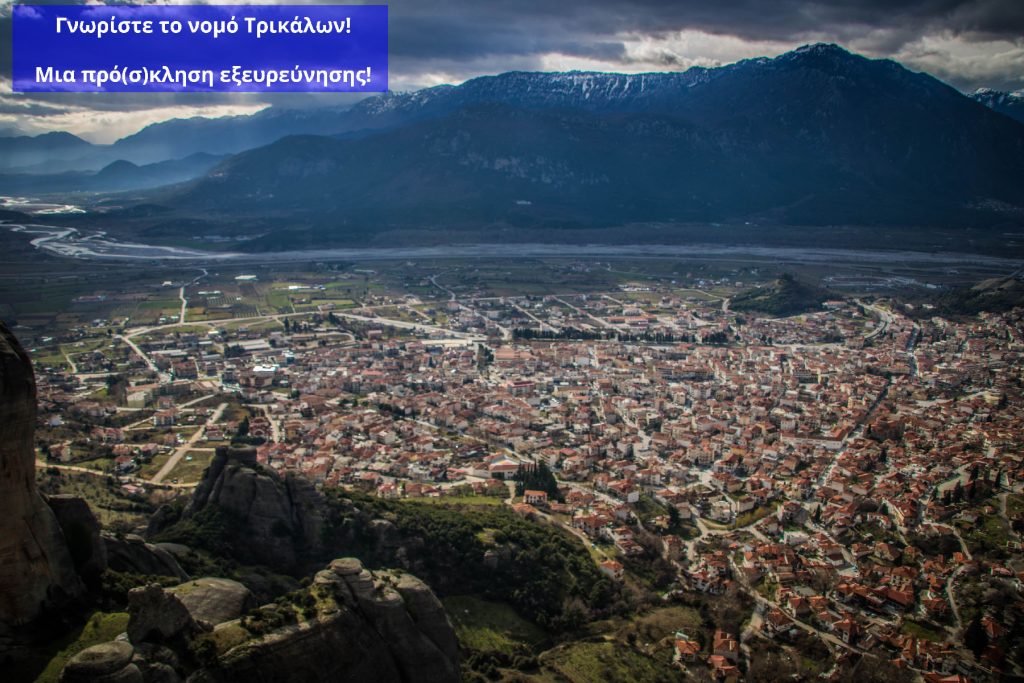
A perfect harmony of mountains and plains. Rivers and gorges. Unique monasteries and mysterious geological phenomena!
Uncharted paths of nature and culture. We are talking about the Trikala Prefecture, the most mountainous region of Thessaly. A region that invites you to explore it!
Trikala, Meteora, Pertouli, Elati – unique places!
Human presence in the prefecture dates back to the Middle Palaeolithic Era. The ancient city of Trikka or Trikki, also known as Trikkai, was located where the modern city stands today and is mentioned by Homer in the Iliad.
According to mythology, the city of Trikki was named after the nymph Trikki, daughter of the Peneius River.
In Trikala, one can visit, in addition to the beautiful and traditional villages of the prefecture, the area's attractions that testify to its rich and glorious history.
If you are a sports enthusiast and are known for your courage and daring, test your limits with some of the so-called extreme sports and get your adrenaline pumping!
The options vary as the mountainous nature of Trikala is suitable for hiking, rock climbing, mountaineering, paragliding, mountain biking, and skiing.
The areas of Meteora, Elati, and Pertouli are ideal for these sports. There is also the possibility of climbing specific routes under the supervision of experienced instructors.
The routes follow paths in the Southern Pindus, amidst landscapes of infinite natural beauty. And if you wish to ski, the Pertouli Ski Centre awaits you.
If you prefer water activities, the waters of Aspropotamos and Acheloos offer a challenge. You can go canoeing, kayaking, rafting, or simply fish on their banks, enjoying the beauty of the wetland.
If you enjoy horse riding, you can explore the Pertouli meadows on horseback, like a 'lightning bolt'.
Travelo Tip : Rent a car without a credit card to explore the area at your leisure!
Aithikes Municipality
An area of unique beauty, which is a major attraction for visitors to the prefecture and is suitable for adventures in the wild.
Elati
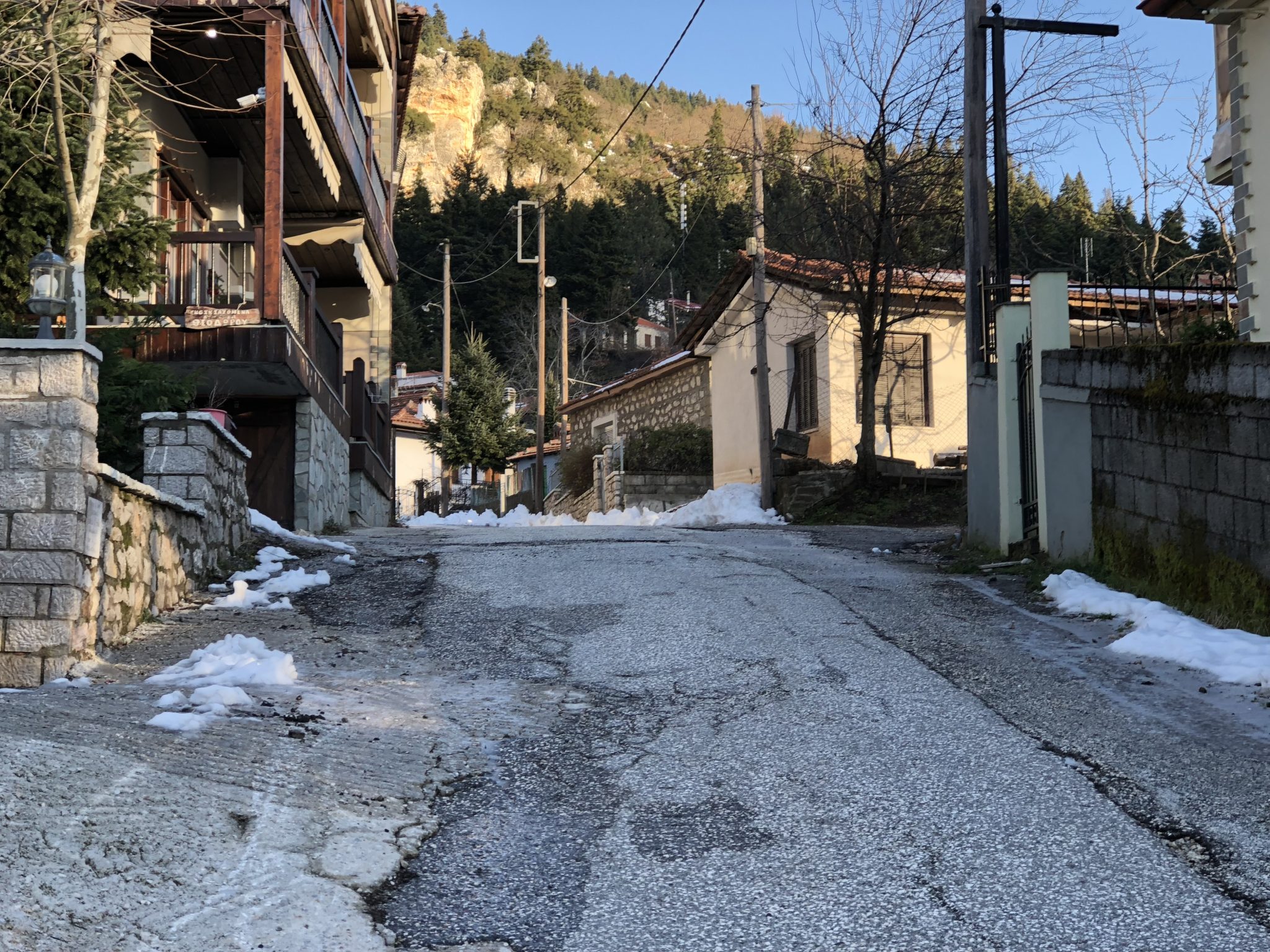
Elati, the most renowned tourist resort in the Trikala prefecture, is built at an altitude of 860 m on one of the slopes of Mount Koziakas.
Its name is not coincidental, as it is literally 'drowned' in fir trees, to the point where it has nothing to envy of the famous Alps mountain range. It is 34 km from the city of Trikala and 13 km from Pyli.
Elati is perfect for a stroll through its streets. Its houses are beautiful, built in traditional styles, with tiled roofs, courtyards, and decorated with stone and wood.
There are many rooms to let, as well as guesthouses, not to mention the grilled meat tavernas and small tavernas, from which pleasant aromas of traditional dishes waft, stimulating the appetite even more!
Among them are shops selling local sweets, such as plum, carrot, and tomato preserves.
Pertouli
Pertouli, one of the most picturesque villages in the prefecture, is located at an altitude of 1,150 m and approximately 50 km from the city of Trikala, immediately after the beautiful Elati, from which it is about 15 km away.
The route from Elati to Pertouli is strikingly beautiful, with rich vegetation and steep mountain slopes. A distinctive feature of the village is its stone houses, some with tiled roofs and others with slate, creating a beautiful contrast.
The entire village is embraced by dense fir forests and abundant streams with cold water. There are several accommodations for overnight stays (traditional guesthouses and hotels), tavernas, and grill houses serving traditional dishes and appetisers.
For those visiting the village, there are many interesting choices, in addition to skiing at the eponymous ski resort. These include exploring the picturesque villages of Aithikes, such as Neraidochori, Desi, Pyrra, and Gardiki, hiking on scenic paths through greenery and beside streams, mountain biking on unexplored routes, horse riding, and archery in the fresh air.
If you visit the area in May, you will experience something special, as on the last Sunday of May, the Sarakatsani gathering is organised, bringing together people from all over the country to revive their old customs, songs, dances, and scenes from their daily life in the countryside.
[Discover cheap hotels in Pertouli!]
Kalabaka Municipality
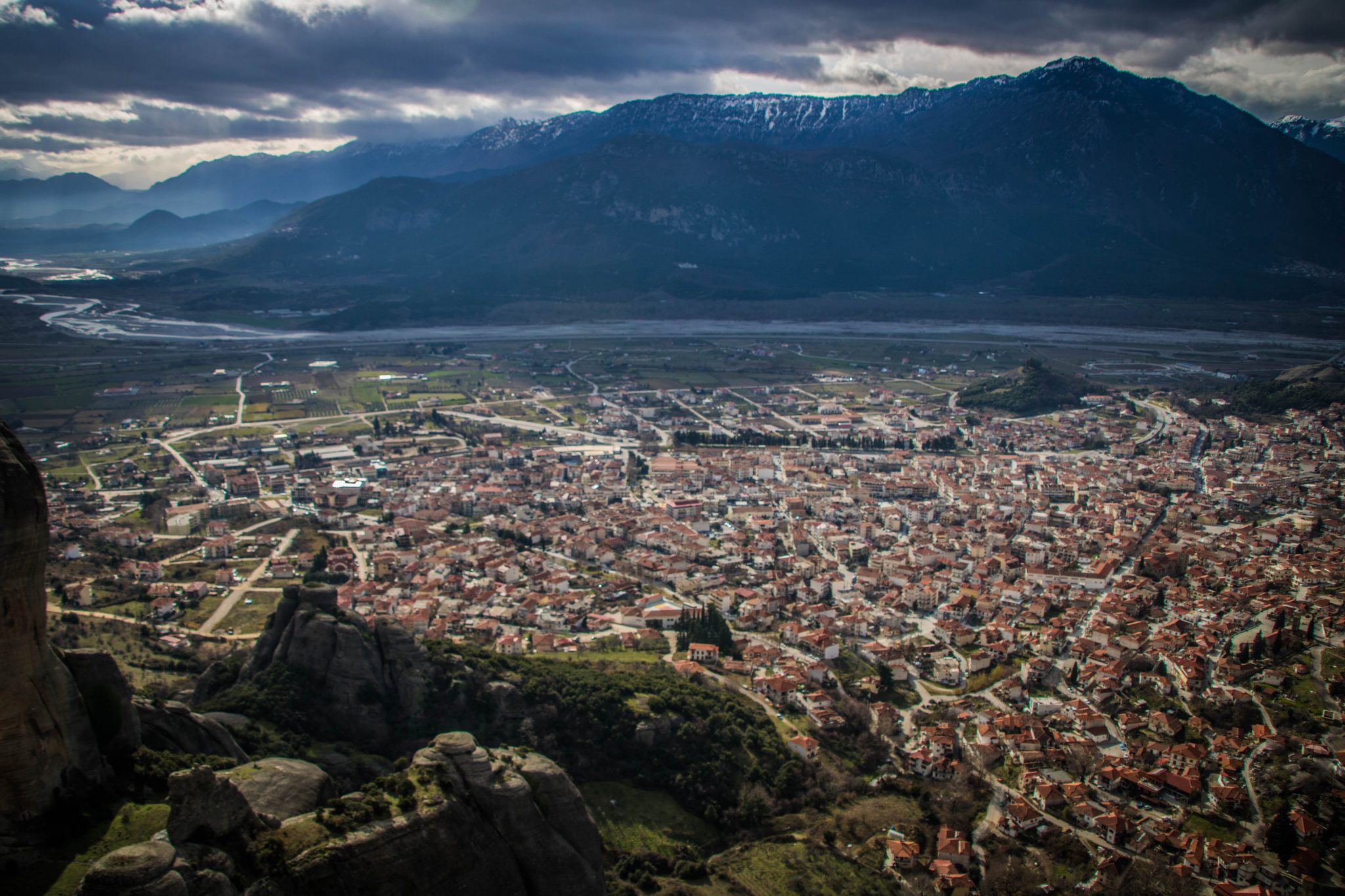
In the shadow of Meteora
One of the few towns that retain their unaltered characteristics from the Byzantine era. Picturesque landscapes and history blend harmoniously.
History and beauty combine
A large market town and seat of the eponymous municipality, built beneath Meteora. It is located 22 km northwest of the city of Trikala, near the Peneius River and at an altitude of 240 m.
Kalabaka serves as a central hub for visitors to Meteora. The area of Kalabaka began to be inhabited during the Hellenistic period, when the city was known as Aeginion.
In the late 8th century AD, it was renamed Stagoi, a corruption of the phrase “to the Saints”.
The current name of the city began to be used from the 15th century onwards, when the Ottomans – who conquered the area – called it “Kalemback”, meaning admirable fortress.
Getting to know the city
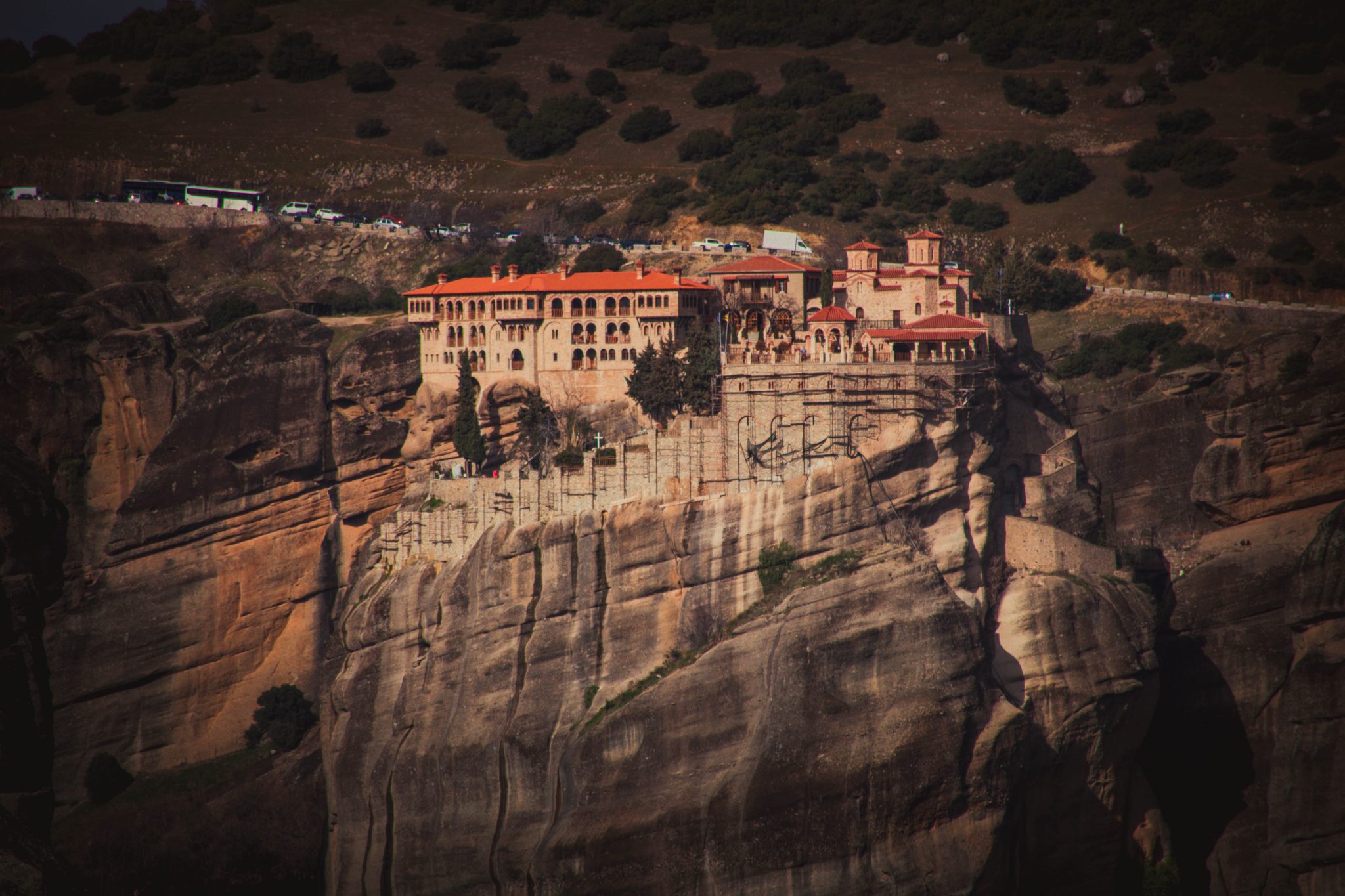
Kalabaka boasts several monuments from the Byzantine era. Standing out is the Metropolitan Church of the Dormition of the Theotokos, built in the 12th century by the Byzantine Emperor Manuel Komnenos.
Its distinctive feature is its marble pulpit, uniquely placed in the centre (a singular phenomenon for a Byzantine church), as well as the synthronon and ciborium, located next to the Holy Altar.
Its frescoes date from the 12th to the 17th century, while an ancient relief is found in the southern part of the church. Starting from Kalabaka, apart from Meteora, you can visit the Vlachava forest in the eponymous village, a true gem for the area, covering more than 30,000 acres with oak trees, and hosting wild fauna species.
Alternatively, enjoy the view towards Domokos and Meteora from the village of Diava (1,200 m altitude) or wander through the narrow streets of Kastraki.
Pyli Municipality
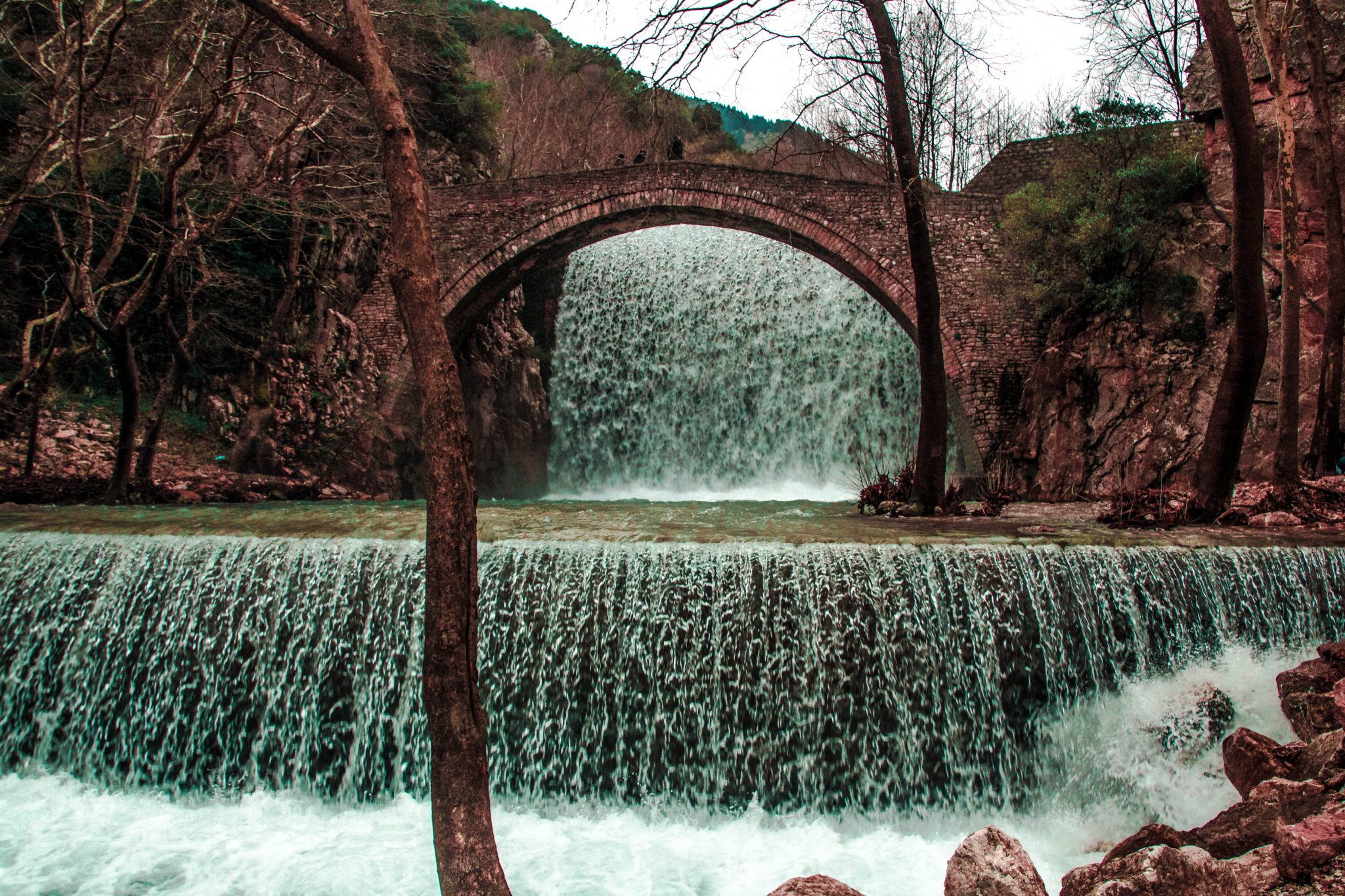
Gateway to nature
Villages nestled in greenery, an area that serves as a starting point for explorations of unknown paths and historical monasteries.
Pyli for getaways!
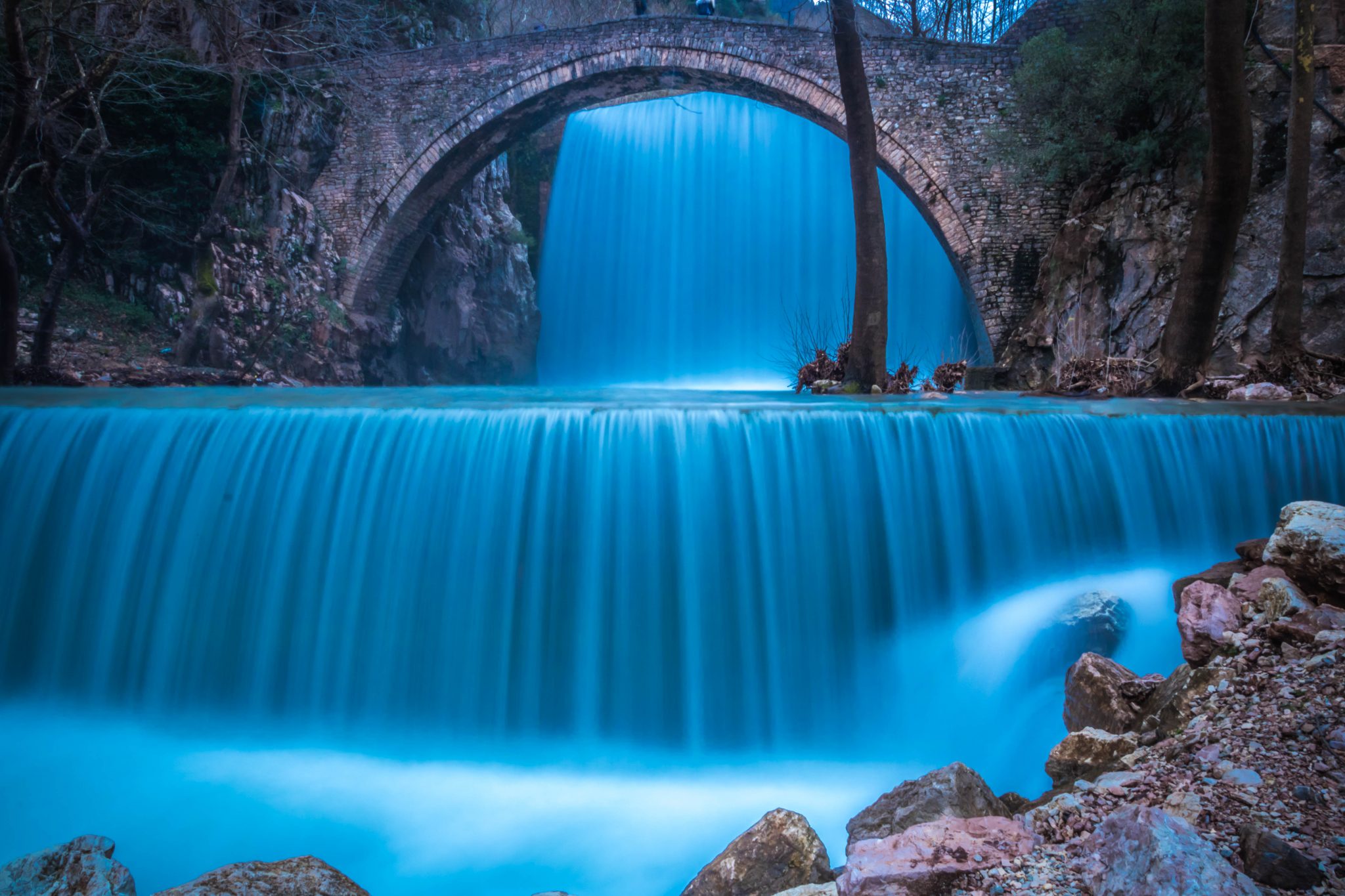
A picturesque market town, located 18.5 km southwest of the city of Trikala, near the border with the Karditsa prefecture.
Initially called Porta-Pazar, it was later renamed Porta, eventually settling on its current name, Pyli.
Its name derives from its natural environment, as the Portaikos River divides the two mountains of the region, Itanos and Koziakas, in such a way that it resembles a 'Gate' (Pyli means gate in Greek).
Trikala Municipality
Vibrancy on the riverbanks
A tour of the city that has played a rich historical role throughout the centuries and gracefully displays its beauty.
A city with history and tradition
Trikala, the capital of the eponymous prefecture, is located in the northernmost part of the Thessalian plain within the same prefecture, at an altitude of 115 m.
The city was first inhabited during antiquity and was called Triki. It was one of the oldest cities of Thessalian Hestiaiotis, and notably participated in the Trojan War alongside other cities in the Hellenic region.
It experienced particular prosperity during the 5th and 4th centuries BC, evidenced by the minting of coins. Few parts of ancient Triki survive, as the modern city is built atop the ancient one. Triki endured until the era of the Byzantine Empire.
In the 12th century, the name Trikala was first mentioned in Anna Komnene's work “Alexiad”. It is estimated that the widespread use of the name Trikala began from the Middle Ages onwards.
In 1393, the city came under Ottoman rule, along with Lamia, Larissa, and Domokos.
In 1774, the Christian population suffered greatly at the hands of the Albanians, who massacred hundreds of the city's inhabitants. In 1796, it came under the administration of the infamous Ali Pasha.
It was liberated from the Ottoman yoke in 1881, like the rest of Thessaly, and in the same year was annexed to the Greek State.
A stroll through the city
The Lithaios River, a tributary of the Peneius, flows through the city of Trikala and has been known since ancient times.
Indeed, the ancients believed it was the river that carried the dead. Along the banks of the Lithaios are the city's most important squares, Rigas Ferraios and Heroes of Polytechneio.
Both are connected by an iron bridge dating from 1886, measuring 31 m in length. Its construction is so robust that it suffered no damage in 1941 when the Germans attempted to blow it up. Southeast of Rigas Ferraios Square, Apollonos Street begins, meeting the Metropolitan Church of Stagoi and Meteora along its side.
Inside, there is an exhibition of rare relics, including impressive wood carvings, sacred vessels, and rare icons.
In Heroes of Polytechneio Square, the bronze bust of Georgios Karaiskakis, the Commander-in-Chief of the 1821 Revolution, stands out.
From there, Larisis Street begins, leading to the church of Saint Kosmas the Aetolian, next to the city's National Stadium.
Inside, the Saint's white shirt is preserved, which he had donated to a local family when he passed through the area in 1778. Above the city dominates the Byzantine castle, built on the ruins of the ancient acropolis by the Byzantine Emperor Justinian.
Inside, the stone clock tower emerges, a landmark of the city. Below the castle, a part of the city can be seen, exhibiting strong Turkish architectural elements, a remnant from the period when Trikala was under the rule of the Ottoman Empire.
A characteristic example of that era is the Kursum or Kursan Mosque, as some call it, built by the famous Turkish architect of the time, Sinan. On the Prophet Elias hill, there is a Zoo.
The city's market has everything, to the point where it has nothing to envy of modern metropolises.
It offers very good woven goods, blankets, and furs. There are restaurants and tavernas, with flavours that will satisfy even the most demanding palate, as well as café-bars that cater for nightlife and relaxation, accompanied by well-known Greek and international hits.
Useful links for your trip

Η συντακτική ομάδα
Travelo Team
Συντακτική ομάδα του Travelo.gr
Πολυταξιδεμένη συντακτική ομάδα με πάνω από 15 χρόνια στον ταξιδιωτικό δημοσιογραφικό χώρο και περισσότερους από 45 προορισμούς σε Ελλάδα και Ευρώπη. Έχουμε διανυκτερεύσει σε εκατοντάδες καταλύματα — από μικρά οικογενειακά ξενοδοχεία και παραδοσιακούς ξενώνες μέχρι resorts 5 αστέρων — και δοκιμάζουμε προσωπικά περιοχές, μεταφορές και υπηρεσίες πριν προτείνει κάτι.
- 45+ προορισμοί επί τόπου
- 500+ καταλύματα σε αξιολόγηση
- 15 χρόνια ταξιδιωτικής αρθρογραφίας
Πώς δουλεύουμε: κάθε οδηγός βασίζεται σε επιτόπια εμπειρία, διασταύρωση αξιολογήσεων επισκεπτών και έλεγχο διαθεσιμότητας/τοποθεσίας κάθε καταλύματος. Ορισμένοι σύνδεσμοι είναι συνεργατικοί (affiliate) — αν κάνετε κράτηση μέσω αυτών, στηρίζετε το Travelo.gr χωρίς καμία επιπλέον χρέωση για εσάς, και δεν επηρεάζουν τις προτάσεις μας. Τελευταία ενημέρωση οδηγού: 22 Σεπτεμβρίου 2026.
Πού να μείνω — Επίσης