Sulphur thermal baths: the best in Greece
Which sulphur thermal baths operate in Greece, what benefits they offer for arthritis and rheumatic conditions, entrance fees, and where to stay nearby.
Από Travelo Team
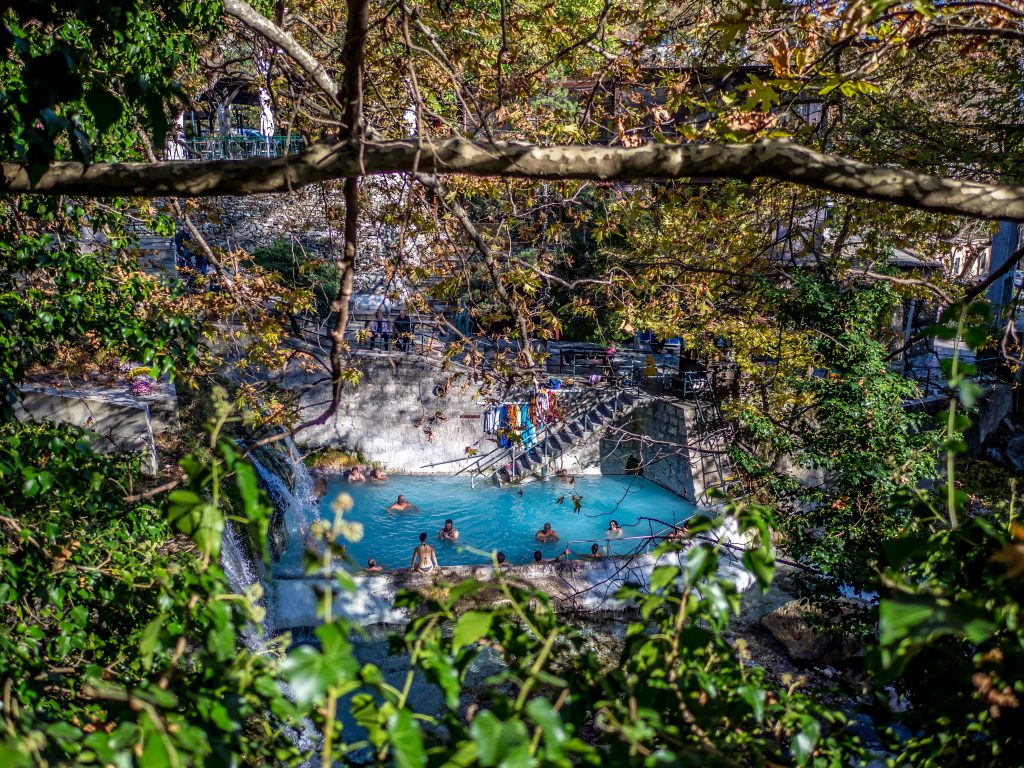
Quick answer: the most well-known sulphur thermal baths in Greece are Loutra Pozar in Aridaia, Loutra Loutrakiou, Thermopylae, Ypati, Loutra Smokovou, Loutraki Aridaia, Loutra Eleftheron in Kavala, and Loutra Aidipsos. The sulphur water emerges at temperatures ranging from 30 to 42 degrees Celsius and is primarily used for rheumatic, arthritic, and skin conditions.
Thermal springs in Greece offer multiple benefits to those suffering from rheumatism and beyond. Our country boasts over 750 locations where water gushes from the earth's depths, through rocks and boulders.
In some springs, the thermal water contains sulphur, calcium, magnesium, and other components, while in others, sulphur is replaced by radium.
Based on the composition of the thermal waters, we have radium-rich springs that are suitable for rheumatoid conditions, as well as sulphur-rich springs that are suitable for common arthritis.
[lwptoc numeration=”roman”]
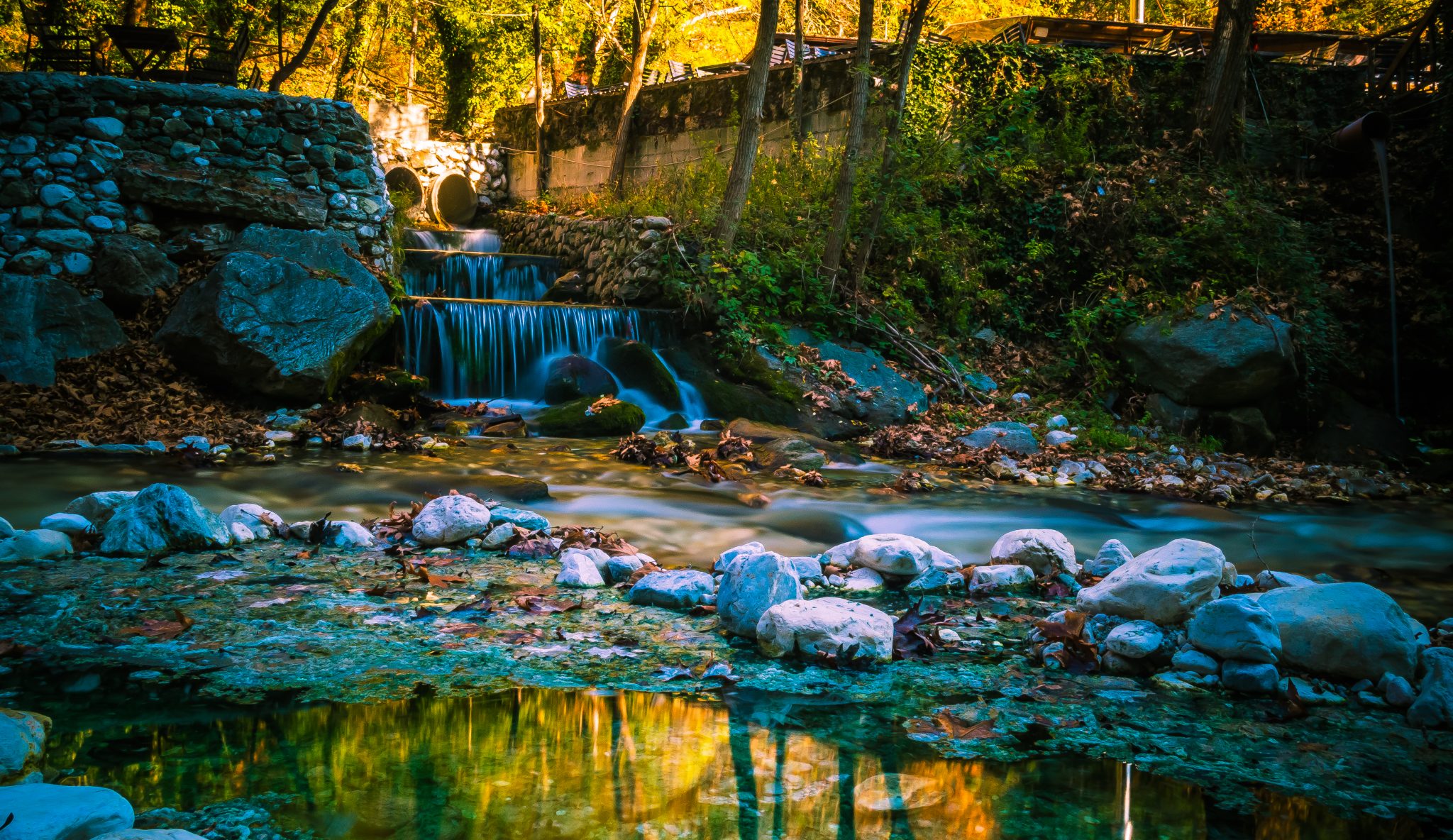 Thermal baths for arthritis Radium thermal springs
The thermal baths suitable for arthritis, as mentioned above, are those whose waters contain radium.
You can find baths for arthritis in Ikaria, Kamena Vourla, and Samos.
The aforementioned three thermal springs are radium-rich and suitable for inflammatory arthropathies.
Sulphur thermal baths
Most thermal baths in Greece spring waters containing sulphur, which is suitable for treating several rheumatic and other body ailments.
Let's explore the best baths in Greece…
Thermal Baths of Loutraki
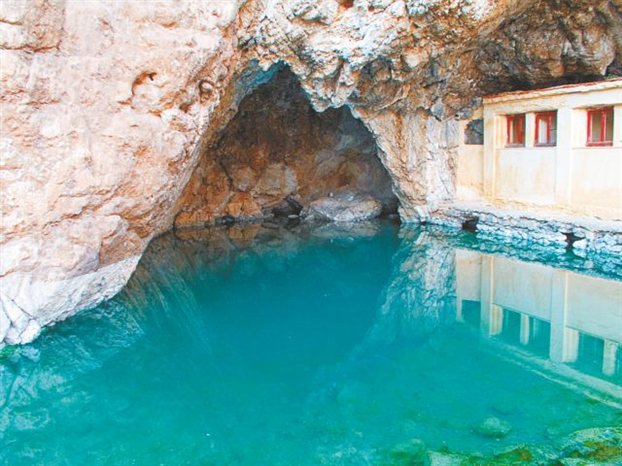
Located about 80km from Athens, you'll find the Thermal Baths of Loutraki on the Corinthian Gulf side.
The water temperature consistently ranges from 29.5°C to 31.4°C and contains 31 radioactive Mache units.
Loutraki Baths is a particularly popular destination with ample facilities for a comfortable stay.
Pozar Thermal Baths
The Pozar thermal baths are located in the village of Loutraki Aridaia, approximately 100 kilometres from Thessaloniki.
The water springs at a constant temperature of 37°C all year round.
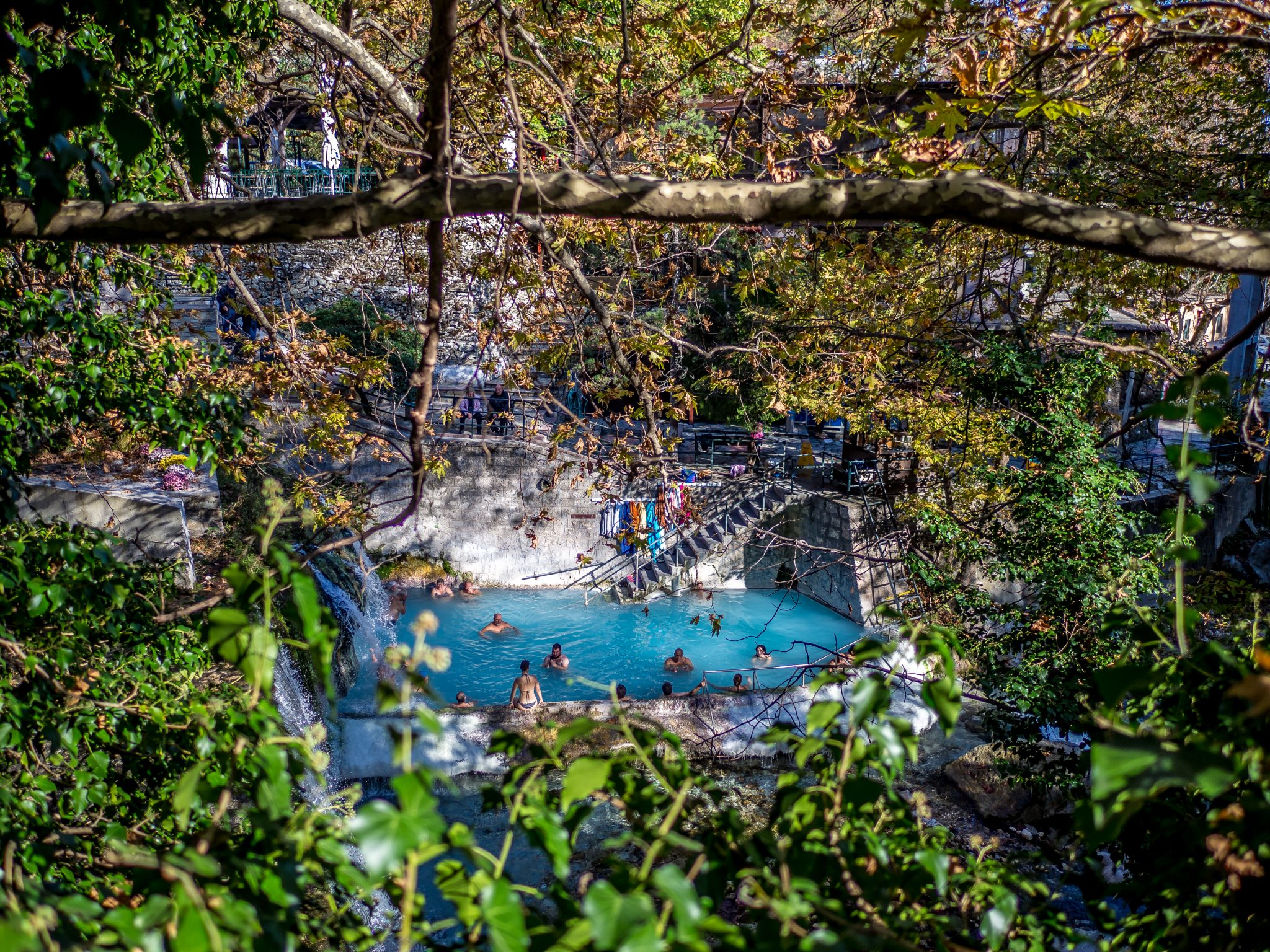
The spa town features both private indoor pools for 2 to 8 people and outdoor natural pools with waterfalls that carry the warm thermal water.
Additionally, at Pozar Baths, there is a large outdoor pool containing warm thermal water, open all year round.
In the area, you'll find dozens of hotels and facilities to enjoy a pleasant weekend.
Loutra Aidipsos
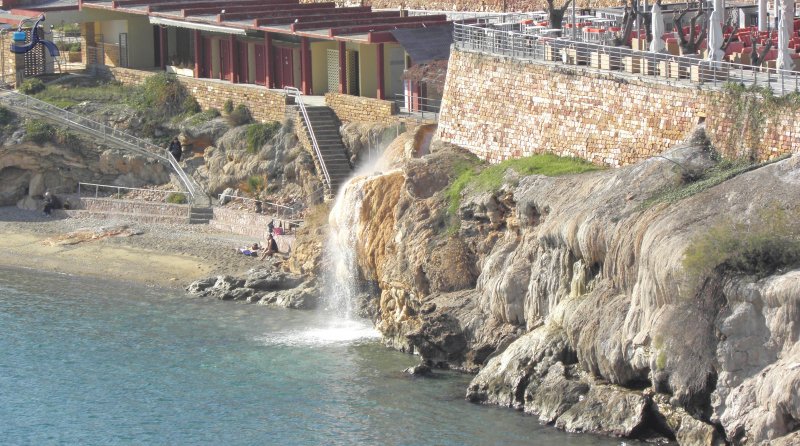
Aidipsos is a small town in the Prefecture of Evia, renowned for its thermal baths.
These are perhaps the oldest and most famous thermal springs in Greece!
The hot water flows through the rocks and ends up in the sea, which is icy cold in winter.
If you wish to visit the baths during winter, you will need to walk through the icy sea up to about knee height.
Alternatively, in the area, you'll find several indoor pools with thermal waters offered by hotels and private hydrotherapy centres.
Thermal baths in Kamena Vourla
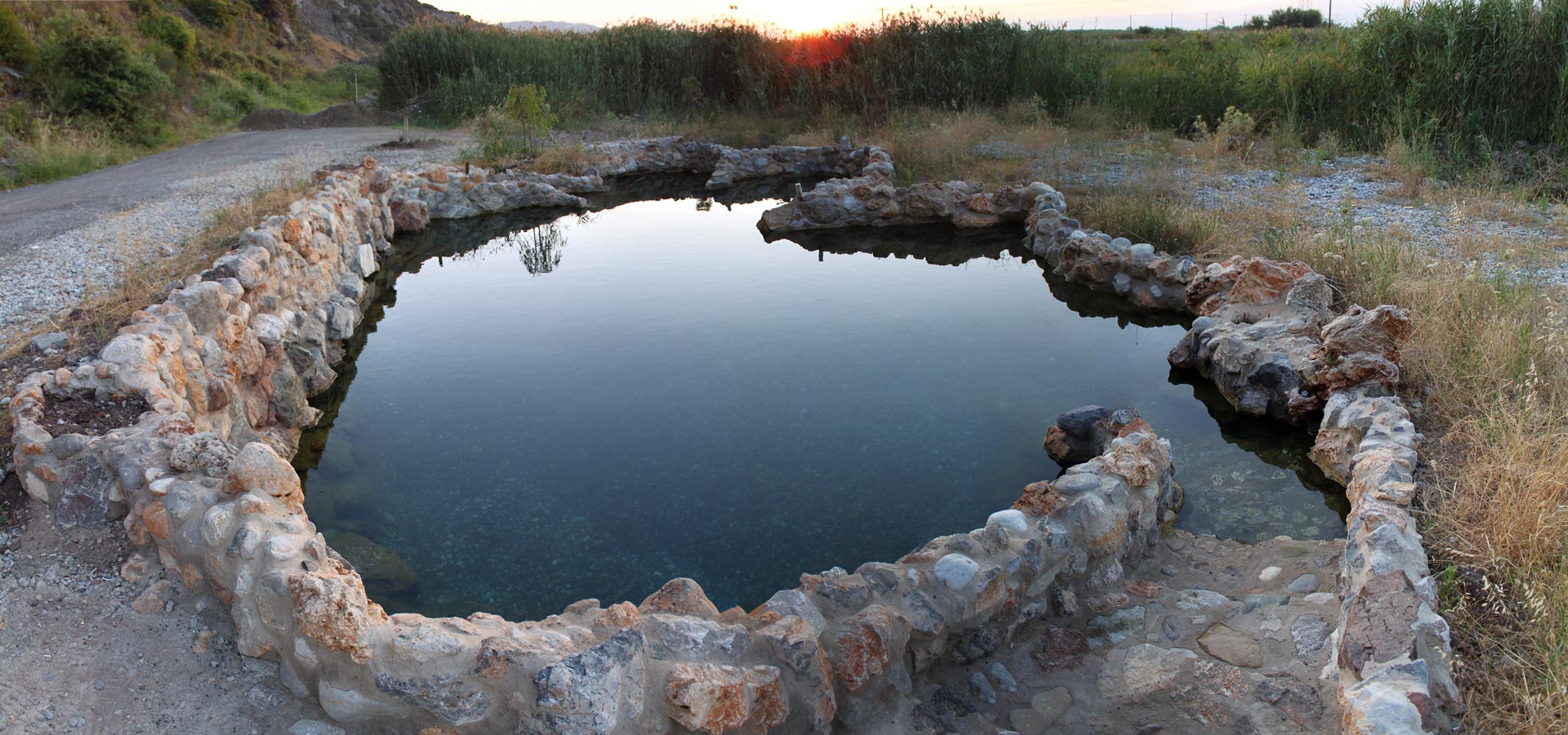
In Kamena Vourla, you will find thermal springs with water temperatures ranging from 30 to 42°C. The springs flow into outdoor, natural pools where you can enjoy bathing and the therapeutic properties of the waters.
Loutra Methana
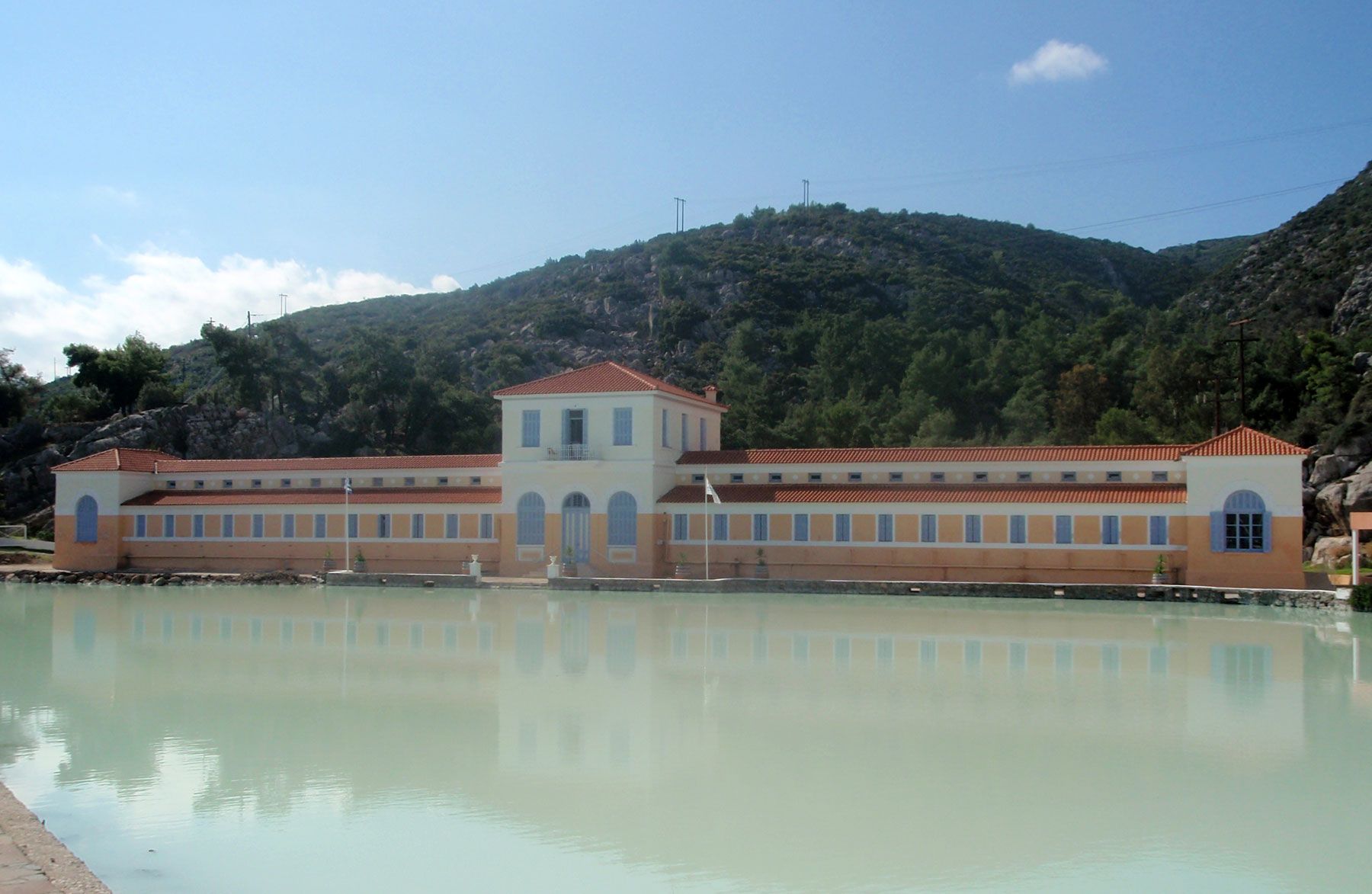
The thermal waters in Methana are the result of volcanic activity from thousands of years ago.
In the spa town, you will find Vromolimni in Agioi Anargyroi – a lake with water temperature around 30°C and rich in minerals.
Additionally, in Methana, you will find both the hydrotherapy centre at the “AI PIGAI” hotel and the Agiou Nikolaou thermal springs, which supply 20 private pools.
Loutra Ikarias
The mineral springs in Ikaria emerge from the seabed and offer temperatures ranging from 31 to 58°C, while being rich in radon.
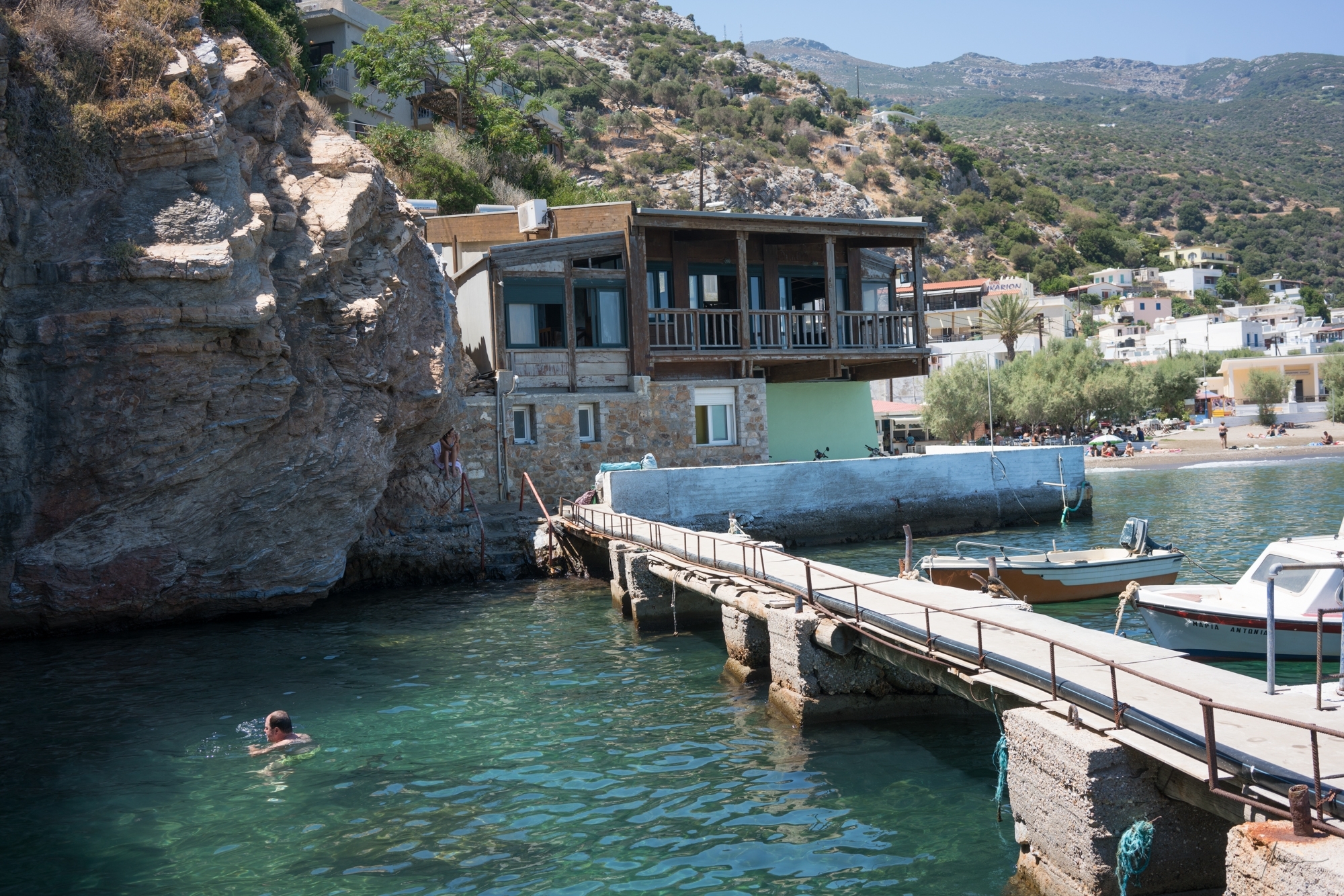
The springs of Ikaria are considered the most radioactive in the world!
Across the entire island of Ikaria, you will find scattered thermal springs, with most located on the southeast and northeast beaches.
The most popular thermal springs in Ikaria are:
- Therma: This is a village in Ikaria that offers thermal waters emerging right next to the harbour!
- Xylosyrtis: Where you will find the “Immortal Water”, a little further down you will also find the thermal springs of Xylosyrtis!
- Agios Kirykos: In Agios Kirykos, the island's capital, you will find several thermal springs in Asklepios, Kato Loumakia, and Kleftolimano.
Loutra Lagkada
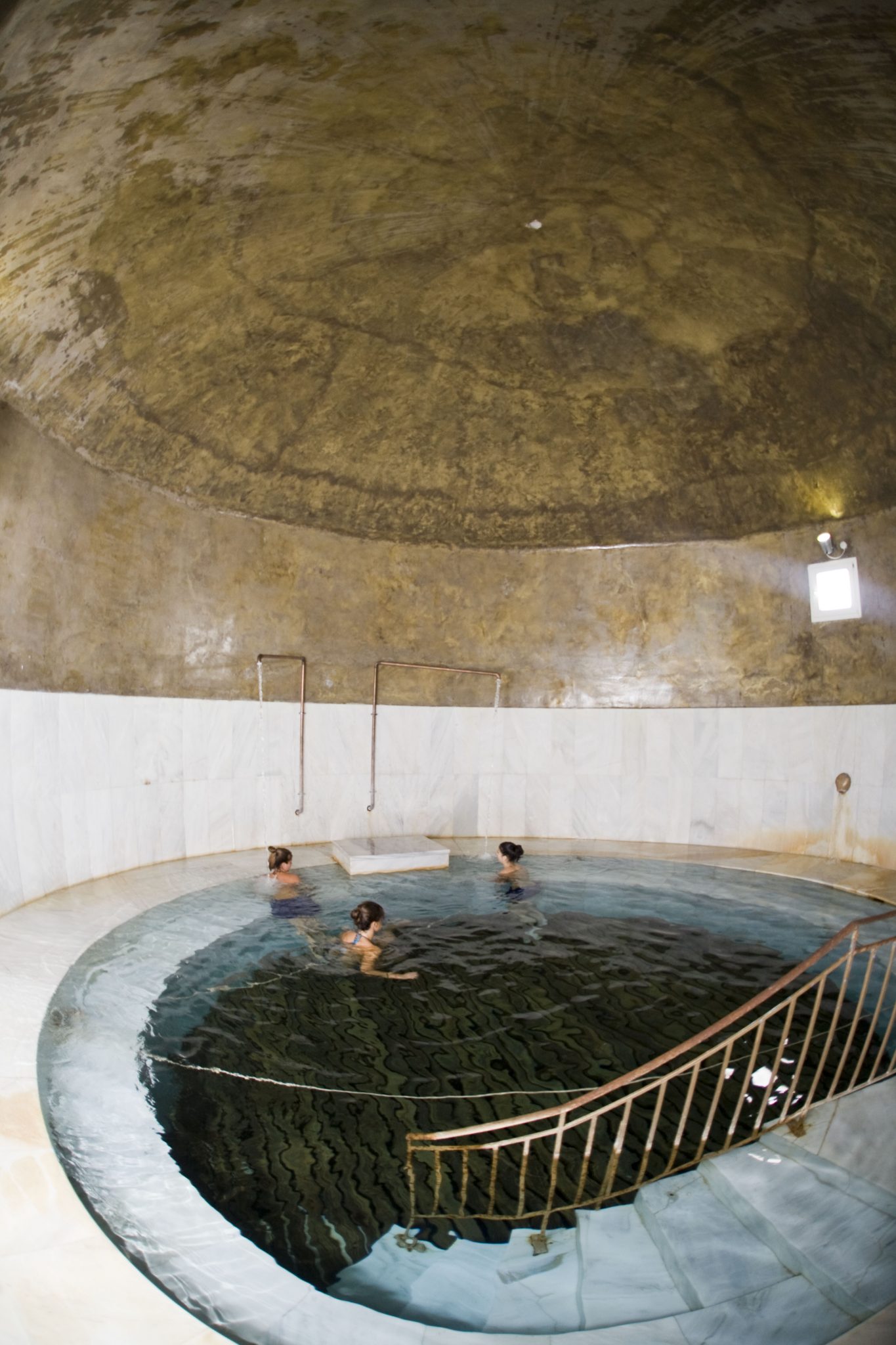
Lagkadas is located just outside Thessaloniki and offers facilities and a hydrotherapy centre with thermal waters.
At Lagkadas baths, you will find a total of 21 individual hydromassage units and 20 individual bathtubs.
Thermal baths of Kyllini
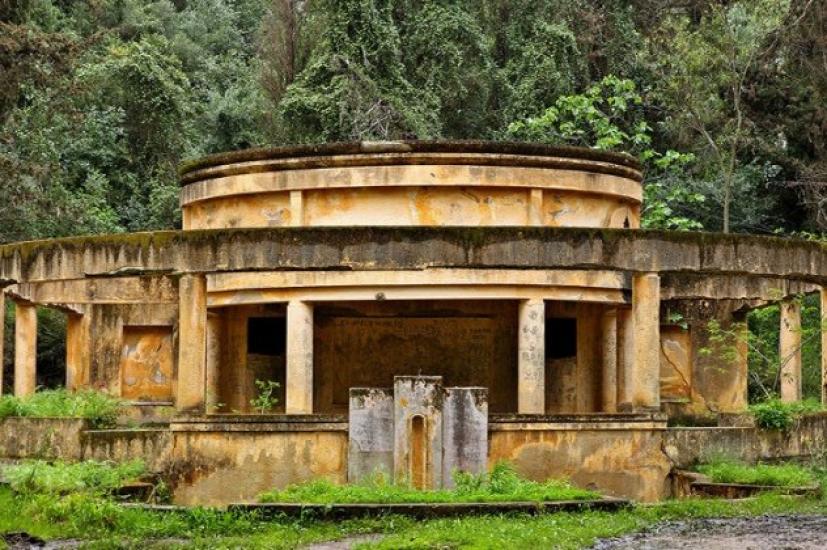
The baths of Kyllini are among the oldest in Greece, with its hydrotherapy centre existing since ancient times.
In the area, you'll find organised facilities for both your accommodation and your entertainment and dining.
Loutra Agistro Serron
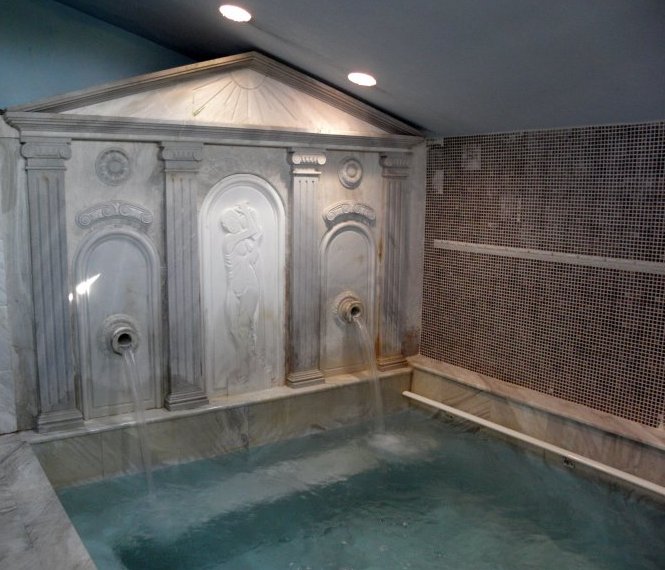
Agistro is located 124 kilometres from Thessaloniki and a few kilometres outside Serres.
There you will find an amazing Byzantine hammam dating back to 950 AD – it is the oldest hammam in Greece!
The water springs at a temperature of 41°C, offering perfect rejuvenation for your body.
In Agistro, you will find the “Hammam” hotel, right next to which is the Byzantine hydrotherapy centre, operating 24 hours a day with 8 communal pools.
The baths in Agistro are suitable for both rheumatic and arthritic conditions.
The best baths in Greece
In Greece, there are hundreds of thermal springs, most of which are open to visitors.
The waters in thermal springs originate from deep within the earth and reach the surface at a temperature of at least 32°C – in some cases, the temperature in the baths can reach up to 52°C!
In Northern Greece, the most organised baths with facilities for both balneotherapy and entertainment are in Pozar, in Loutraki Aridaia.
On the other hand, near Athens, you'll find organised baths in Aidipsos, Evia, where there are several hotels for your stay and facilities for your balneotherapy.
What sulphur water does and who it helps
Sulphur water contains sulphur compounds that are absorbed by the skin and act as vasodilators. In practice, this means it relaxes muscles, relieves joint pain, and improves circulation. The characteristic rotten egg smell is hydrogen sulphide and indicates that the water is indeed sulphurous.
Arthritis and rheumatic conditions
For arthritis, lumbago, and chronic musculoskeletal pains, the classic advice from hydrotherapy centres is to take baths for 15 to 20 minutes, once or twice a day, for a cycle of 10 to 15 days. The relief is symptomatic and temporary; it does not replace medication.
Skin and respiratory conditions
In psoriasis, acne, and seborrheic dermatitis, sulphur has a keratolytic action. In inhalation caves, such as those at Pozar, the vapours are used for chronic bronchitis and rhinitis.
When to avoid it
Severe heart failure, uncontrolled hypertension, pregnancy, active infections, and open wounds are the most common contraindications. Seek your doctor's advice before undertaking a course of baths.
The best sulphur baths by region
Northern Greece
Loutra Pozar in Aridaia with 37-degree water, outdoor pools within the gorge, and an inhalation cave. Loutra Eleftheron in Kavala with a vaulted Roman bath. Loutra Apollonia and Nigrita in Serres, with fewer crowds and lower prices.
Central Greece
Thermopylae with free 40-degree waterfalls, Ypati for an organised hydrotherapy centre, Loutra Smokovou in Karditsa focusing on respiratory conditions, and Kamena Vourla for a combination of sea and bath.
Peloponnese and islands
Loutraki with the longest tradition of hydrotherapy in the country, Methana with intensely sulphurous water, Loutra Kyllini in Ilia, Aidipsos in Evia, and Loutra Thermis in Lesbos.
Prices, opening hours, and what to bring
Entrance to organised pools ranges from €5 to €12 per person, private baths from €8 to €20, and inhalation caves around €5. Many hydrotherapy centres cooperate with EOPYY (National Organisation for Healthcare Provision) for prescribed cycles. Bring flip-flops, two towels, a bottle of water, and a dark swimsuit, as sulphurous water stains light-coloured fabrics and silver. Prices are as recorded in 2026; please check them before you go.
Frequently asked questions
Which thermal baths in Greece have sulphur?
The most famous sulphur baths are Pozar, Loutraki, Thermopylae, Ypati, Smokovou, Methana, Eleftheres Kavala, Aidipsos, and Thermis Lesbos.
Do thermal baths help with arthritis?
They offer symptomatic relief from pain and stiffness. The usual cycle is 10 to 15 days with baths lasting 15 to 20 minutes.
How hot is the water?
Depending on the spring, from 30 to 42 degrees Celsius. In Thermopylae, it reaches 40, at Pozar it's consistently around 37.
How much does admission cost?
From €5 to €12 for pools and €8 to €20 for a private bath, based on 2026 prices.
How long should I stay in the water?
Fifteen to twenty minutes at a time. Longer stays in hot sulphurous water can cause dizziness and a drop in blood pressure.
What is the best season?
From October to April. Winter offers the greatest contrast with the warm water, and the baths have fewer crowds on weekdays.
Are there baths with free entry?
Yes, the natural waterfalls at Thermopylae, Loutra Konitsas, and some springs in Aidipsos are free, but without changing rooms or supervision.
Read also
- Loutra Pozar: accommodation and practical information
- Thermopylae and Ypati: accommodation near the baths
- Benefits and contraindications of thermal baths
How to organise a two-day trip to the baths
The most common arrangement is two overnight stays with three baths. You arrive at midday, take the first bath after five when the pools are less busy, the second the next morning before ten, and the third before your return. Maintain at least a six-hour gap between baths and drink water, as hot sulphurous water dehydrates more than you might imagine.
In Pozar and Aidipsos, there is accommodation within walking distance of the pools, which is very helpful in winter. In Thermopylae and Smokovou, accommodation is in nearby villages, so allow fifteen minutes by car. Weekends in January and February are the busiest of the year; book your room two to three weeks in advance.
What to pay attention to regarding the water and your skin
After your bath, rinse with fresh water and moisturise your skin, as sulphur dehydrates it. Remove silver jewellery and watches before entering, as they will permanently blacken. Avoid alcohol before and immediately after, and do not enter with a full stomach. If you feel dizzy or experience strong palpitations, exit immediately and sit in the shade.

Η συντακτική ομάδα
Travelo Team
Συντακτική ομάδα του Travelo.gr
Πολυταξιδεμένη συντακτική ομάδα με πάνω από 15 χρόνια στον ταξιδιωτικό δημοσιογραφικό χώρο και περισσότερους από 45 προορισμούς σε Ελλάδα και Ευρώπη. Έχουμε διανυκτερεύσει σε εκατοντάδες καταλύματα — από μικρά οικογενειακά ξενοδοχεία και παραδοσιακούς ξενώνες μέχρι resorts 5 αστέρων — και δοκιμάζουμε προσωπικά περιοχές, μεταφορές και υπηρεσίες πριν προτείνει κάτι.
- 45+ προορισμοί επί τόπου
- 500+ καταλύματα σε αξιολόγηση
- 15 χρόνια ταξιδιωτικής αρθρογραφίας
Πώς δουλεύουμε: κάθε οδηγός βασίζεται σε επιτόπια εμπειρία, διασταύρωση αξιολογήσεων επισκεπτών και έλεγχο διαθεσιμότητας/τοποθεσίας κάθε καταλύματος. Ορισμένοι σύνδεσμοι είναι συνεργατικοί (affiliate) — αν κάνετε κράτηση μέσω αυτών, στηρίζετε το Travelo.gr χωρίς καμία επιπλέον χρέωση για εσάς, και δεν επηρεάζουν τις προτάσεις μας. Τελευταία ενημέρωση οδηγού: 22 Σεπτεμβρίου 2026.