Exploring Thessaloniki , Sights, Activities and Shopping!
Exploring the city of Thessaloniki. A world of different flavours, vibrant nightlife and endless strolls. The 'Bride of the Thermaic Gulf' awaits lovers of good times, history, and romance. A historic and cosmopolitan city, with a centuries-old culture stretching from antiquity and the Roman era to the glory of Byzantium, Thessaloniki today stands out in the Balkans with its…
Από Travelo Team
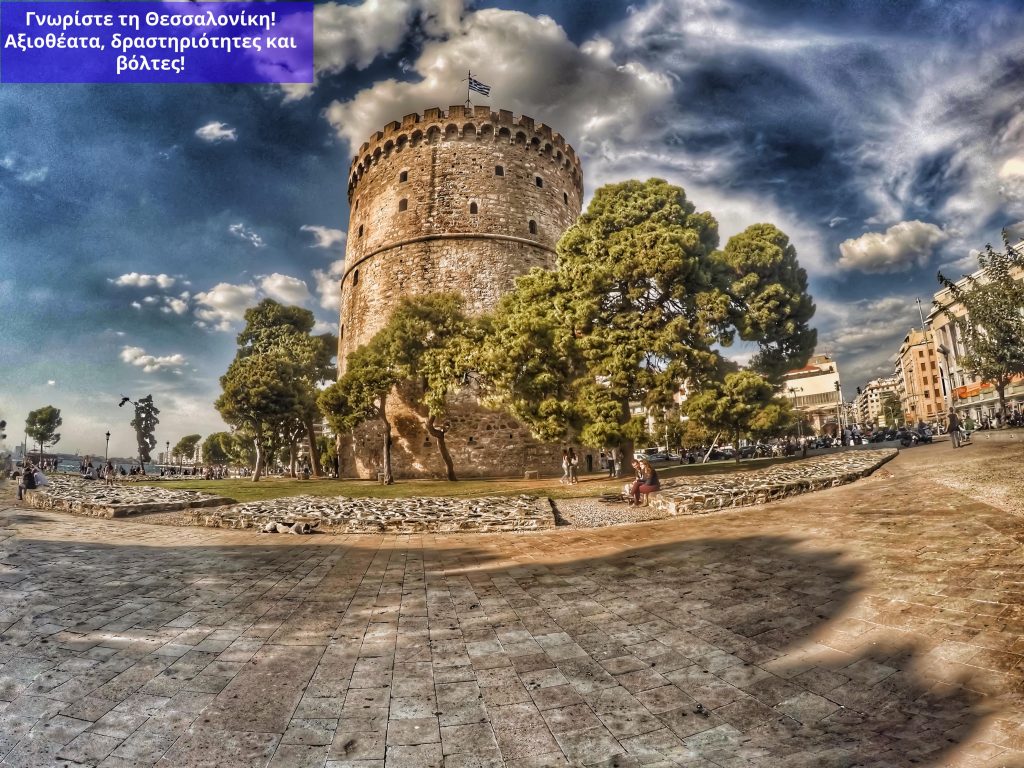
Exploring the city of Thessaloniki
A world of different flavours, vibrant nightlife and endless strolls. The 'Bride of the Thermaic Gulf' awaits lovers of good times, history, and romance.
A historic and cosmopolitan city, with a centuries-old culture stretching from antiquity and the Roman era to the glory of Byzantium, Thessaloniki today stands out in the Balkans with its own timeless character and contemporary rhythm.
Founded in 315 BC by General Cassander, it was named after his wife and sister of Alexander the Great. It is Greece's second-largest city, a core of historical events, a stage for conflicts and a melting pot of cultures and languages.
From its impressive coastal boulevard to its old neighbourhoods with narrow streets and picturesque shops, its eclectic architecture and Byzantine churches, romantic Thessaloniki captivates visitors with its varied charms: rich, exquisite food, 'sinful' sweets, entertainment until the early hours, and a pervasive atmosphere of art and culture throughout the year.
Daily direct flights to Thessaloniki and Thessaloniki-Athens. Find out about routes and book cheap flights to Thessaloniki!
[lwptoc numeration=”roman”]
Sights of Thessaloniki
City Walks
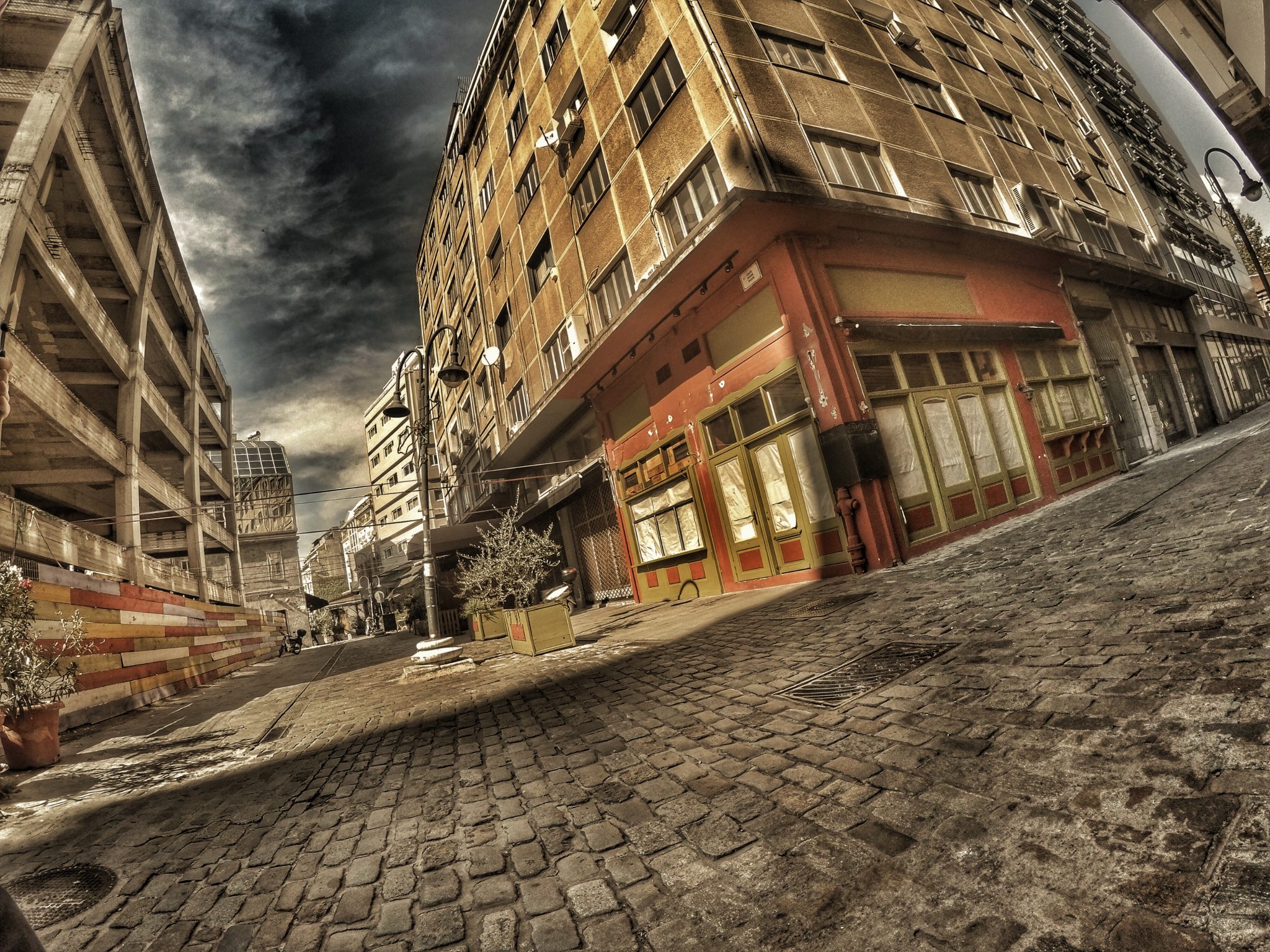
Thessaloniki is a crossroads of civilisations, with traces of centuries of history revealing themselves in its streets, walls, cafes, and markets: from the Byzantine walls dominating the Upper Town, to the Rotonda, the Ancient Agora, and Ladadika, the Modiano Arcade and Bit Bazaar, and down to the romantic waterfront, everything becomes a truly enchanting journey through time!
The stroll begins at the waterfront and the city's landmark...
Hagia Sophia and Agios Dimitrios
Hagia Sophia: The Church of Hagia Sophia is an excellent example of an early Christian church. According to the prevailing view, it was built in the late 8th century AD and shares many characteristics with Hagia Sophia in Constantinople.
The building's style is a 'domed basilica', and inside, eyes are drawn to the marvellous mosaics at the base of the dome and the apse of the sanctuary.
Agios Dimitrios: Located on the street of the same name, it is a monument of particular significance for the city, as it houses the place of martyrdom of the city's patron saint, Saint Demetrius, during Roman times.
The first church was built around 313 AD, when the Edict of Milan allowed Christians to freely honour their fellow citizen, the Great Martyr Demetrius.
Over the centuries, the temple suffered much damage until it was completely destroyed by fire in 1917. Beneath the church, there is a crypt and a space that serves as a museum, exhibiting early Christian sculptures from the 5th, 6th, and 7th centuries from the temple, Byzantine sculptures from the 11th to the 14th centuries, and other archaeological finds. Inside, the painted and marble decoration is rich, with elaborate capitals and mosaics depicting Saint Demetrius.
[ Find discounted hotels in Thessaloniki HERE! ]
White Tower
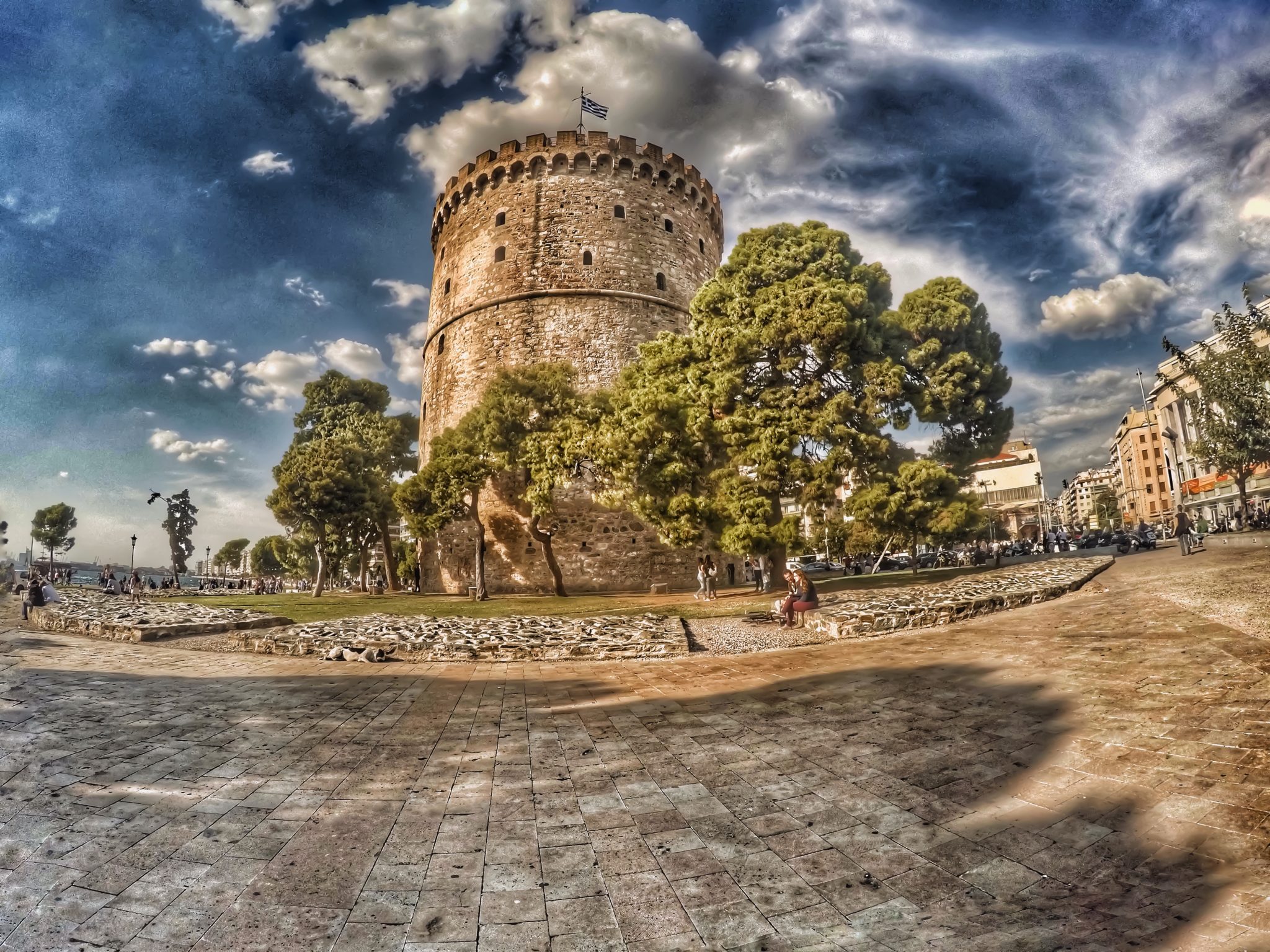
The symbol of Thessaloniki dates back to the 15th century AD and was part of the city's fortifications.
It got its name when a convict, to save his life, whitewashed it completely.
Its older name was 'Tower of Blood', as the Ottomans used it as a prison for death row inmates or a torture chamber for young Janissaries.
Today, it houses a museum, which aims to serve as a starting point for exploring the city of Thessaloniki, presenting and highlighting its history through digital technology.
Opening hours: Tuesday to Sunday, 08:30-15:00.
Information
T:+30 2310267832
Ancient Thessaloniki
With continuous habitation from ancient times to the present day, Cassander's city offers immense historical interest. The ancient memory of the city weaves into the present, amidst the new buildings, with visible underground structures and intriguing constructions, an archaeological park stretching through the city that surprises the passer-by with its imposing presence.
Walking along Egnatia Street in an easterly direction, we encounter one of Thessaloniki's most famous monuments, the Arch of Galerius, today known as 'Kamara'. In its original form, it was an octopylon with 4 central massive piers, erected in honour of the Roman tetrarch Galerius and his victory against the Persians in 341 AD. The rich relief depictions on the surviving piers are striking.
Roman Agora: Turning right onto Navarinou Street, the remains of Galerius' palatial complex become visible, a large excavated area at the western end of the street, where a central peristyle, a courtyard framed by stoas with mosaics, a basilica, the Octagon (throne room), the Nymphaeum (place of worship), and the Hippodrome can be discerned.
In the western part of the city, we will find the captivating Roman Agora (at the junction of Olympou and Filippou streets), a 2nd-century AD work from which the stoa, square, baths, and odeon survive, where today it also functions as an open-air theatre.
Rotonda
An impressive circular building – one of the few of its kind – built during the time of Galerius, probably as a temple to Zeus or Cabeirus, or as a Mausoleum for the tetrarch himself.
In early Christian times, it was converted into a Christian church, a period that bequeathed the beautiful building a collection of incomparable mosaics, while during Ottoman rule it was transformed into a mosque. Today it is an exhibition space hosting various exhibitions and events.
Hamam Bey Baths
A very old spa, the largest surviving hammam in Greece, is located at the intersection of Egnatia and Aristotelous streets and was built in 1444 by Sultan Murad II.
It is a double hammam, with its male and female sections forming a single architectural complex. In the first room, one can admire an impressive dome with rich decoration, while in the second room, we find a beautifully decorated yet perforated dome that allowed natural light to flood the space.
The most impressive is the third room, which has a square shape and is cruciform. In its centre is the 'belly stone', the raised platform where hammam employees massaged bathers.
The space is covered with domes, which are supported by the room's walls and four magnificent carved piers. A small entrance leads to a rectangular area intended for the Sultan's private bath. This is a space with exceptionally rich painted and sculptural decoration with muqarnas. Since 1976, when it came under the Archaeological Service, and after restoration work, the Hammam has been open to the public and used as an exhibition space.
Casa Bianca
A beautiful villa, a representative example of the distinct Art Nouveau style of early 20th-century Thessaloniki architecture, built in 1912 by Dino Fernandez Diaz.
It became the epicentre of a major scandal and a romantic idyll between the villa owner's daughter, Aline, and Greek officer Spyros Aliberti. The conservative society of 1912 did not approve of a marriage between a Jewish woman and a Christian, which led to Aline's abduction by Spyros and their secret marriage in Athens.
The building has been listed since 1976, and since 1990, it has been the subject of extensive restoration and enhancement works. It hosts temporary exhibitions.
[ Find discounted hotels in Thessaloniki HERE! ]
Municipal Art Gallery
A representative example of eclectic architecture – referred to as 'of the towers' or 'of the country houses' – that flourished in Thessaloniki and was particularly prevalent in the area during the late 19th and early 20th centuries.
To old Thessalonians, it is known as Villa Mordoch, after the family who resided there from 1930 to 1940. An attractive building worth visiting both for its architecture and for the exhibitions it hosts.
The art gallery includes, among others, works by Iakovidis, Papaloukas, Engonopoulos, Bouzianis, Hadjikyriakos-Gikas, Tombros, Parmakelis, Whitlock, a collection of Byzantine and post-Byzantine icons from the early 14th to the 19th century, and an impressive collection of prints with 360 works by great artists (Varlamos, Hadjikyriakos-Gikas, Charos, Tetsis, Moralis, Fasianos, Myrtaras, Zouni, Dali, Lichtenstein).
Hours: Tuesday-Friday 09:00-13:00, 17:00-21:00 Saturday-Sunday 09:00-13:00
Free Entrance
Information
T:+30 2310425531
Villa Modiano
This enormous villa was built in 1906 by the Jewish merchant Iakov Modiano, and is also known as the 'old government house'. From 1913 onwards, it was successively used as a palace, residence for the Governor-General of Macedonia, and as a Seminary and Military School. Since 1972, it has housed the Folklore and Ethnological Museum of Macedonia-Thrace (www.lemmth.gr).
The building is spread over four levels – a semi-basement, two floors, and an attic – with a total area of 1,200 sq.m. Its architectural composition is characterised by an eclectic style with strong Art Nouveau influences. The two-story balcony (loggia) with a sea view is particularly noteworthy.
Teloglion Foundation of Art
Intended to be home to the vast collection of works by Greek artists from the 19th and 20th centuries by Aliki and Nestor Telloglou, as well as to host Hellenistic figurines, Corinthian, Hellenistic, and Roman vases, Persian miniatures, and examples of Arab and Chinese art, the foundation was established in 1972 within the Aristotle University premises.
Since then, it has resided in an architecturally pioneering building, at the highest point of the university campus, with views over this green part of the city and the Thermaic Gulf. Besides the treasures of its permanent collection, which features leading figures of Greek visual arts (Gyzis, Lytras, Bouzianis, Moralis, etc.), the Teloglion organises stunning temporary exhibitions.
Thessaloniki Concert Hall
After your strolls through the charming narrow streets, museums, and culinary explorations, don't miss the opportunity to take a deep… 'musical' breath at the city's jewel building.
The ultra-modern dynamic concert and dance venue hosts major stars of the global classical scene, opera, and classical and contemporary dance, who share the magic of high art.
Museums of Thessaloniki
Archaeological Museum of Thessaloniki
With finds from the prehistoric, ancient, and Hellenistic periods of Macedonia, the museum's rich collection is housed in a beautiful building, the work of architect Patroklos Karantinos, and a characteristic example of modernist architecture.
The Museum's permanent exhibition, recently reorganised, presents aspects of the culture that developed in Macedonia from 200,000 BC to late antiquity and is structured into five thematic sections: "An exhibition on life in prehistoric Macedonia", "Towards the birth of cities", "In Macedonia from the 7th century BC to late antiquity", "Thessaloniki, Metropolis of Macedonia", "The Gold of the Macedonians".
Through these, visitors come into contact with the world of ancient Macedonia and the daily life of its inhabitants.
Museum of Byzantine Culture
With findings from the prehistoric, ancient, and Hellenistic eras of Macedonia, the museum's rich collection is housed in a beautiful building, a work by architect Patroklos Karantinos and a characteristic example of modernist architecture.
The Museum's recently reorganised permanent exhibition presents aspects of the culture that developed in Macedonia from 200,000 BC to late antiquity and is structured into five thematic sections: A modern and uniquely aesthetic space that transports visitors into the mystical atmosphere of the Byzantine Empire through the stories each of the 2,900 exhibits has to tell.
Frescoes, mosaics, icons, marble architectural elements, detached early Christian tombs with their frescoes, precious ecclesiastical vessels, jewellery, and humble everyday objects present aspects of life in Byzantium, from the organisation of religious and social life, artistic and intellectual production, to private life and human activities in the Agora, the countryside, and the sea.
Jewish Museum of Thessaloniki
Founded to honour the rich "Sephardic" cultural heritage that developed in the city after the 15th century. Thanks to a climate of progress and economic stability, Jews expelled from Spain (Sephardim: "Sefarad" is the name for Spain in their language) found refuge in the city, giving it the name "Madre de Israel" – Mother of Israel.
After five centuries of stable presence, in 1941, occupied Thessaloniki was unprepared to face the horror of the "Final Solution". 96.5% of the city's Jewish community was exterminated in the Auschwitz and Bergen-Belsen camps. The Museum is housed in one of the rare Jewish-owned buildings that survived the fire of 1917.
It hosts objects from permanent collections, photographic exhibitions, and the Simon Marks photographic exhibition, "Thessaloniki, Metropolis of Sephardism". On the ground floor are gravestones and epitaphs from the large Jewish necropolis that extended east of the city walls. In the central part of the first floor, the history of the Jewish presence in Thessaloniki from the 3rd century until World War II is exhibited.
[ Find discounted hotels in Thessaloniki HERE! ]
State Museum of Contemporary Art
One of the world's most significant art collections is housed in this boutique museum, located in the northeast wing of the Lazariston Monastery complex.
The Costakis Collection, with its 1,275 works by great artists of the Russian avant-garde, is an irresistible magnet for art lovers worldwide, while a significant number of paintings and sculptures by Greek and foreign artists such as Chagall, Kandinsky, Malevich, Rodchenko, Avramidis, Antonakis, and Giannakos have placed the State Museum of Contemporary Art at the heart of all art enthusiasts everywhere. Don't miss it!
Macedonian Museum of Contemporary Art
Together with the Macedonian Centre of Contemporary Art, they represent a unique example of citizen initiative, unprecedented in the history of Greek visual arts. It began as the home for the large donation of artworks by collector Alexander Iolas, as part of a city regeneration plan.
A group of art-loving citizens sought the space and funding, relying entirely on private initiative. With much effort, love for art, and dedication, the museum today houses over 2,000 works, from Takis and Tsoklis to Oppenheim and Joseph Beuys.
Museum of Photography
Plan a visit to the Museum of Photography, which hosts a permanent collection with interesting works by Greek artists and international photography exhibitions or events. Take some time to enjoy a coffee in the museum's space: the atmosphere is almost cinematic!
NOESIS Science Centre and Technology Museum
An ultra-modern science and technology centre, that educates and entertains both children and adults. Discover the Cosmotheatre, a 300-seat cinema with the largest flat screen in Southeast Europe, which screens educational documentaries and also has 3D movie projection capabilities. Visit the Digital Planetarium, with its enormous panoramic spherical screen, which immerses viewers in the mysteries of the universe.
Finally, Greece's unique virtual reality simulator is located in a room with 3 six-seater vehicles that move on 6 axes, offering viewers the unsurpassed realistic experience of cosmic or underwater journeys.
Old Archaeological Museum
Better known as the Yeni Tzami, this beautiful building by Vitaliano Poselli was constructed in 1902 for the Islamised Jews of the city. After the population exchange of 1922, it housed refugees for a short period, and from 1925 to 1963, it served as the city's archaeological museum. Today, it is an exhibition space for the Municipality of Thessaloniki.
Atmospheric and beautifully preserved, the building combines Muslim tradition with the eclectic tendencies of its era. Its courtyard houses a rich collection of marble sculptures from the Roman era and early Christian times (sarcophagi, epitaphs, reliefs, honorary and funerary stelae) from all over Thessaloniki.
Alaca Imaret Art Gallery
A curious shape… A colourful minaret and a mystical atmosphere transport the visitor six centuries back, making Alaca Imaret one of Thessaloniki's most impressive historical and cultural venues.
It was built in February 1484 by Ibrahim's son, Inegöl Ishak Pasha. Its name means 'colourful poorhouse', due both to the colourful diamond-shaped stones decorating its minaret and the poorhouse (imaret) which operated next to the mosque. It is worth noting that minarets decorated in such a manner are rare in Ottoman architecture.
The building largely mimics the Byzantine style as it belongs to the early Ottoman mosques that also served other needs, such as feeding, accommodation, etc. Today it hosts exhibitions and various events.
You'll find it at: Kassandrou 91-93
Activities in Thessaloniki
Market – Shopping
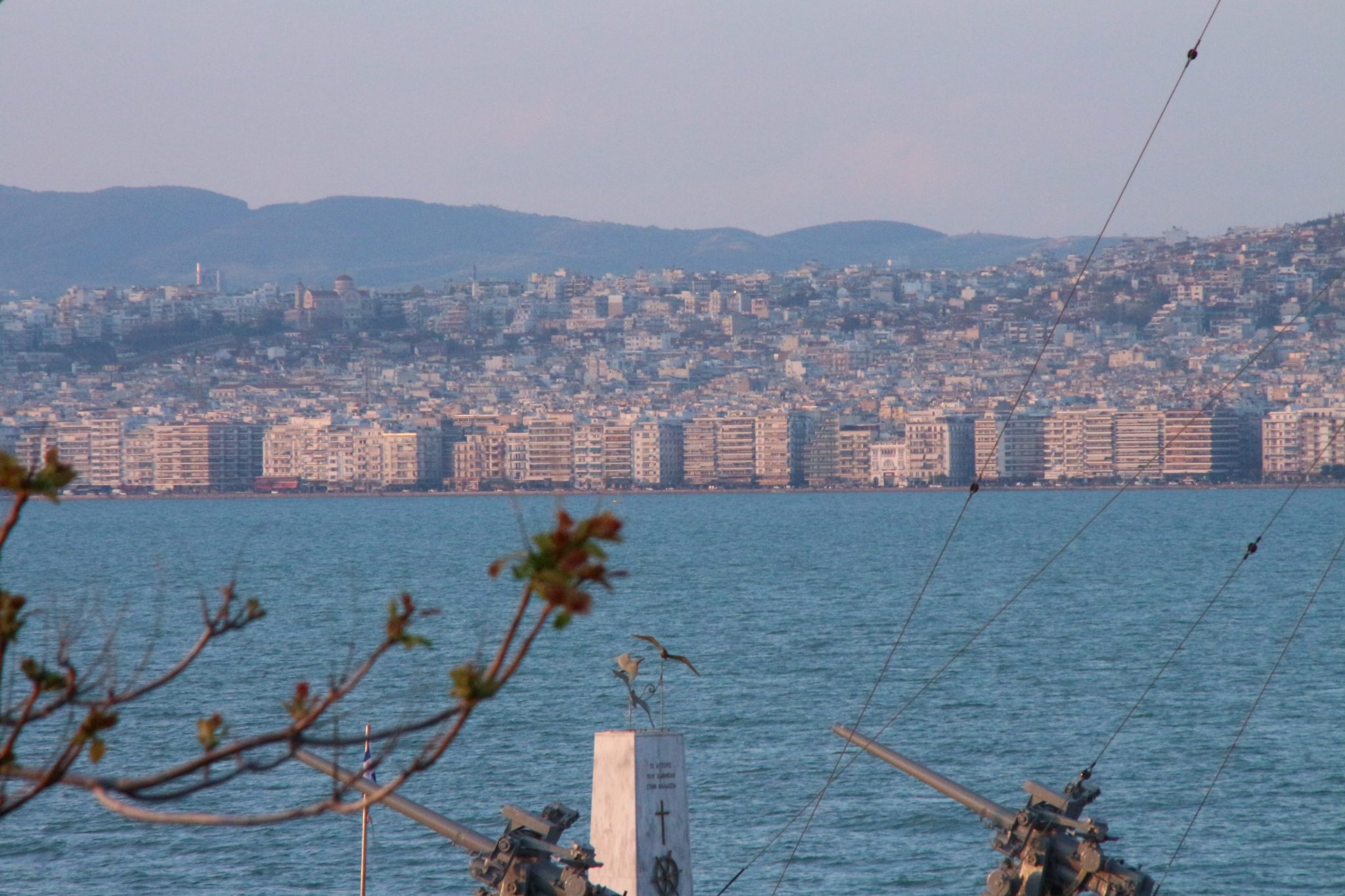
For many, Thessaloniki's market is the best in Greece! The cosmopolitan air of Europe, the Balkans, and the distant East combine in a unique mosaic, where everyone can literally find everything at prices scandalously lower than those in Athens.
In Thessaloniki, however, prices function geographically: from the waterfront towards the Castles and similarly from the White Tower towards the port, prices decrease.
The entire centre of Thessaloniki buzzes with life and shops, but the most 'hot' in terms of prices and class is Proxenou Koromila Street – Thessaloniki's... Via dei Condotti – with the trendiest shops and most interesting offerings.
For those who prefer the convenience of a large shopping centre, Mediterranean Cosmos (11 km National Road Thessaloniki-Moudania), now a landmark for Northern Greece's retail scene with its numerous shops, restaurants, cafes, and cinemas, is a comfortable and impressive space for the whole family with a wide range of retail stores.
For unique pieces and antiques, visit Myro Antiques House (P. Mela 46, N. Foka 8), and for what many agree is the coolest bookstore in town, visit Bustart for art, design, photography, and fashion books (Grigoriou Palamas 21).
[ Find discounted hotels in Thessaloniki HERE! ]
Journeys through time
Thessaloniki is a city you must walk to truly know. Locals have favourite routes they've walked hundreds of times and, of course, do so at every opportunity.
Walk from Kamara to Kemal Atatürk's house, which houses the museum of the same name and the Turkish consulate. Cross the glittering Aristotelous Square and emerge into the much-sung-about Ladadika. Wander through the food arcades of Modiano, Kapani, and Vlali, as well as the streets of the bustling commercial centre where you can do your shopping at good prices.
Enjoy your coffee on Nikis Avenue with a view of the city's port. Visit the ouzeries in Athonos Square and the super-picturesque Bit Bazaar, where even today you will find many of the city's antique shops.
New Waterfront
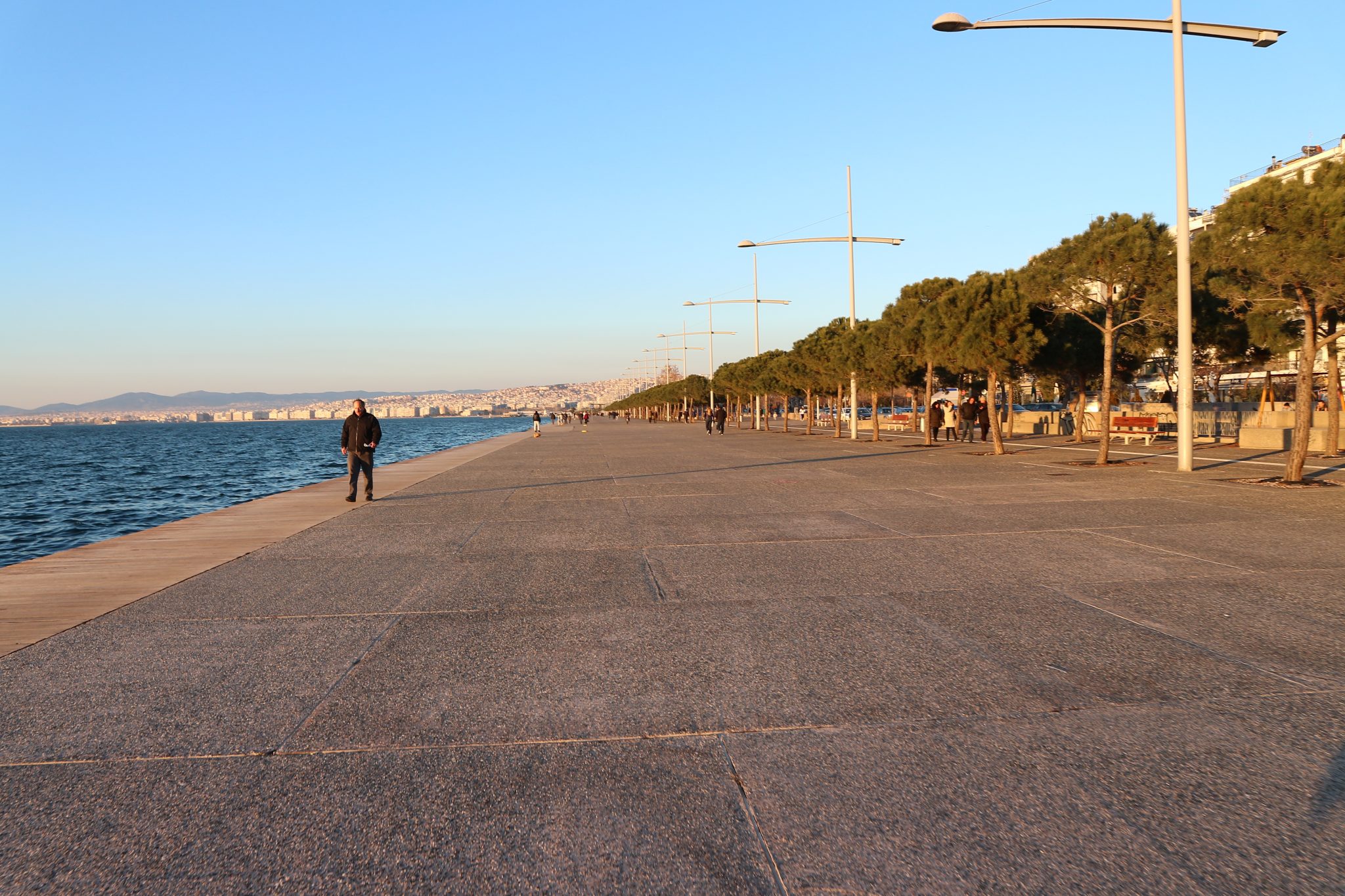
The city's most charming feature, its romantic proximity to the sea, is now best showcased on the New Waterfront. Thanks to regeneration projects, a unified linear pathway along the open sea horizon has been created, extending from the White Tower to the Concert Hall.
A model development of a coastal park that will develop through a series of 16 'rooms', thematic recreational areas, although currently only five are ready.
The 'Garden of Music', next to the Concert Hall, consists of greenery and a small amphitheatre for musical events.
The 'Garden of Water' is a space where water is the dominant element organising its overall atmosphere, combining a linear water surface and a water wall.
The 'Garden of Memory' includes 24 large flowerbeds planted with aromatic plants from the East.
The 'Garden of Roses' is an enclosed garden filled with colourful roses, reminiscent of the walled courtyards of old mansions and demarcated on all sides by a externally enclosed pergola, while the 'Garden of Sound' is entirely planted with tall trees and reeds.
A Stroll in the Upper Town
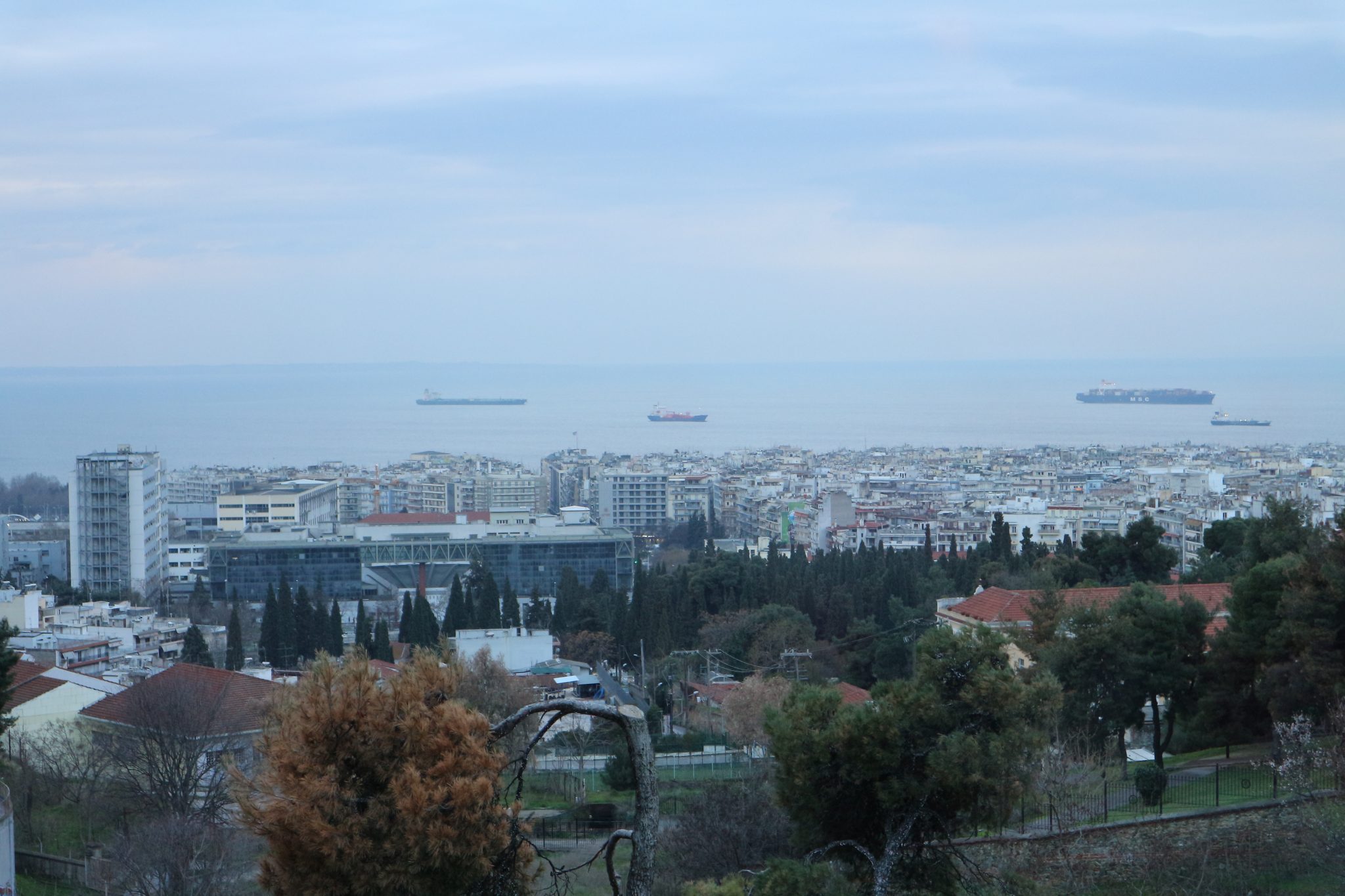
A few uphill climbs, perhaps some tiring stairs, and you will see Thessaloniki of another era unfolding before your eyes. Ambitiously spread out high towards the Castles, the Upper Town, with its distinctly traditional character, its own microclimate, and dense network of narrow streets, offers the wanderer hidden squares with traditional fountains, plane trees, and cafes with a special atmosphere.
Here you will find the Castles, parts of the city's fortifications dating back to its foundation. The highest part of Thessaloniki housed the powerful Acropolis in ancient times, while at its summit, the last and strongest defensive fort was created, with imposing walls and seven towers – the Eptapyrgio.
Of these, the middle entrance tower is a work by the Turks from 1431 – also known as Yedi Kule – which gave its name to the entire fortress complex (in Turkish, 'yedi' is the number seven and 'kule' is tower). The Eptapyrgio was used as a prison until 1989. In recent years, many repairs and restorations have been carried out at the fortress, and spaces for museums and cultural events are being created.
Explore Thessaloniki with a tour
Do you want to see Thessaloniki's most beautiful and interesting sights but don't know where to start? The Thessaloniki Urban Transport Organisation solves the problem with the launch of its new Cultural Line No. 50, welcoming passengers on the route "History of Our City", with stops at numerous monuments that mark its centuries-old history from antiquity to the present day.
The bus stands out with its colourful artistic exterior, while special signage and brochures with the route map and points of interest have been placed at its stops. The ticket is valid for 24 hours, and there is an attendant on board to provide any information you may need. The cultural line starts and ends at the White Tower.
Access and Accommodation in Thessaloniki
You can reach Thessaloniki in various ways, depending on where you're coming from.
From Athens, the easiest way is by plane – flights between Thessaloniki and Athens are particularly affordable, especially if booked a few months in advance.
Airlines operating the Athens-Thessaloniki route are Olympic Air (via Aegean) and Ellinair.
Through Travelo, you can find cheap flights and enjoy your trip to the co-capital!
Another way to get to Thessaloniki is by road. If you're coming from Athens, you'll head north on the National Road for approximately 500 kilometres.
From Ioannina or Alexandroupoli, you can reach Thessaloniki via the extensions of the Egnatia Odos motorway.
Finally, you can also reach Thessaloniki by train – see detailed timetables and ticket prices on the OSE website.
For your accommodation, Thessaloniki offers endless options for hotels, rooms, boutique hotels, and B&Bs.
You can view all available accommodations HERE with a discount!

Η συντακτική ομάδα
Travelo Team
Συντακτική ομάδα του Travelo.gr
Πολυταξιδεμένη συντακτική ομάδα με πάνω από 15 χρόνια στον ταξιδιωτικό δημοσιογραφικό χώρο και περισσότερους από 45 προορισμούς σε Ελλάδα και Ευρώπη. Έχουμε διανυκτερεύσει σε εκατοντάδες καταλύματα — από μικρά οικογενειακά ξενοδοχεία και παραδοσιακούς ξενώνες μέχρι resorts 5 αστέρων — και δοκιμάζουμε προσωπικά περιοχές, μεταφορές και υπηρεσίες πριν προτείνει κάτι.
- 45+ προορισμοί επί τόπου
- 500+ καταλύματα σε αξιολόγηση
- 15 χρόνια ταξιδιωτικής αρθρογραφίας
Πώς δουλεύουμε: κάθε οδηγός βασίζεται σε επιτόπια εμπειρία, διασταύρωση αξιολογήσεων επισκεπτών και έλεγχο διαθεσιμότητας/τοποθεσίας κάθε καταλύματος. Ορισμένοι σύνδεσμοι είναι συνεργατικοί (affiliate) — αν κάνετε κράτηση μέσω αυτών, στηρίζετε το Travelo.gr χωρίς καμία επιπλέον χρέωση για εσάς, και δεν επηρεάζουν τις προτάσεις μας. Τελευταία ενημέρωση οδηγού: 22 Σεπτεμβρίου 2026.
Πού να μείνω — Επίσης