What Kastoria is famous for
Kastoria, this picturesque town adorning northern Greece, is a magical destination worth discovering. With a remarkable history and an atmosphere that combines tradition with modern life, Kastoria is famed for many reasons that make it unique. One of the first things that will impress you is the lake…
Από Travelo Team
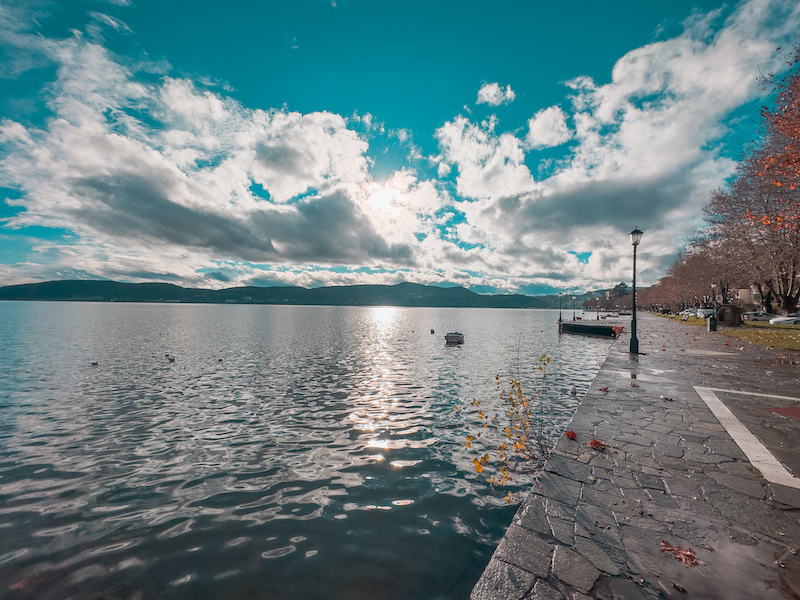
Kastoria, this picturesque town adorning northern Greece, is a magical destination worth discovering. With a remarkable history and an atmosphere that combines tradition with modern life, Kastoria is famed for many reasons that make it unique.
One of the first things that will impress you is Lake Kastoria, a natural treasure surrounded by beautiful mountains and rich flora. The lake is known for its tranquil waters, its unparalleled natural richness, and the abundance of birds it hosts during winter. It is an ideal place to enjoy the peace of nature and discover its beauty up close.
Beyond its nature, Kastoria is also known for its rich history. The city reflects its wealth and glory through the architecture of its traditional buildings and the monuments that attest to its cultural heritage.
It is also known for its rich gastronomy, with traditional flavours and local products that will delight you.
In this article, we will explore everything Kastoria is famous for, from its impressive nature and rich history to its delectable gastronomic delights. Prepare to experience the magic of this wonderful destination.
# Lake Orestiada
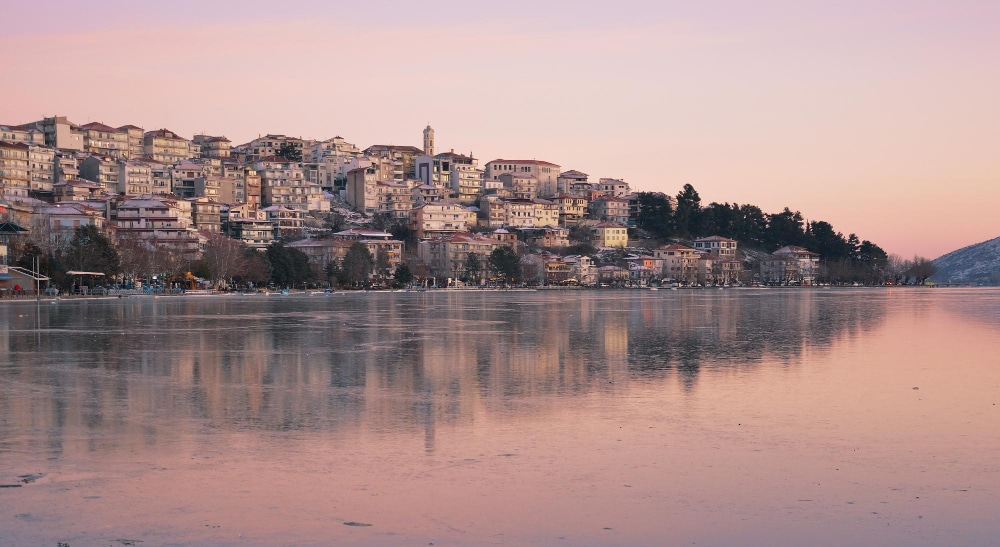
Undoubtedly, the number one highlight of the city is the lake itself. The entire area gives you the feeling of an island, but without the presence of tourists! It is full of life, birds, greenery, and a relaxing atmosphere. Do not hesitate to stroll around the lake and admire the ducks and geese swimming nonchalantly or taking their own walk along its perimeter.
If you visit Kastoria in summer, head to the part of the lake where many locals swim and, if you wish, take a dip yourself.
Another way to experience the romance of Kastoria's lakeside landscape is simply to walk around the water.
# The districts of Doltso and Apozari
One of Kastoria's distinctive features is its suburban districts. In the past, the city was shaped by various neighbourhoods that hosted different religious, ethnic, and social groups.
Historic Doltso (on the southeastern side of the peninsula) and Apozari (on the northeastern side of the peninsula) are two of Kastoria's oldest parts, formed when locals were expelled from the city. Here, you can still find beautiful buildings with unique architecture. Many of the buildings date back to the 17th century, when Kastoria was conquered by the Ottomans. As Jewish, Turkish, and Bulgarian families came to settle, they built residences (and churches) that incorporated different architectural styles.
# Ottoman Architecture
Kastoria's elegant mansion houses are found in every neighbourhood and are among the most impressive features of the urban landscape. Dating back to the 17th century, they were built by wealthy merchants and artisans connected with Kastoria's fur trade.
The most significant mansions have brown signs indicating their names. Some are dilapidated, while others have been restored.
Some of the most well-known include: The Papaterpos Mansion, the Skoutaris Mansion, and those of Mitousis, Sapountzis, and Athanasios Christopoulos.
# The Tsiatsipas Mansion
The Tsiatsipas Mansion, located on the waterfront in Apozari, is the largest (and one of the oldest) Ottoman-style houses in Kastoria. A few years ago, it was restored and opened to the public as a museum. This is a fantastic opportunity to see what mansions would have looked like in their heyday. It is a must-see attraction in Kastoria. It was built in the mid-18th century for a wealthy furrier. He bequeathed the house to his three daughters, but when they left Greece, two different families settled in the three-storey building. They preserved the paintings and wood carvings on the top floor, which you can admire today. The first two levels of the house display a collection of miniature models of various residences, churches, and city landmarks.
# The Byzantine Churches
For a town of its size, Kastoria has many churches. Some are prominently located, such as the 11th-century Church of Panagia Koumbelidiki, but many others are hidden down side streets. This was done so that the churches were partly concealed and could withstand the Ottoman occupation of Kastoria.
Like the mansions, Kastoria's churches were a display of wealth and prestige. Although humble externally, they have rich interiors with frescoes. Many are dedicated to Saint Nicholas, the patron saint of sailors and merchants, highlighting the importance of Lake Orestiada to the city's economy.
The oldest churches in Kastoria date back to the 10th century. Of the 72 Byzantine and medieval churches built in Kastoria, 54 still exist today.
# The 11th-century Church of Panagia Koumbelidiki
One of Kastoria's most significant religious monuments, it is a symbol of the Macedonian region. The church is located among the remnants of the old city walls and was originally built as a place of prayer for the soldiers guarding the acropolis. Inside, exceptionally rare frescoes depict the Holy Trinity.
# The Byzantine Museum
To see a selection of icons and wooden altarpieces collected from Kastoria's churches, visit the Byzantine Museum. It houses an incredible collection of ecclesiastical objects that are even more impressive when viewed side-by-side and in their entirety. Most items date from the 12th, 13th, and 14th centuries and have been skillfully restored. The museum also features some newer works signed by Onufri, the famous Albanian icon painter who has his own museum in Berat. The Byzantine Museum of Kastoria is open from 8:30 a.m. to 3:30 p.m., Wednesday to Monday (closed Tuesdays). Admission costs 4 euros per person.
# Cycling around the lake
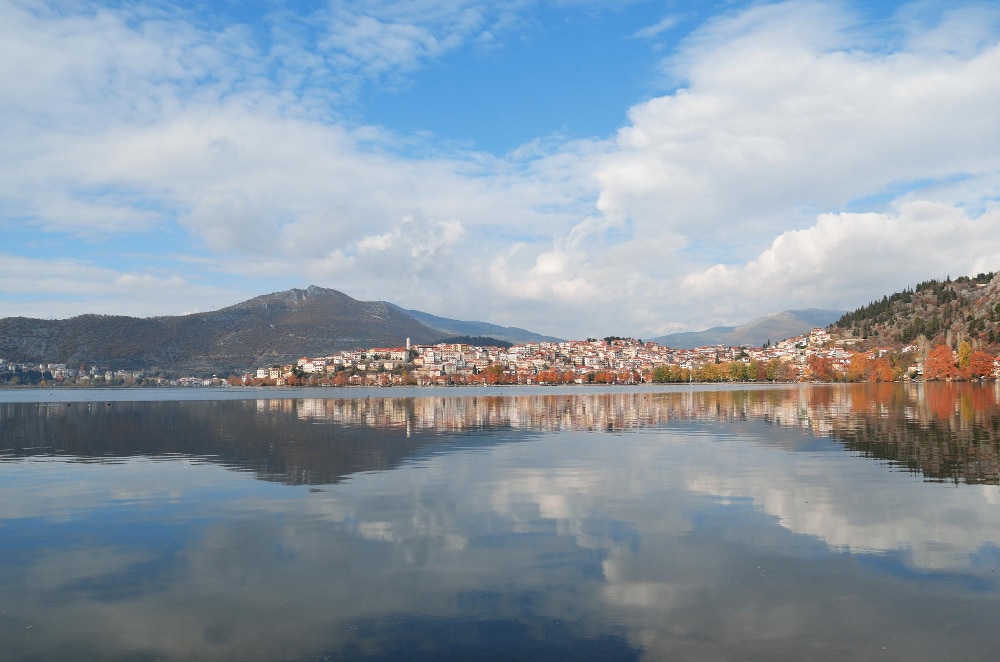
Kastoria's gems are its mansions and churches, but let's not forget that this city boasts an exquisite natural environment. The cluster of red-roofed houses on the cape is simply a bridge between the new part of the city on the mainland and an expansive green peninsula stretching into the lake. Apart from a few monasteries and various restaurants, the peninsula is mostly wild and wooded. Hiking trails around the lake lead you to various viewpoints, and you can also complete the 9 km route around the lake on foot or by bicycle. There are several points of interest to see along the way, such as the Dragon's Cave and the Holy Monastery of Panagia Mavriotissa, a magnificent lakeside complex with icons inside and a 900-year-old plane tree. Also, observe the war shelters.
# The new town of Kastoria
The newer part of Kastoria starts from the cape and extends along the southern side of the lake. It is busier and has a slightly different atmosphere from the old districts, with a more modern architectural style.
# The Furriers' Shops
There is no doubt that the fur trade has been vital in shaping Kastoria into what it is today. In the 14th century, legendary furriers supplied furs to Byzantine courtiers. Generations later, their descendants mass-settled in New York and formed the foundations of the fur industry there. More than 300 fur traders still operate in and around Kastoria. As you approach the city, you will see large factories on the edge of the motorway.
In addition to factories that produce furs on an industrial scale, there are also family businesses that do everything by hand.
# The Dragon's Cave
Located on the lakeside road in the northern part of the city, it was originally discovered in the 1940s. According to local myths, it was a gold mine guarded by a dragon. Today it extends over 300 metres and contains significant geological formations, such as stalactites and stalagmites, seven small underground lakes, bridges, and tunnels.
# The Monastery of Panagia Mavriotissa
Located approximately 4 km southeast of Kastoria near the lake shore, surrounded by ancient plane trees. It was built in the 11th century during the reign of Byzantine Emperor Alexios Komnenos, after he recaptured the area from the Normans. The church is known for its decoration with frescoes on both sides of the walls dating from the 12th and 13th centuries. In the 16th century, a chapel dedicated to Saint John the Theologian was added to the church's south wall.
# The Apozari District
Situated on the northern lakeside of Kastoria, Apozari showcases all the traditional architectural and cultural elements of the Byzantine periods. The restored mansions of Sapountzis and Tsiatsipas are indicative of 18th-century history, while the 14th-century Church of Saint Nicholas Tzotza and the 17th-century Church of the Presentation of the Theotokos Tsiatsipa are fine examples of Kastoria's economic and cultural prosperity during the Byzantine and post-Byzantine eras.
# The Kastoria Aquarium
The Kastoria Aquarium, named "Ecumenical Patriarch Bartholomew", opened its doors to the public after almost two years of preparation on 3 July 2012, following the inauguration ceremony performed by Ecumenical Patriarch Bartholomew during his official visit to Western Macedonia. It is the first freshwater aquarium in the Balkans, hosting endemic and indigenous fish species from Greece's rivers and lakes, as well as a large number of non-native species living in Greek lakes. The aquarium consists of 49 tanks with capacities ranging from 1 to 1.6 cubic metres, a simulation of Lake Kastoria, and a simulation of the Aliakmon River. The majority of the aquarium's fish were caught with the help of local professional and amateur fishermen, while endemic species were caught with the crucial assistance of the Institute of Inland Waters of HCMR using scientific methodology and methods.
# The lakeside settlement of Dispilio
The Lakeside Prehistoric Settlement of Dispilio is located near the city of Kastoria on the southern shore of Lake Orestiada. It was discovered in 1932, when the wooden piles of the extensive lakeside settlement were uncovered. Ongoing archaeological research has unearthed, along with the wooden structural elements, thousands of Neolithic artifacts, such as figurines, stone jewellery, tools, jars, and pottery.
# The Archaeological Museum in Argos Orestiko
The Archaeological Museum is located in Argos Orestiko, which in antiquity belonged to ancient Orestis, an important region of Upper Macedonia. The museum's permanent exhibitions include a variety of archaeological artifacts, such as marble and stone reliefs, figurines, jewellery, weapons, etc., dating from 1100 BC to 300 AD.
# Saint George in Omorfokklisia
Located in the mountainous village of Omorfokklisia, in the southwestern part of the Municipality of Kastoria. The main church of Saint George was built in the early 13th century, serving as part of a monastery, while the narthex, bell tower, and chapels were added a few years later. It is known for its frescoes and icons dating from the 12th and 13th centuries, as well as for the unique, large-sized, wooden relief of Saint George from the 13th century, placed in the southern apse of the church.
# The Tsouka Monastery near Agia Anna
Agia Anna is a village near Nestorio in the regional unit of Kastoria, located on the northeastern slopes of Mount Grammos. Its proximity to the Aliakmon River and a waterfall adds natural beauty to the area. The Tsouka Monastery, situated above the massive waterfalls, near the cliff and among rocks, was built in the 13th century according to the dedicatory inscription. The monastery was dedicated to the Archangels Michael and Gabriel.
# The Abraham Vineyards
Kostas Kapourgas and Anestis Chaitidis are childhood friends. Together they created one of Europe's most mountainous vineyards. Their aim is to produce low-intervention wines, resulting in the ultimate expression of the mountainous Terroir. A beautiful location, and also ideal for producing wines with cool climate characteristics. In the middle of a natural high-altitude triangle formed by three mountains: Grammos, Verno, and Askio, all over 2000 metres above sea level, winter temperatures often reach -20°C. With day/night temperature differences exceeding 20°C from spring until harvest, particularly expressive wines are created.
# The Kousioumpli Bridge
According to oral testimonies, the bridge was built in the late 18th or early 19th century. Its total length is 33 metres, its width is 2.4, its arch span is 14, and its height is 8 metres. On the keystone, the central stone of the arch that holds the bridge up, there is a carved head.
# Drakolimni (Dragon Lake)
Drakolimni is located approximately 7 km north of Kastoria and belongs to the village of Dolichi. It is one of many lakes in the area, such as Lake Orestiada and Lake Kastoria. It is a very small lake, covering about 18 acres. Its name comes from mythology, as it is said that the dragon that tried to flood the city of Kastoria with its water lived in this lake. Drakolimni constitutes a natural ecosystem rich in fauna and flora. It is known for the abundance of birds that visit it during winter, as well as for the presence of various fish species. Visitors can enjoy fishing or simply relax watching the natural environment.
# The Ragoutsaria Festival
The "Ragoutsaria" custom is one of the most well-known and traditional carnival customs celebrated annually from 6 to 8 January in the city of Kastoria. It is a distinctive and impressive ritual where ancient Dionysian ceremonies are revived, aiming to make people forget the problems of the past year. Participants, known as "Ragoustarades," dress in traditional and eccentric costumes with bells, masks, and colourful outfits, parading through the city streets singing and dancing. The music includes traditional percussion and wind instruments, while the dances are enthusiastic and lively.
# Arcturos
Arcturos is an environmental organisation founded in 1992, aiming to protect wild fauna and the natural environment. Its establishment was prompted by the need to find a solution to the problem of captive bears and wolves. You can visit Arcturos and take a walk in the forest.
# Gastronomy of Kastoria
Kastoria is famous for its very tasty Batzos cheese, which is eaten grilled, its Makalo meatballs that contain no meat, and its lake fish such as carp. Kastoria is also known for the pulses it cultivates, especially its delicious and quick-cooking beans. Accompany your meals with local aromatic tsipouro or wine.
In the epilogue to this article about beautiful Kastoria, we can conclude that this city is famous for its rich heritage, its stunning natural world, and the authentic Greek tradition that continues to thrive and be revived in its streets and in the hearts of its people.
From the picturesque lakes and impressive mountains surrounding the area to its rich gastronomy and traditional customs, Kastoria offers a unique opportunity to discover the rich and multifaceted cultural heritage of northern Greece. It is a city that stands out for its beauty and its essential significance in the country's history and culture.
Visit Kastoria and discover the secret corners and treasures it hides, as you explore the incredible beauty and culture that make it unique. In every corner, Kastoria reminds you that nature, tradition, and hospitality are treasures that we must preserve and share, offering unforgettable impressions to every visitor. Have a good trip and happy exploring!

Η συντακτική ομάδα
Travelo Team
Συντακτική ομάδα του Travelo.gr
Πολυταξιδεμένη συντακτική ομάδα με πάνω από 15 χρόνια στον ταξιδιωτικό δημοσιογραφικό χώρο και περισσότερους από 45 προορισμούς σε Ελλάδα και Ευρώπη. Έχουμε διανυκτερεύσει σε εκατοντάδες καταλύματα — από μικρά οικογενειακά ξενοδοχεία και παραδοσιακούς ξενώνες μέχρι resorts 5 αστέρων — και δοκιμάζουμε προσωπικά περιοχές, μεταφορές και υπηρεσίες πριν προτείνει κάτι.
- 45+ προορισμοί επί τόπου
- 500+ καταλύματα σε αξιολόγηση
- 15 χρόνια ταξιδιωτικής αρθρογραφίας
Πώς δουλεύουμε: κάθε οδηγός βασίζεται σε επιτόπια εμπειρία, διασταύρωση αξιολογήσεων επισκεπτών και έλεγχο διαθεσιμότητας/τοποθεσίας κάθε καταλύματος. Ορισμένοι σύνδεσμοι είναι συνεργατικοί (affiliate) — αν κάνετε κράτηση μέσω αυτών, στηρίζετε το Travelo.gr χωρίς καμία επιπλέον χρέωση για εσάς, και δεν επηρεάζουν τις προτάσεις μας. Τελευταία ενημέρωση οδηγού: 22 Σεπτεμβρίου 2026.