Christmas in Belgrade: markets and a 3-day guide
Festive strolls along Knez Mihailova, warm rakija and dinners that last well into the night. A practical guide to Christmas in Belgrade, with sights, places to stay and a three-day itinerary.
Από Travelo Team
Why visit at Christmas
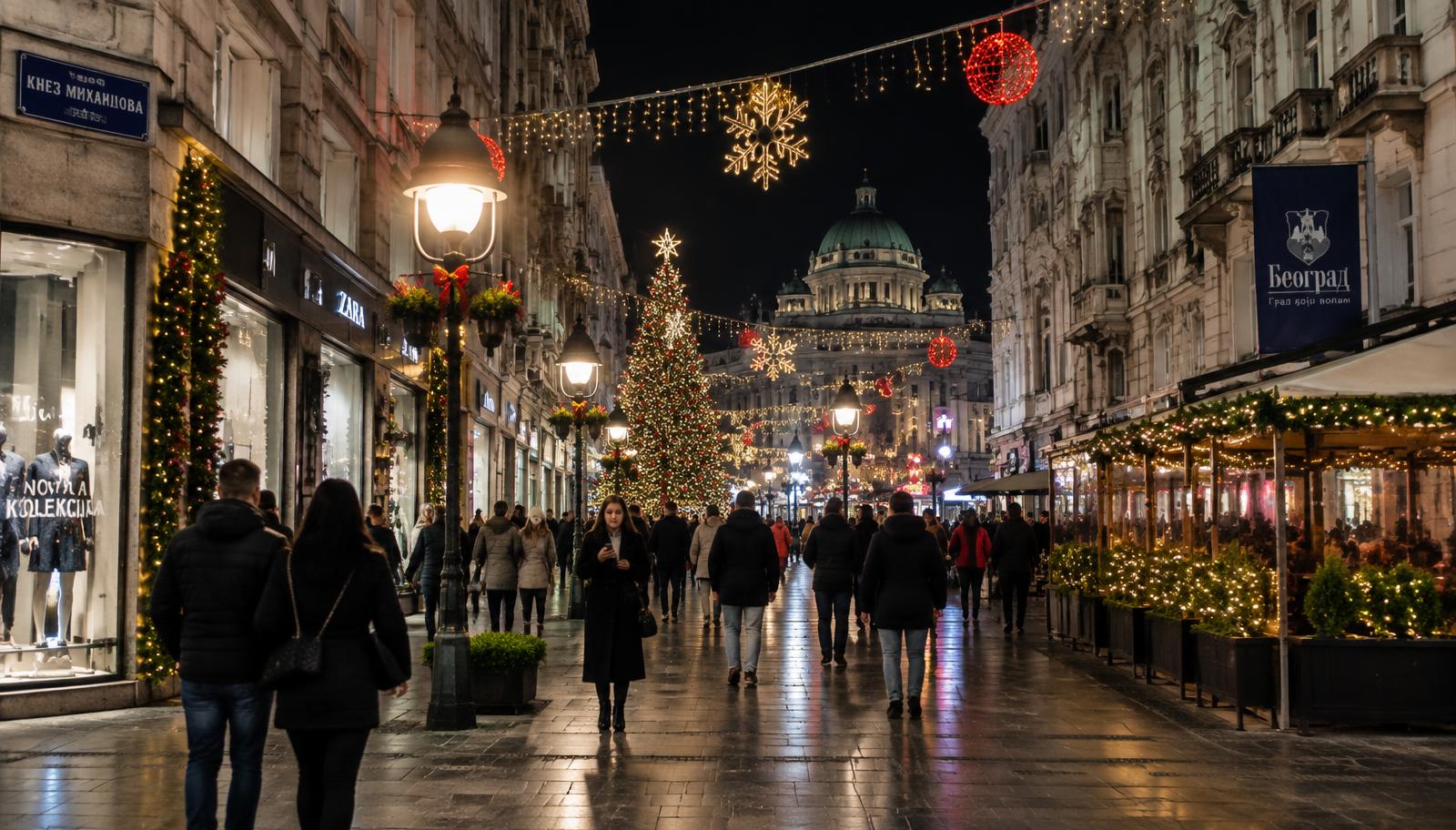
In December, Belgrade brings chilly riverbanks, bustling cafés and the smell of grilled meat drifting from the kafane, traditional Serbian taverns. Knez Mihailova is perfect for an afternoon stroll past illuminated shop windows, while a few streets away you can sit down for a meal without having to plan a whole evening out. This is a destination for those who want a festive city but are equally interested in history, music and good food.
The most important detail is the calendar. The Serbian Orthodox Church celebrates Christmas on 7 January, with Christmas Eve on 6 January. On 25 December, the city generally follows something closer to its everyday routine, although the decorations are already up. New Year is a focal point of the festive season, followed by the so-called Serbian New Year on the night of 13 to 14 January.
Do not expect a replica of Vienna with Christmas stalls in every square, though. Belgrade's strength lies in its combination of nightlife, culture and relatively affordable food. If you are comparing destinations mainly for their decorations and markets, take a look at Europe's most Christmassy cities, keeping this difference in character in mind.
Getting there
There are direct flights from Athens to Belgrade Nikola Tesla Airport, with an estimated flight time of around 1 hour 40 minutes to 1 hour 55 minutes. From Thessaloniki, direct flights take around 1 hour 10 minutes to 1 hour 25 minutes. Frequencies and operating days vary by season, so check the winter timetable before booking accommodation.
The airport is about 18 kilometres west of the centre. Allow around 25 to 45 minutes by taxi or pre-booked transfer, and longer at peak times. For taxis, follow the airport's official procedure and confirm the fare before setting off. There are also bus connections, including route 72 to Zeleni Venac and the A1 minibus to Slavija. Check their operating details and conditions of travel before arrival.
In the historic centre, most journeys are easily made on foot. For the Church of Saint Sava, New Belgrade or Zemun, you will need public transport or a taxi. Belgrade's regular urban public transport has been free since 2025, but do not assume this automatically covers every special or airport service. Routes may change because of roadworks, particularly near the bridges.
Christmas events and markets
The festive season usually runs from December into the first few weeks of January. Venues and dates are not necessarily the same every year. For Christmas 2026, look for the final announcements from the Tourist Organisation of Belgrade and the event organisers: older photographs or posters do not confirm this year's programme.
Winter Fairytale at Sava Park
Zimska bajka, also known as Winter Fairytale, has been held at Sava Park in the Belgrade Waterfront area. This festive event features decorations, food outlets, music and family activities. In previous years, it ran roughly from early December to early January. Before adding it to your itinerary, check whether it is returning this year, the exact dates and which activities are included.
New Year's fair at Belgrade Fair
Novogodišnji vašar, the New Year's fair at the Belgrade Fair exhibition complex, has a long history in the city. Mainly associated with December, it combines shopping stalls, games and entertainment. It is not a German-style market with wooden chalets, but a different, more family-focused experience. Opening days, the halls used and the attractions vary, so check this year's announcement.
City-centre walks and New Year
Knez Mihailova and Republic Square are reliable choices for a festive stroll. Any outdoor stalls or smaller events depend on the annual programme and should not be treated as permanent markets. On 1 January, the charity-focused Ulica otvorenog srca, or 'Street of the Open Heart', traditionally takes place around Svetogorska. Check this year's route and times.
For New Year's Eve, do not rely on old announcements about concerts or fireworks. Book a table once you know what the package includes and whether a deposit is required. If organised markets are the main reason for your trip, the guide to famous Christmas markets will help you set realistic expectations.
What to see and do
Kalemegdan and the old town
Start at Republic Square, with its statue of Prince Mihailo and the National Museum, and follow Knez Mihailova towards Kalemegdan. The pedestrianised street has shops, cafés and handsome façades worth a second look. From the fortress, views open out over the confluence of the Sava and Danube. Visit while it is still light and wear shoes with good grip, as the stones and steps become slippery in rain or icy weather.
Saint Sava and the Nikola Tesla Museum
The Church of Saint Sava in Vračar impresses with its scale and mosaics. It is an active place of worship, so visit respectfully, particularly around 6 and 7 January. The Nikola Tesla Museum on Krunska Street is smaller than many visitors imagine. Guided tours and demonstrations are an important part of the experience: check the available languages and admission arrangements in advance.
Dorćol and Skadarlija
Dorćol is ideal for leisurely walks, coffee and browsing in small shops. Nearby Skadarlija is known for its traditional taverns and live music. It is touristy, but remains a good choice for an evening of Serbian food. Ask whether there is a minimum spend, a special festive menu or an extra charge for music, particularly on New Year's Eve.
Zemun and the riverbanks
Zemun looks quite different from the centre, with lower buildings, cobbled streets and Austro-Hungarian influences. Walk along the waterfront and head up towards Gardoš Tower, weather permitting. Allow roughly half a day, including travel and a meal. In strong winds or fog, spend more time at the National Museum rather than feeling obliged to walk by the water.
What to eat and drink
Serbian cuisine suits a winter trip: warming dishes, grilled meats and portions that are often generous enough to share. Order gradually, as bread, salads and side dishes can easily fill the table before the mains arrive. As a rough guide, allow around 900 to 1,800 Serbian dinars per person for a simple meal, while a fuller dinner with a drink may cost around 2,000 to 4,000 dinars, depending on the venue.
- Ćevapi: small grilled minced-meat sausages, often served with bread and raw onion.
- Pljeskavica: a large burger-style meat patty, with various versions and accompaniments.
- Sarma: stuffed pickled cabbage rolls, especially good in cold weather.
- Kajmak and ajvar: a rich dairy spread and a pepper spread, respectively.
- Gibanica: cheese pie, a good choice for breakfast or a quick bite.
- Prebranac: baked beans, a useful meat-free option once you have checked how they are prepared.
For breakfast, try burek from a bakery with yoghurt. For something sweet, look for kremšnita or the famous Moskva šnit cake at the historic café in Hotel Moskva. Rakija comes in many varieties, with plum-based šljivovica among the most characteristic. In winter, you may also find warm rakija, known as kuvana rakija, as well as mulled wine. Cold weather does not reduce their alcohol content.
Before Orthodox Christmas, fasting dishes labelled posno become more common. This does not always mean vegan, as they may contain fish. If you have allergies or particular dietary requirements, explain exactly what you avoid. Also ask for a non-smoking area: smoking remains common in quite a few indoor dining venues.
3-day itinerary
Day 1
Devote your first day to the centre. Start with coffee near Republic Square, walk along Knez Mihailova and continue to Kalemegdan before dark. Have lunch in Dorćol and save the afternoon for the National Museum, if opening hours allow. Otherwise, return to the pedestrianised street for decorated shop windows and a hot drink. Book a table in Skadarlija for the evening, without adding any more journeys to the day.
Day 2
Visit Saint Sava in the morning, then stop for coffee in Vračar. Plan what comes next around your tour time at the Nikola Tesla Museum, not the other way round. After lunch, take a break at your hotel. In the late afternoon, head towards Belgrade Waterfront and, if it is running during your stay, Winter Fairytale at Sava Park. If not, opt for a short riverside walk and dinner in Savamala.
Day 3
Keep the morning for Zemun. Head up towards Gardoš, walk beside the Danube and stop for a meal before returning to the centre. If the wind is strong, swap this for a museum visit and a walk around Dorćol. Use your last few hours to buy ajvar, sweets or small gifts, bearing luggage restrictions on liquids in mind. For an afternoon flight, skip Zemun and leave plenty of time to reach the airport.
The itinerary keeps distances short and alternates outdoor stops with time indoors. If you are looking for a similar three-day break with more emphasis on organised markets, compare it with Christmas in Prague. For a combination of riverside walks and thermal baths, see the guide to Christmas in Budapest.
Where to stay
For a first visit, choose Stari Grad, near Knez Mihailova and Republic Square. You will be able to cover much of the itinerary on foot and return easily for a rest. Dorćol suits those who want cafés and restaurants nearby, but check noise levels on the particular street. Vračar offers more of a neighbourhood feel without being cut off from the sights.
Savamala is convenient for nightlife and access to the Sava, while New Belgrade has larger hotels and often easier parking, at the cost of more travelling. For families, location, heating and peace and quiet matter more than the view. The detailed guide to where to stay in Belgrade lets you compare areas before deciding.
- Hotel Moskva: Suits those looking for historic character and a central base on Terazije. Check availability on Booking
- Mama Shelter Belgrade: Suits travellers who prefer contemporary design and direct access to Knez Mihailova. Check availability on Booking
- Envoy Hotel: A good option for couples seeking a stylish, central base near the main pedestrianised street. Check availability on Booking
- Belgrade Art Hotel: Convenient for those who want to step straight out onto Knez Mihailova. Check availability on Booking
- Boutique Hotel Museum: Suits a short cultural break thanks to its location near Republic Square. Check availability on Booking
- Hotel Hyatt Regency Belgrade: An option for those who prefer a large hotel in New Belgrade rather than staying in the narrow streets of the centre. Check availability on Booking
- Radisson Collection Hotel, Old Mill Belgrade: Suits those who appreciate industrial architecture and do not mind being further from the main pedestrianised street. Check availability on Booking
- Jump Inn Hotel Belgrade: Offers a practical base in Savamala for walks towards the centre and the Sava. Check availability on Booking
- Hotel Constantine the Great: Suits those who want access to the Tašmajdan area and are not set on staying on the pedestrianised street. Check availability on Booking
- Villa Mystique: Suits those seeking a quieter base in the Dedinje area who are happy to travel into the centre. Check availability on Booking
Before paying, confirm the property's exact address and country on the booking platform, along with its cancellation policy and any additional charges. For New Year, also check for a possible minimum stay.
December weather
December is cold, with average daytime highs of around 5 to 7°C and night-time temperatures often close to freezing. There are milder days as well as frosty spells. Rain, fog and snow are all possible, but a snowy setting is not guaranteed. The strong wind known as the košava can make it feel noticeably colder, especially near the rivers.
Bring a warm jacket, hat, gloves and waterproof shoes with non-slip soles. Layers help, as indoor spaces are often very warm. It gets dark early, at around four in the afternoon, so put the fortress and Zemun first on your itinerary. If you would like to unwind at your hotel after sightseeing, take a look at these hotels with heated pools for Christmas, checking facilities and access times separately.
Practical tips
- Currency: Serbia uses the Serbian dinar, RSD, not the euro; keep some cash for small purchases and choose to pay in the local currency when using a card.
- Documents: Greek citizens do not need a visa for a short tourist visit, but should confirm current entry requirements and whether their particular travel document is accepted.
- Mobile phones: Serbia is not automatically covered by surcharge-free European roaming; check your package or choose a local SIM or eSIM.
- Time: Belgrade is one hour behind Greece in winter.
- Public holidays: confirm museum and restaurant opening hours for New Year and 7 January rather than assuming they will be open.
- Safety: keep an eye on your belongings in busy places, use official taxis and avoid gatherings that disrupt travel.
Air pollution can be high in winter, particularly on still days. If you are travelling with children or have a respiratory condition, check air quality and adjust outdoor activities accordingly. Travel insurance with clear cover for medical expenses is also useful.
Frequently asked questions
When is Christmas celebrated in Belgrade?
Orthodox Christmas is celebrated on 7 January. However, the city puts up its decorations earlier, and the festive atmosphere is already there in December, with a strong focus on New Year.
Is it worth visiting on 24 and 25 December?
Yes, for walks, food and the decorated city centre. These are simply not the main local Christmas holidays, so do not expect the same festive programme as in Central European cities.
Are there Christmas markets?
There are seasonal festive events, such as Winter Fairytale when it takes place, and the New Year's fair at Belgrade Fair. Their scale and attractions differ from traditional German markets, and you will need to check dates.
Are three days enough for a first visit?
Three full days are enough for the historic centre, Saint Sava, one or two museums and Zemun. If those days also include your flights, cut back on the more distant stops.
Is it suitable for families with children?
Yes, with a central hotel, frequent breaks and a flexible itinerary. The cold, slippery cobbles and smoking in some restaurants need more attention than the distances themselves.
Do we need to hire a car?
No, not for a three-day city break. The centre is walkable, while public transport and taxis cover longer distances. A car adds parking hassles and delays without offering any real benefit for this itinerary.
Σύγκριση
Τα καταλύματα με μια ματιά
Τύπος καταλύματος
Τα φίλτρα σας αποθηκεύονται αυτόματα για αυτόν τον προορισμό.
| Κατάλυμα | Περιοχή | Τύπος | Τιμή από | Βαθμολογία | Λίστα |
|---|---|---|---|---|---|
| Hotel Moskva | Where to stay | Ξενοδοχείο | — | — | |
| Mama Shelter Belgrade | Where to stay | Ξενοδοχείο | — | — | |
| Envoy Hotel | Where to stay | Ξενοδοχείο | — | — | |
| Belgrade Art Hotel | Where to stay | Ξενοδοχείο | — | — | |
| Boutique Hotel Museum | Where to stay | Boutique | — | — | |
| Hotel Hyatt Regency Belgrade | Where to stay | Ξενοδοχείο | — | — | |
| Radisson Collection Hotel, Old Mill Belgrade | Where to stay | Ξενοδοχείο | — | — | |
| Jump Inn Hotel Belgrade | Where to stay | Ξενοδοχείο | — | — | |
| Hotel Constantine the Great | Where to stay | Ξενοδοχείο | — | — | |
| Villa Mystique | Where to stay | Βίλα | — | — |
Οι τιμές είναι ενδεικτικές, όπως αναφέρονται στο άρθρο, και αλλάζουν ανά εποχή. Η λίστα σας αποθηκεύεται τοπικά στη συσκευή σας. Οι σύνδεσμοι είναι affiliate links, χωρίς επιπλέον χρέωση για εσάς.

Η συντακτική ομάδα
Travelo Team
Συντακτική ομάδα του Travelo.gr
Πολυταξιδεμένη συντακτική ομάδα με πάνω από 15 χρόνια στον ταξιδιωτικό δημοσιογραφικό χώρο και περισσότερους από 45 προορισμούς σε Ελλάδα και Ευρώπη. Έχουμε διανυκτερεύσει σε εκατοντάδες καταλύματα — από μικρά οικογενειακά ξενοδοχεία και παραδοσιακούς ξενώνες μέχρι resorts 5 αστέρων — και δοκιμάζουμε προσωπικά περιοχές, μεταφορές και υπηρεσίες πριν προτείνει κάτι.
- 45+ προορισμοί επί τόπου
- 500+ καταλύματα σε αξιολόγηση
- 15 χρόνια ταξιδιωτικής αρθρογραφίας
Πώς δουλεύουμε: κάθε οδηγός βασίζεται σε επιτόπια εμπειρία, διασταύρωση αξιολογήσεων επισκεπτών και έλεγχο διαθεσιμότητας/τοποθεσίας κάθε καταλύματος. Ορισμένοι σύνδεσμοι είναι συνεργατικοί (affiliate) — αν κάνετε κράτηση μέσω αυτών, στηρίζετε το Travelo.gr χωρίς καμία επιπλέον χρέωση για εσάς, και δεν επηρεάζουν τις προτάσεις μας. Τελευταία ενημέρωση οδηγού: 3 Σεπτεμβρίου 2026.