Car Rental in Crete: The Complete Guide for Your Journeys
Discover everything you need to know about car rental in Crete. Prices, insurance, pick-up points, and the most beautiful routes to explore Greece's largest island.
Από Travelo Team
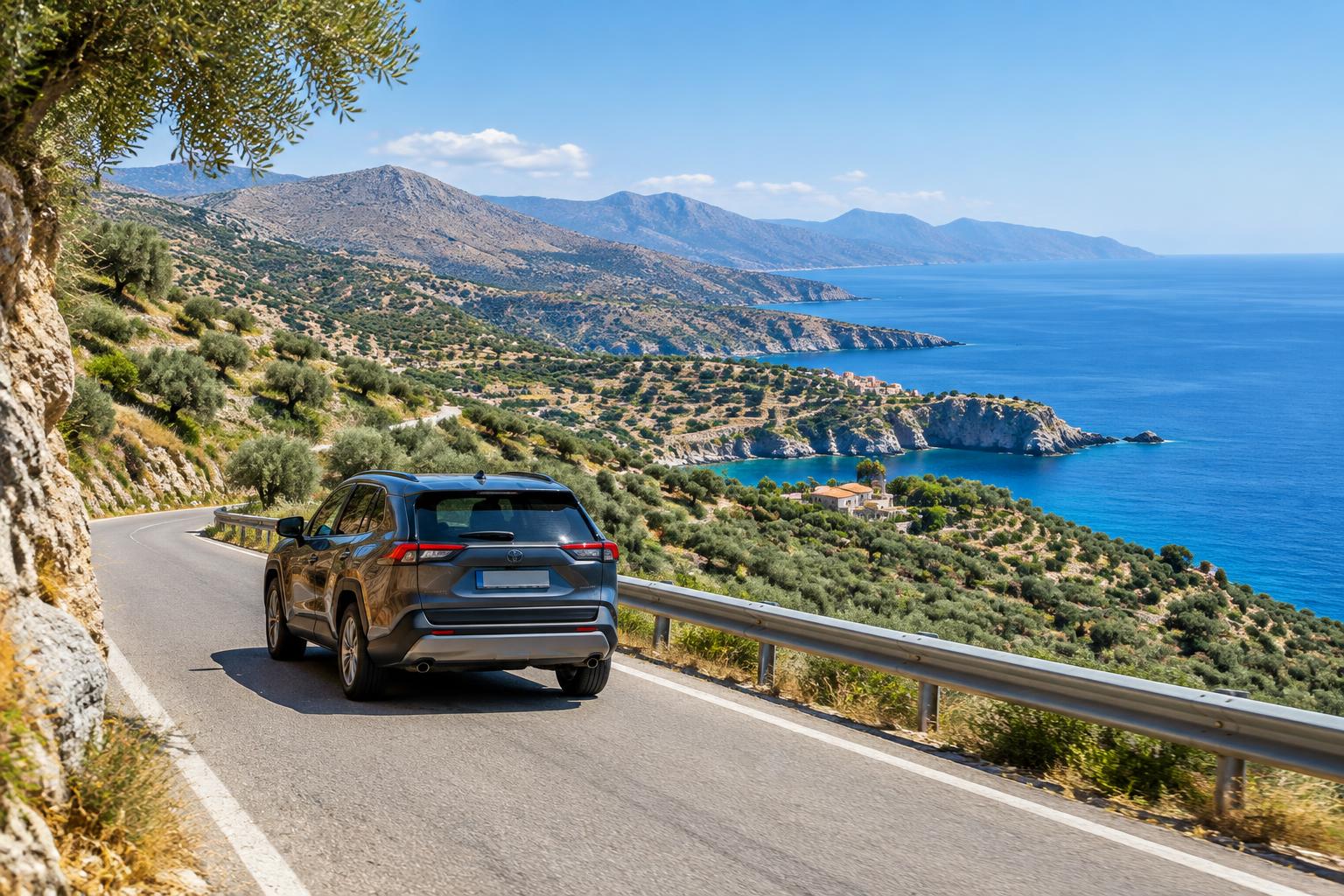
Crete is a place you cannot truly get to know unless you have your own freedom of movement. As Greece's largest island, it offers a huge variety of landscapes, from the exotic beaches of Chania to the wild mountains of Rethymno and the archaeological treasures of Heraklion. Car rental in Crete is not just a convenience, but the essential prerequisite for experiencing the island to the fullest, as distances are long and hidden gems are often far from the main bus routes.
You can pick up your vehicle from dozens of locations, with Heraklion and Chania airports being the most popular choices for air travellers. Additionally, the island's major ports offer direct access to rental offices, allowing you to start your adventure as soon as you disembark from the ferry. There are plenty of options for every type of traveller, from economical city cars to sturdy SUVs ideal for inland mountain routes.
Regarding cost, prices vary depending on the season and the type of car you choose. During the low season, you can find a small car for approximately 20 to 35 € per day, while in summer, prices increase significantly, reaching 50 to 70 € for basic categories. Early booking is key to securing better prices and availability, especially if you plan to visit the island in July or August. Below, we will analyse every detail you need to know to make the best possible choice.
Exploring Crete with your own vehicle
Crete stretches for approximately 260 km from east to west, making it an ideal destination for a road trip. There are 5 reasons to go on holiday to Crete this year, and road exploration is certainly one of them. The road network is mainly divided into the Northern Road Axis of Crete (BOAK), which connects the major cities of the north, and a labyrinthine network of provincial roads leading to mountain villages and the secluded beaches of the south. Driving on BOAK requires caution, as drivers often use the emergency lane to facilitate overtakes, a local custom you will frequently encounter.
Starting from the west, the Chania region hosts some of the world's most famous beaches. If you have hired a car, you can easily head to Elafonisi or Balos, although access to the latter requires caution due to the dirt road. In the centre of the island, Rethymno offers a more traditional atmosphere, with its old town reminiscent of bygone eras. The journey from Heraklion to Rethymno takes about one hour and 15 minutes, offering wonderful views of the Cretan Sea. For those seeking accommodation information, the guide on where to stay in Rethymno is extremely useful.
Moving east, we reach Heraklion, the island's economic and administrative centre. Here, a car is essential to visit Knossos, which is just outside the city, and to explore the hinterland with its vineyards and olive groves. If you plan to arrive by plane, it is advisable to book flights to Crete well in advance to find the best connections. The eastern side, the Lasithi region, is perhaps the quietest part of the island, with Agios Nikolaos and Elounda offering luxurious accommodation options. You can find more about these areas in the guide where to stay all-inclusive in Crete, which covers some of the island's best hotels.
Distances in Crete may seem short on the map, but driving time is often longer due to twists and turns and changes in elevation. For example, the journey from Heraklion to Ierapetra in the south takes about one hour and 30 minutes, while travelling from Chania to the palm forest in Vai on the other side of the island can take over 4 hours. This is why many choose to rent a car at one point and return it at another, although this may incur an additional charge (one-way fee). Before you set off, it is useful to read about what Crete is famous for to better understand the history and culture of the place you are visiting.
Car pick-up and drop-off points
Flexibility in choosing your pick-up location is one of the great advantages Crete offers. Most visitors opt for car rental in Heraklion, as Nikos Kazantzakis Airport is the main gateway. There you will find dozens of companies, from large international chains to reliable local agencies. Airport pick-up saves you the cost of transport to your hotel, which can be significant if you are staying in remote areas.
Similarly, car rental in Chania serves those landing at Ioannis Daskalogiannis Airport or arriving at Souda port. Chania is an excellent base for exploring western Crete, and having a car from the outset will make things much easier. For information on accommodation in the area, you can refer to the article on where to stay in Chania, which analyses the city's best neighbourhoods. Furthermore, if you arrive by ferry, pick-up from the ports of Heraklion, Souda, or Rethymno is a simple process, as company staff usually await you with a sign bearing your name just outside the ramp.
Another option is car rental in Rethymno, which is ideal if you have already arrived in the city by other means and subsequently decided you need a vehicle to see the surrounding villages or the beaches of southern Rethymno, such as Preveli. Many agencies also offer a car delivery service directly to your hotel, which is extremely convenient if you do not want to travel to a central office. Finally, for those travelling to eastern Crete, Sitia Airport also offers rental options, although the vehicle fleet there is usually more limited compared to the two major airports.
Car rental costs by category
Car rental prices in Crete are determined by many factors, the most important being the booking period. The prices you will find below are indicative averages per day for a one-week rental. It is important to remember that last-minute booking prices can be much higher, especially in August.
| Car Category | Low Season (November - March) | Mid Season (April - June & September - October) | High Season (July - August) |
|---|---|---|---|
| Mini (e.g. Fiat 500, Kia Picanto) | 15 to 25 € | 25 to 45 € | 50 to 70 € |
| Economy (e.g. VW Polo, Opel Corsa) | 20 to 30 € | 35 to 55 € | 60 to 85 € |
| Compact / Medium (e.g. VW Golf, Ford Focus) | 25 to 40 € | 45 to 70 € | 75 to 110 € |
| SUV / Crossover (e.g. Dacia Duster, Nissan Qashqai) | 35 to 60 € | 60 to 90 € | 100 to 160 € |
| Minivan 7-9 seats | 50 to 90 € | 90 to 140 € | 160 to 250 € |
Beyond the basic price, you should also factor in the cost of fuel, which in Crete tends to be slightly more expensive than mainland Greece due to transport costs. Also, pay attention to the company's fuel policy; the fairest is 'full-to-full', where you pick up the car with a full tank and return it with the same amount, avoiding service charges for refuelling.
Insurance and deposit: What to look out for
Insurance is the most critical part of car rental. Most basic prices include Third Party Liability insurance and Collision Damage Waiver (CDW). The excess is the amount you will be liable for in case of an accident, and it usually ranges from 500 to 1200 €, depending on the car category. To avoid this risk, many travellers choose Full Damage Waiver (FDW), which zeroes the excess amount.
There are tips before you rent a car that mention you should always check exactly what the insurance covers. Often, even comprehensive insurance does not cover damage to tyres, mirrors, glass, and the underside of the car, unless you purchase additional coverage (WWI). In Crete, where roads to some beaches may be stony or dirt tracks, this extra coverage can prove invaluable. Do not forget to read the 10 things to look out for when renting a car to be fully informed.
For the deposit, most companies require a credit card in the name of the main driver. The excess amount is blocked on the card and released after the vehicle is returned without damage. If you do not have a credit card, some local companies accept debit cards or even cash for the deposit, but this usually comes with the mandatory purchase of full insurance. Always ask in advance about the deposit policy to avoid surprises at the pick-up counter.
Driving requirements and necessary documents
To rent a car in Crete, you must be at least 21 years old, although many companies require 23 years for larger vehicle categories. In addition, you must have held your driving licence for at least one or two years. If you are between 21 and 25 years old, there may be an additional 'young driver' fee due to the higher insurance risk.
As for documents, EU citizens can use their national driving licence, provided it is in card format with Latin characters. Travellers from non-EU countries (such as the USA, Canada, or Australia) usually need an International Driving Permit (IDP) along with their original licence. Although Greek law has become more flexible for some countries, many rental companies still require it to be covered by insurance. You will also need your ID card or passport for identification.
When picking up the car, take a few minutes to inspect the vehicle with the employee. Note any pre-existing scratches or dents on the rental agreement and take some photos or a video around the vehicle. This will protect you from any disputes upon return. Also, make sure you know how the car's basic systems work, such as the air conditioning, which is essential during the summer months in Crete.
Driving and parking in Cretan cities
Driving in Crete is an experience that requires alertness and patience. In large cities, such as Heraklion and Chania, traffic can be very heavy, especially during peak hours and the tourist season. City centre roads are often narrow and one-way, and signage can be inadequate in some areas. Using a GPS or a map app on your mobile is essential, but always cross-reference directions with road signs.
Parking is perhaps the biggest challenge in the cities. In Heraklion and Chania, finding a free parking space in the centre is almost impossible. The best solution is to use the large private or municipal car parks located around the city centre or near the ports. Parking prices are reasonable, usually around 5 to 10 € for several hours, and will save you a lot of time and stress. Avoid illegal parking, as traffic controls are frequent and fines are high, and your license plates may even be removed.
On the provincial network, you should be prepared for unexpected visitors on the road, such as flocks of sheep or goats, especially in the mountainous areas of Psiloritis or the White Mountains. In these cases, simply slow down and patiently wait for them to pass. Also, be careful on turns on narrow roads, as large tourist buses may take up part of your lane. Night driving requires extra caution, as lighting on many roads is non-existent.
Suggested routes for your Road Trip
With a car at your fingertips, all of Crete unfolds before you. One of the most beautiful routes in western Crete is the drive from Chania to Elafonisi. You will cross the Topolia Gorge, an area of wild beauty and rich vegetation, before reaching the famous pink sand beach. Be sure to start early in the morning to avoid heavy traffic and find parking near the beach.
In central Crete, an interesting route is from Heraklion to the south coast, heading for Matala. You will pass through the Messara plain, one of the island's most fertile regions, and have the opportunity to visit the archaeological site of Phaistos. Matala, with its famous caves and hippy atmosphere, is ideal for an afternoon swim and dinner by the sea. If you prefer the sea, you can book ferry tickets to visit nearby islands, although Crete alone will keep you busy for weeks.
For lovers of eastern Crete, the route from Agios Nikolaos to Sitia and the palm forest in Vai is enchanting. The road winds along the coast, offering panoramic views of Mirabello Bay. Along the way, you can stop at the traditional village of Mochlos for fresh fish. Finally, a visit to Crete's secluded beaches is always a good idea; discover more in the article on how to discover 4 of Crete's most remote beaches.
Tips for affordable car rental in Crete
To find the best car rental deals, the first and most important tip is to book early. During peak months, demand exceeds availability, causing prices to soar. By booking your car 2 to 4 months in advance, you can save up to 30% of the cost. Use price comparison websites to get an idea of the market, but also check the websites of local companies, as they often offer better insurance packages.
Additionally, consider avoiding airport pick-up directly if the price difference is significant. Some companies that have their offices a short distance from the airport offer free mini-bus shuttle service and have lower prices as they do not pay expensive airport fees. Also, choose the right car size for your needs. A small car consumes less petrol and is much easier to park and navigate on narrow village roads.
Finally, pay attention to 'hidden' costs. Additional drivers, child seats, GPS systems, and out-of-hours pick-up (usually after 22:00) can increase the final amount. If you have your own GPS on your mobile or a child seat you can bring with you, you will save a fair amount of money. Also, always check the cancellation policy; most companies offer free cancellation up to 48 hours before pick-up, which gives you the flexibility to book a better deal if one comes up later.
Frequently Asked Questions
Is a credit card essential for car rental in Crete?
Most international companies require a credit card to block the deposit. However, in Crete, there are many local companies that accept debit cards or even cash, provided you choose full insurance (FDW) which zeroes the excess.
Is driving on the Northern Road Axis of Crete (BOAK) safe?
The BOAK is the island's main road and requires caution due to heavy traffic and often narrow road surfaces. A peculiarity is that many drivers use the emergency lane to facilitate overtakes, which you should also do if you see someone approaching at a higher speed.
Can I take the rental car on a ferry to another island?
Most companies prohibit transporting the car by ferry outside Crete, as insurance coverage ceases to apply on the water. If allowed, written permission and additional insurance costs are usually required, so it is preferable to rent a new vehicle at your next destination.
What is the age limit for car rental?
The minimum age is usually 21, while for certain car categories (such as large SUVs or Minivans) the limit may be 25. Also, drivers under 25 are often charged a small daily fee due to the higher risk of accidents.
What documents do tourists from outside the European Union need?
Tourists from non-EU countries, such as the USA or Australia, should ideally have an International Driving Permit accompanied by their regular licence. Although Greek legislation has been simplified, many insurance companies require it in case of an accident.
What is the best time for a road trip in Crete?
May, June, and September are the ideal months. The weather is pleasant for driving and exploring, car prices are lower compared to August, and road traffic is noticeably lighter, making your journeys more relaxed.
What happens in case of a breakdown or accident?
All legitimate rental companies provide 24-hour roadside assistance. In case of any problem, the first thing you should do is call the emergency number listed on your rental agreement. The company will guide you through the next steps and, if necessary, arrange for a replacement vehicle.

Η συντακτική ομάδα
Travelo Team
Συντακτική ομάδα του Travelo.gr
Πολυταξιδεμένη συντακτική ομάδα με πάνω από 15 χρόνια στον ταξιδιωτικό δημοσιογραφικό χώρο και περισσότερους από 45 προορισμούς σε Ελλάδα και Ευρώπη. Έχουμε διανυκτερεύσει σε εκατοντάδες καταλύματα — από μικρά οικογενειακά ξενοδοχεία και παραδοσιακούς ξενώνες μέχρι resorts 5 αστέρων — και δοκιμάζουμε προσωπικά περιοχές, μεταφορές και υπηρεσίες πριν προτείνει κάτι.
- 45+ προορισμοί επί τόπου
- 500+ καταλύματα σε αξιολόγηση
- 15 χρόνια ταξιδιωτικής αρθρογραφίας
Πώς δουλεύουμε: κάθε οδηγός βασίζεται σε επιτόπια εμπειρία, διασταύρωση αξιολογήσεων επισκεπτών και έλεγχο διαθεσιμότητας/τοποθεσίας κάθε καταλύματος. Ορισμένοι σύνδεσμοι είναι συνεργατικοί (affiliate) — αν κάνετε κράτηση μέσω αυτών, στηρίζετε το Travelo.gr χωρίς καμία επιπλέον χρέωση για εσάς, και δεν επηρεάζουν τις προτάσεις μας. Τελευταία ενημέρωση οδηγού: 26 Σεπτεμβρίου 2026.