Car Rental in Malta: The Ultimate Guide to Getting Around the Island of Knights
Discover everything about car rental in Malta, from prices and insurance to the peculiarities of driving on the left.
Από Travelo Team
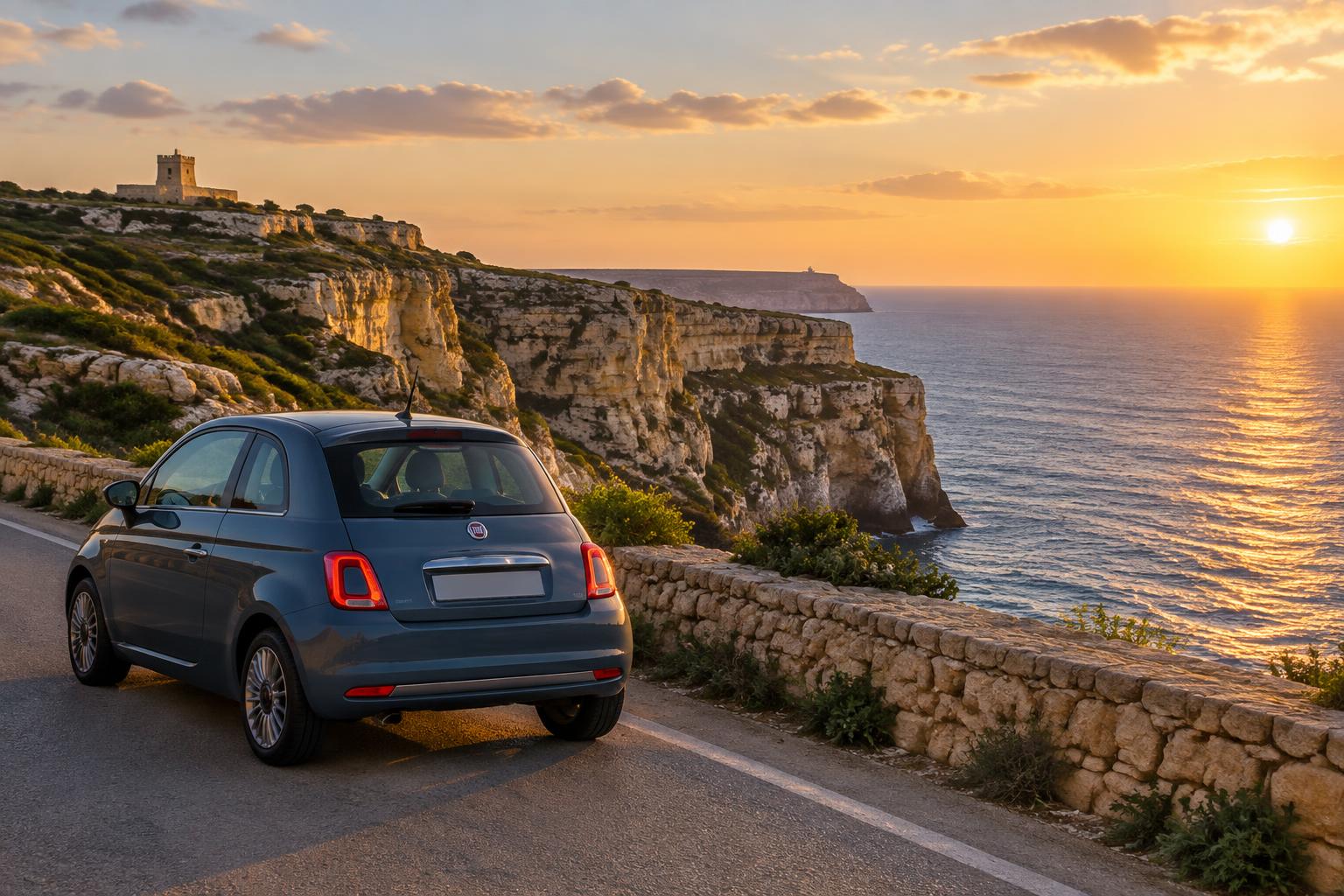
Malta is one of the Mediterranean's most captivating destinations, offering a unique blend of history, culture, and natural beauty. Although the island is small, car rental in Malta is considered by many travellers to be the best option for exploring every corner of the archipelago at your leisure. The autonomy a vehicle provides allows you to escape the bustling tourist centres and discover secluded beaches, picturesque villages, and archaeological sites that are not easily accessible by public transport.
Car collection usually takes place immediately after your arrival at Malta International Airport, which serves all flights to the island. Prices for car hire in Malta are quite reasonable, especially if booked well in advance of your trip. On average, you can find an economy car costing from €15 to €45 per day, depending, of course, on the season of your visit and the type of vehicle you choose. It's important to remember that driving in Malta is on the left-hand side of the road, a legacy from the British period that requires a little attention at first.
In the guide that follows, we will analyse all the details you need to know before making a booking. From essential documents and insurance coverage to the best routes you can take, you will find all the information to make your experience as pleasant and safe as possible. Before you start, it's worth reading some tips before hiring a car to be fully prepared for the process.
Malta as a destination: A crossroads of civilisations in the Mediterranean
Malta is not just an island, but a living museum in the middle of the sea. Its geographical location has made it, over the centuries, a strategic point for many peoples, from the Phoenicians and Romans to the Knights of St John and the British. This rich history is visible everywhere, from the architecture of its cities to the language and traditions of its inhabitants. When visiting the country, it is useful to know what Malta is famous for, as this will help you prioritise the attractions you want to see.
The capital Valletta is a baroque masterpiece and has been declared a UNESCO World Heritage Site. With its narrow streets, imposing walls, and stunning views of the Grand Harbour, Valletta is the starting point for every visitor. However, driving within the city can be challenging due to traffic restrictions and pedestrianised zones. A car is ideal for travelling to the old capital, Mdina, also known as the Silent City. Mdina is located in the centre of the island and offers an atmosphere that transports you back in time, with its mediaeval buildings and characteristic tranquillity.
In addition to its cities, Malta boasts impressive natural landscapes. The rugged Dingli Cliffs offer the best sunset views, while the Blue Grotto is a spectacle not to be missed. For sea lovers, the northern side of the island hosts the most beautiful sandy beaches, such as Mellieha Bay and Golden Bay. Car hire in Malta allows you to visit these areas without depending on bus schedules, which can be time-consuming, especially during the summer months. Also, access to the neighbouring island of Gozo is easy by ferry, where you can take your car with you to explore this greener and quieter part of the archipelago.
Distances in Malta may seem small on the map, as the island is only 27 km long, but travel times can vary significantly. Dense urban development and increased traffic on the main routes around Valletta, Sliema, and St Julian's mean that you will often need more time than you anticipated. Nevertheless, the road network is generally in good condition and signage is adequate, in English and Maltese. Having your own vehicle allows you to adjust your schedule and avoid peak hours, choosing to visit popular attractions early in the morning or late in the afternoon.
If you're wondering about accommodation, there are many options depending on whether you prefer the vibrancy of the city or the tranquillity of the countryside. See our detailed suggestions for where to stay in Malta to choose the area that best suits your needs and offers easy car access. Many hotels in tourist areas offer parking spaces, which is extremely important given the difficulty of finding parking on public roads in busy areas.
Car collection and return points
The main point for car hire in Malta is Malta International Airport (MLA), located near the village of Luqa. At the airport, you will find all the major international rental companies as well as some reliable local firms. Their offices are usually located on the arrivals level, while the cars are parked in a dedicated car park a very short walk away. Airport pick-up is the most convenient solution, as it allows you to start your trip immediately and avoid the cost of a taxi transfer to your hotel.
In addition to the airport, there are rental stations at other strategic points on the island. The areas of Sliema and St Julian's have many offices, as most tourists congregate there. Also, if you arrive in Malta by cruise ship, you can find rental services at Valletta Waterfront. Some companies even offer a car delivery service directly to your hotel, which can save you time and effort if you decide to hire a car only for a few days of your stay.
Upon returning the vehicle, procedures are usually quick and simple. If you are returning the car to the airport, follow the "Rental Car Return" signs as you approach. It is important to check the office opening hours, although most major companies have a key drop-off box if the return is made outside of business hours. Always take photos of the car upon return, so you have proof of its condition, a practice included in the 10 things to watch out for in every rental.
Car hire costs in Malta by season
Car rental prices in Malta vary significantly depending on the time of year. Malta is a year-round destination, but in summer, demand soars. To secure the best possible price, it is essential to know some reasons to book your holiday car early, as early booking can save you up to 50% of the cost.
During the low season (November to March), prices are extremely attractive. You can find small city cars for as little as €10 to €18 per day. This time of year is ideal for those who want to explore the island's history without the summer heat and crowds. In spring and autumn (April to June and September to October), prices range from €20 to €35 per day. These periods are considered the best for a visit, as the weather is pleasant and traffic is more bearable.
During the peak season months (July and August), prices increase significantly, reaching €40 to €60 per day for a basic model. In addition to the price, availability becomes limited, so last-minute booking can be difficult or very expensive. Furthermore, you must factor in the cost of fuel, which in Malta is generally stable and comparable to the European Union average. Due to short distances, you won't need to spend much on petrol, unless you plan to drive around the island all day.
| Car Category | Low Season (per day) | Peak Season (per day) |
|---|---|---|
| Mini (e.g. Toyota Aygo) | 12 to 20 € | 35 to 50 € |
| Economy (e.g. Opel Corsa) | 15 to 25 € | 45 to 60 € |
| Compact (e.g. VW Golf) | 20 to 35 € | 55 to 80 € |
| SUV / Crossover | 30 to 50 € | 70 to 110 € |
Insurance and deposit
Insurance is the most critical part of any rental. In Malta, basic insurance (CDW - Collision Damage Waiver) is usually included in the initial price, but it comes with an excess amount, which can range from €500 to €1500 depending on the company and car category. This means that in case of an accident, you are responsible for the damage up to the excess amount. For greater security, many opt for full insurance (FDW - Full Damage Waiver), which zeroes the excess and covers you for almost any damage.
Upon collecting the car, the company will block an amount as a deposit on your credit card. This amount is usually equal to the insurance excess. It is essential to have a credit card in the main driver's name with sufficient balance for the block. Some local companies may accept debit cards if you purchase full insurance from them, but this is something you should confirm in advance. Always read the terms and conditions to avoid unpleasant surprises at the counter.
Required documents and age limits
To hire a car in Malta, you will need a valid driving licence, your ID card or passport, and a credit card. European Union citizens can use their national driving licence without problems. Travellers from non-EU countries may need to present an International Driving Permit, although many companies accept licences in English. The minimum age for rental is usually 21, but drivers under 25 often incur an additional "young driver" surcharge.
Similarly, there is often an upper age limit, usually 70 or 75, after which a medical certificate or additional insurance may be required. It is important to declare all drivers on the contract, as if something happens and an undeclared driver is at the wheel, the insurance will not cover you. Adding a second driver usually incurs a small daily fee, but it is useful if you plan to cover long distances or if you want to share the responsibility of driving on the left-hand side of the road.
Driving and traffic rules in Malta
The biggest challenge for most visitors is driving on the left-hand side. If you are used to driving on the right, you will need a little time to adjust, especially at turns and roundabouts. A good tip is to hire a car with an automatic gearbox, so you don't have the stress of changing gears with your left hand. Roundabouts in Malta are numerous, and priority is given to those already in the roundabout (coming from your right).
Speed limits are low compared to other European countries. In residential areas, the limit is 35 to 50 km/h, while on open roads, the maximum limit is 80 km/h. There are many speed cameras throughout the island, and fines are hefty, so adhering to the limits is imperative. Also, seat belt use is mandatory for all passengers, and using a mobile phone while driving is strictly prohibited, unless you have a hands-free system.
Parking is another issue that requires attention. In Valletta, the CVA (Controlled Vehicle Access) system applies, where cameras record vehicle entry and exit and charge according to the time spent in the centre. In other areas, pay attention to road markings: white lines mean public parking, yellow lines prohibit parking, and green or blue lines are reserved for residents or limited parking time. In many cases, using municipal car parks or private garages is the safest and easiest option.
Suggested car routes
With your own vehicle, you can plan wonderful day trips. A popular route is exploring the south coast. Start from the fishing village of Marsaxlokk, famous for its colourful "luzzu" boats and Sunday market. Then, head to the Blue Grotto for a boat trip to the caves and finish at the Hagar Qim and Mnajdra temples, which are older than the Egyptian pyramids.
Another route includes the central and western part of the island. Visit historic Mdina and nearby Rabat, where you can see St Paul's Catacombs. Continue to the Dingli Cliffs for breathtaking views and end your day at Golden Bay or Rivier Bay for a swim. If you have children, Popeye Village in Anchor Bay is a stop they will love, as it is the original set from the 1980 film.
Finally, don't miss a visit to Gozo. The ferry crossing from Cirkewwa harbour takes about 25 minutes, and services are frequent. In Gozo, driving is more relaxed as there is less traffic. Visit the capital Victoria with its Citadel, Ramla Bay's red sand beach, and Dwejra, where the famous Azure Window once stood. The freedom a car gives you in Gozo is invaluable, as buses there are less frequent.
Tips for economical rental
To reduce rental costs, there are a few smart tricks. Firstly, avoid renting additional equipment like GPS, as you can use your smartphone with a local SIM card or free offline maps. Secondly, choose the "full-to-full" fuel policy, so you only pay for the petrol you actually consume. Policies where you prepay for fuel are usually less advantageous.
Also, compare prices from different sources and try to book your car at the same time as your flight tickets, as there are often package deals. Don't forget to check for tips for affordable flights that can reduce the overall cost of your trip. Finally, if you are travelling during peak season, consider renting a car only for the days you plan to take excursions outside the city and use walking or public transport for the days you will stay in Valletta or Sliema.
Frequently Asked Questions
Is a car necessary in Malta?
Although there is a bus network, a car is essential if you want flexibility, to visit secluded beaches, and to save time, as public transport can be slow due to traffic.
Is driving on the left difficult?
It requires concentration, especially for the first few hours, but the roads are well-signposted and most drivers get used to it quickly. Choosing an automatic car makes the situation much easier.
What documents do I need for rental?
You will need a valid driving licence (the Greek one is accepted), an ID card or passport, and a credit card in the main driver's name for the deposit.
Where is the best place to pick up the car?
Malta International Airport is the most convenient point, as it offers the widest variety of companies and vehicles and allows you to start your trip immediately.
Do I need full insurance in Malta?
Although not mandatory, full insurance is highly recommended due to the narrow roads and dense traffic, so you can have peace of mind about minor damages or scratches.
What are fuel prices like?
Petrol and diesel prices in Malta are stable and similar to the rest of Europe. Due to short distances, fuel consumption is usually low.
Can I take the rental car to Gozo?
Yes, you can take the car on the ferry that connects Malta with Gozo. The journey is short, and the car will greatly help you explore the second island.

Η συντακτική ομάδα
Travelo Team
Συντακτική ομάδα του Travelo.gr
Πολυταξιδεμένη συντακτική ομάδα με πάνω από 15 χρόνια στον ταξιδιωτικό δημοσιογραφικό χώρο και περισσότερους από 45 προορισμούς σε Ελλάδα και Ευρώπη. Έχουμε διανυκτερεύσει σε εκατοντάδες καταλύματα — από μικρά οικογενειακά ξενοδοχεία και παραδοσιακούς ξενώνες μέχρι resorts 5 αστέρων — και δοκιμάζουμε προσωπικά περιοχές, μεταφορές και υπηρεσίες πριν προτείνει κάτι.
- 45+ προορισμοί επί τόπου
- 500+ καταλύματα σε αξιολόγηση
- 15 χρόνια ταξιδιωτικής αρθρογραφίας
Πώς δουλεύουμε: κάθε οδηγός βασίζεται σε επιτόπια εμπειρία, διασταύρωση αξιολογήσεων επισκεπτών και έλεγχο διαθεσιμότητας/τοποθεσίας κάθε καταλύματος. Ορισμένοι σύνδεσμοι είναι συνεργατικοί (affiliate) — αν κάνετε κράτηση μέσω αυτών, στηρίζετε το Travelo.gr χωρίς καμία επιπλέον χρέωση για εσάς, και δεν επηρεάζουν τις προτάσεις μας. Τελευταία ενημέρωση οδηγού: 26 Σεπτεμβρίου 2026.
Πού να μείνω — Επίσης
- Where to Stay in Tilos , Accommodation Guide to the Green Island of the Dodecanese
- Where to Stay in Tolo , An Accommodation Guide for the Peloponnese's Closest "Island"
- Belgrade: The vibrant heart of the Balkans , Where to stay to discover its authentic charm
- Bratislava: Accommodation Guide to the Danube's Most Charming Capital