Car Hire in Italy: The Complete Guide to an Unforgettable Road Trip
Discover everything you need to know about car hire in Italy, from prices and insurance to the special ZTL traffic zones.
Από Travelo Team
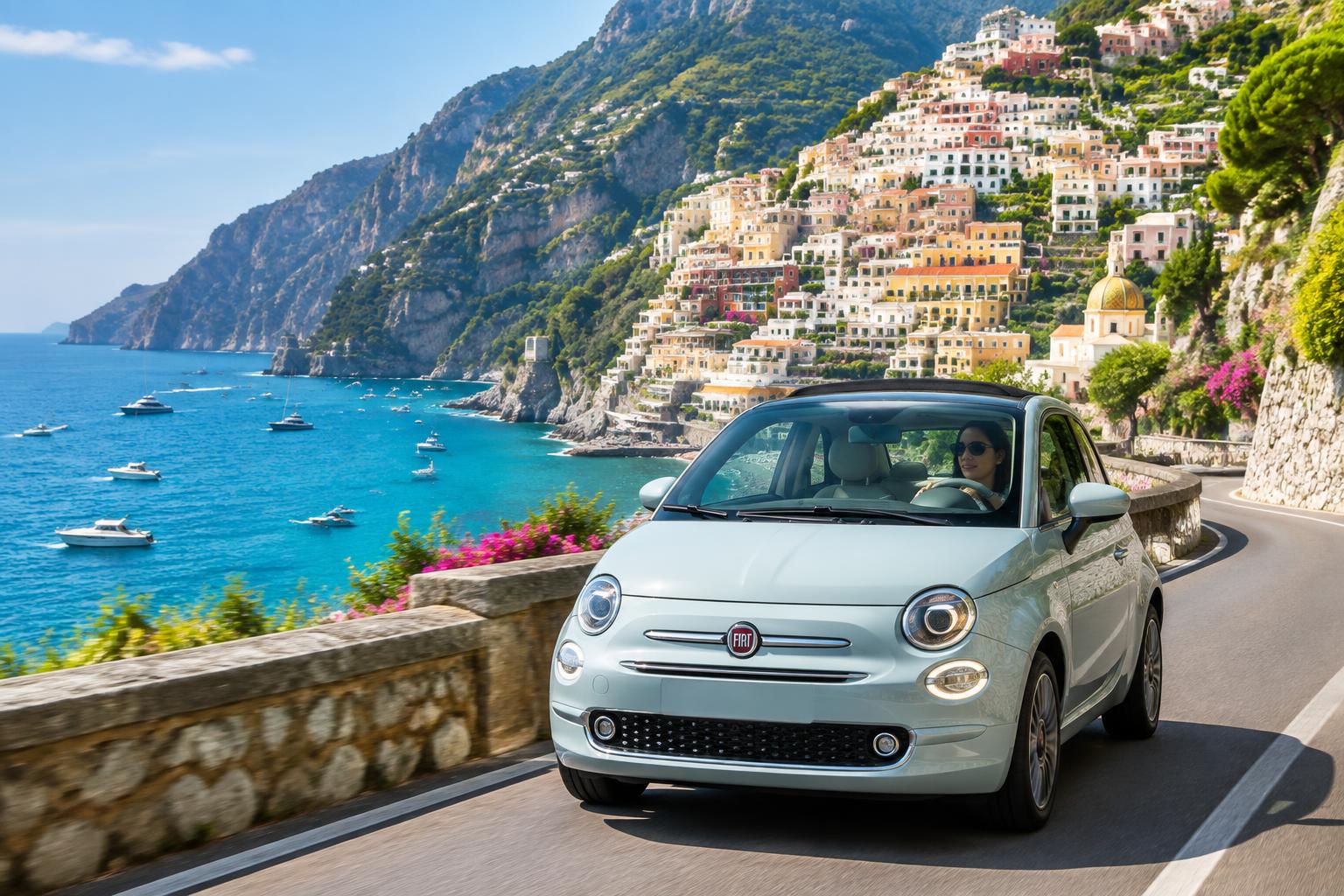
Italy is a destination that feels made for road adventures. From the verdant hills of Tuscany and the rugged Amalfi Coast to the historic cities of the North and the volcanic landscapes of Sicily, hiring a car in Italy offers the ultimate freedom to discover places that trains and buses struggle to reach. It’s the only way to stop at a small winery in the countryside or admire the sunset from a secluded village in the Apennines without the stress of timetables.
Picking up a vehicle is extremely straightforward, as all major international companies maintain offices at every significant airport and railway station in the country. The cost largely depends on the season and the type of car, with prices starting from around 25 euros a day for an economy model during the low season and exceeding 70 or 80 euros during peak months, such as July and August. If you plan a trip to Italy that involves travel outside major urban centres, a car is not just a luxury, but a necessity.
In this guide, we will look in detail at how to secure the best price, what to look out for with insurance, the peculiarities of Italian driving, and how to avoid hefty fines in the infamous restricted traffic zones. Organisation is key to enjoying your journey without unpleasant surprises.
Exploring Italy by Car: Routes and Distances
Italy's geography is so diverse that each region offers a completely different driving experience. In the northern part, motorways are modern and connect major cities such as Milan, Venice, and Turin quickly. However, the real magic lies on the provincial roads. For example, the journey from Rome to Florence takes about 3 hours via the A1 motorway, but if you choose the roads crossing Umbria, you will have the opportunity to see breathtaking medieval fortified towns.
Tuscany is perhaps the most popular region for car hire. Distances between the villages of Val d'Orcia are short, typically 20 to 40 minutes, allowing you to visit three or four different places in a single day. In contrast, in the south, roads can be narrower and more challenging. Driving on the Amalfi Coast is a unique experience, but it requires strong nerves and caution due to the continuous bends and buses taking up a large part of the road. There, a small and agile car is clearly preferable to a bulky SUV.
In Sicily and Sardinia, a car is the only reliable way to reach the most spectacular beaches. The distance from Palermo to Catania is covered in less than 3 hours, but the coastal routes passing through Cefalù and Messina offer much more beautiful scenery. Generally, the country's main thoroughfares (Autostrade) are in excellent condition, although tolls can increase the overall cost of your trip. Before you set off, it's a good idea to research distances and allow time for stops, as Italy is full of small surprises around every corner.
Where to pick up your rental car
The most important pick-up points in Italy are undoubtedly the international airports. If you are flying to the capital, Rome Fiumicino Airport has a huge car rental centre connected to the terminals via a skybridge. There you will find all global providers as well as several reliable local companies. The situation is similar at Ciampino Airport, which mainly serves low-cost airlines.
In the north, Malpensa Airport in Milan is the main gateway for those heading to the Alps or Lakes Como and Garda. Alternatively, many travellers choose to land in Bergamo and pick up their vehicle there, as Bergamo Airport often offers more competitive prices due to high competition among rental companies. In southern Italy, Naples Airport serves those who want to explore Campania and Calabria.
In addition to airports, you can also hire a car at major railway stations (Stazione Centrale), which is convenient if you arrive by train from another city and only want a car for a few days. However, picking up from the city centre can be a little more stressful due to traffic and traffic restrictions. If your trip includes islands, the ports of Naples, Bari and Genoa also have rental offices, making the transition from ferry to your own transport easier.
Rental Cost and Vehicle Categories
Car hire prices in Italy fluctuate greatly depending on the booking season and how early you arrange to secure the vehicle. During the winter months (with the exception of Christmas), you can find cars for as little as 15 to 20 euros a day. In spring and autumn, prices rise to 35 to 50 euros, while in summer, demand skyrockets and prices often exceed 80 euros per day for basic models.
| Car Category | Indicative Cost (Per Day) | Ideal for |
|---|---|---|
| Mini (e.g. Fiat 500) | 25 to 55 € | Couples, city driving |
| Economy (e.g. Lancia Ypsilon) | 30 to 65 € | 2-3 people, short distances |
| Compact (e.g. VW Golf) | 45 to 85 € | Families, motorway trips |
| SUV / Crossover | 60 to 120 € | Comfort, lots of luggage |
| Convertible (Cabrio) | 80 to 200 € | Drives in Tuscany or the Amalfi Coast |
It is important to choose the right size. If you plan to drive in places like Florence, finding accommodation is the first step, but the second is to have a car that fits in tight parking spaces. See more about where to stay in Florence to choose a hotel with car access. Manual cars are the norm in Italy and are cheaper. If you want an automatic, you should request it early and be prepared for an extra charge that can be up to 20% of the price.
Insurance and Deposit: What you need to know
Insurance is what confuses most travellers. In Italy, basic third-party liability insurance is included in the price, as is partial damage waiver (CDW) and theft protection (TP). However, these coverages come with an excess amount, which can range from 800 to 1500 euros depending on the car category. This amount will be blocked on your credit card as a deposit upon collection.
For peace of mind, full insurance (FDW or Super Cover) is recommended. This zeroes the excess amount and covers you for almost everything. Many companies will try to sell you their own insurance at the counter, which is often more expensive than what you can buy online when booking. However, buying at the counter has the advantage that it usually doesn't require a large deposit amount to be held on your card. Before deciding, read carefully the 10 things to look out for when hiring a car to avoid unpleasant surprises.
An important detail in Italy is that using a credit card in the main driver's name is almost always mandatory. Debit cards are accepted by very few companies and usually require the purchase of the expensive full insurance package. Also, check if the insurance covers damage to tyres, windows, and the underside of the car, as these are often excluded from basic CDW packages.
Required documents and age limits
For EU citizens, things are simple. You only need your valid national driving licence, your ID card or passport, and a credit card. If your licence does not have Latin characters or if you come from a country outside the EU, such as the US or Australia, you will definitely need an International Driving Permit (IDP) accompanied by your regular licence. Do not neglect this detail, as rental companies may refuse to hand over the keys without it.
As for age, most companies require the driver to be at least 21 years old and to have held their licence for at least one year. Some providers rent to drivers aged 18 to 20, but they impose a daily 'young driver surcharge', which can be quite high. Similarly, in some cases there is an upper age limit (usually 75 years) or additional charges for drivers over 70. It is always advisable to check the terms and conditions of the specific provider before finalising your booking.
Driving in Italy: Rules, Tolls and ZTL
Driving in Italy can seem chaotic in large cities, but it follows specific rules. The most important thing to know is about ZTL zones (Zona a Traffico Limitato). These are areas in the historic city centres where traffic is only permitted for residents and authorised vehicles. Cameras record every licence plate that enters, and fines are automatic and very expensive (usually over 80 euros per entry). If your hotel is located within a ZTL, you will need to inform them of your licence plate number so they can register it with the police.
On motorways (Autostrade), signage is green and tolls are calculated based on distance. Upon entry, you take a ticket and pay the corresponding amount upon exit. You can use cash, cards, or the Telepass system. Be careful at exit lanes; do not enter those that say Telepass only if you do not have the relevant device in your car. If you find yourself in Rome, the guide to where to stay in Rome will help you find areas outside the centre with easier access and parking.
Speed limits are 130 km/h on motorways, 110 km/h on expressways, 90 km/h on secondary roads, and 50 km/h within built-up areas. Italy uses the Tutor system on many motorways, which measures average speed over a section rather than just the moment you pass a camera. Also, the use of dipped headlights (low beam) is mandatory during the day on all roads outside cities.
Parking: Where to leave your car
Parking is a challenge in Italy, especially in tourist destinations. The lines on the roads have specific colours you need to know. White lines mean free parking, although there is often a time limit (you'll need a parking disc or disco orario). Blue lines mean paid parking. You'll need to find the nearest parking meter, pre-pay, and place the receipt in a visible spot on the dashboard. Yellow lines are exclusively for residents or emergency vehicles, so never park there.
In large cities, the best solution is private car parks or garages (Autorimessa). Although they cost more (about 20 to 35 euros for 24 hours), they offer security and often undertake to register your licence plate if the garage is within a ZTL zone. If you are planning a visit to Milan, check out where to stay in Milan to identify hotels with their own parking, which will save you a lot of effort and time.
Recommended routes for a road trip in Italy
Italy offers some of the most beautiful routes in the world. A classic choice is the tour of Tuscany, starting from Florence. You can drive through the vineyards of Chianti, stop in Siena, and end up in San Gimignano. If you have more time, head down to Val d'Orcia to photograph the famous cypress-lined roads. For such an excursion, Florence makes an ideal starting base.
Another enchanting route is the Lakes region in the North. Start from Milan and drive towards Lake Como. The lakeside route offers views of magnificent villas and gardens. Continue towards Lake Garda, where the roads become more mountainous and the landscape wilder. If you prefer the sea, the route in Sicily from Taormina to Syracuse and Noto will reveal the island's Baroque side and some of the best flavours of the Mediterranean. Don't forget to read the guide to Naples if you plan to explore southern Italy, as this city is the gateway to Pompeii and Mount Vesuvius.
Tips for Economical Hire
- Book early: Just like with airline tickets, the earlier you book your car, the better price you'll get. Last-minute prices, especially in summer, can be double.
- Pay attention to the fuel policy: Always choose the “full to full” policy. You pick up the car full and return it full. This way you only pay for the fuel you actually used.
- Avoid airport pick-up if not necessary: Often city offices have lower prices and do not charge 'airport taxes'. However, calculate your transport costs to get there.
- Inspect the car upon pick-up: Photograph or video any existing scratches or dents in the presence of the employee. Make sure everything is recorded in the contract so you are not held responsible upon return.
- Choose the appropriate size: Do not hire a larger car than you need. Smaller cars consume less fuel and are much easier to park in Italy's narrow streets.
Frequently Asked Questions about Car Hire in Italy
Do I need an international driving licence for Italy?
If you hold a Greek driving licence or any licence from an EU country, you do not need an international licence. However, if your licence was issued outside the EU (e.g. USA, Canada, Australia), then an international licence is mandatory.
Can I hire a car without a credit card?
It is difficult but not impossible. Some local companies accept debit cards, but usually require the purchase of full insurance and a deposit amount to be held. Major international companies almost always require a credit card in the driver's name.
What is a ZTL zone and how do I avoid it?
A ZTL is a restricted traffic zone in city centres. You avoid it by paying attention to signs with a red circle and the ZTL indication. If your hotel is within the zone, ask them to register your licence plate with the authorities.
What is the cost of petrol in Italy?
Petrol in Italy is among the most expensive in Europe. Prices usually range between 1.70 and 2.00 euros per litre. Note that at Autostrada service stations, prices are always higher than at stations within cities or in the countryside.
Is it safe to drive in Southern Italy?
Driving in the South (e.g. Naples, Sicily) is more intense and rules are often treated as suggestions. However, if you drive carefully, are vigilant and avoid sudden movements, you will not encounter any problems. Opt for a full insurance package for peace of mind.
How much do tolls cost in Italy?
Toll costs depend on the distance. For example, the route from Milan to Florence costs approximately 20 to 25 euros. You can calculate the exact cost of your route via the official website of Italian motorways.
Can I cross borders with the rental car?
Most companies allow travel to neighbouring EU countries (such as France, Austria, Switzerland, Slovenia), but you must declare this when booking. There may be an additional charge (Cross Border Fee) to cover roadside assistance abroad.

Η συντακτική ομάδα
Travelo Team
Συντακτική ομάδα του Travelo.gr
Πολυταξιδεμένη συντακτική ομάδα με πάνω από 15 χρόνια στον ταξιδιωτικό δημοσιογραφικό χώρο και περισσότερους από 45 προορισμούς σε Ελλάδα και Ευρώπη. Έχουμε διανυκτερεύσει σε εκατοντάδες καταλύματα — από μικρά οικογενειακά ξενοδοχεία και παραδοσιακούς ξενώνες μέχρι resorts 5 αστέρων — και δοκιμάζουμε προσωπικά περιοχές, μεταφορές και υπηρεσίες πριν προτείνει κάτι.
- 45+ προορισμοί επί τόπου
- 500+ καταλύματα σε αξιολόγηση
- 15 χρόνια ταξιδιωτικής αρθρογραφίας
Πώς δουλεύουμε: κάθε οδηγός βασίζεται σε επιτόπια εμπειρία, διασταύρωση αξιολογήσεων επισκεπτών και έλεγχο διαθεσιμότητας/τοποθεσίας κάθε καταλύματος. Ορισμένοι σύνδεσμοι είναι συνεργατικοί (affiliate) — αν κάνετε κράτηση μέσω αυτών, στηρίζετε το Travelo.gr χωρίς καμία επιπλέον χρέωση για εσάς, και δεν επηρεάζουν τις προτάσεις μας. Τελευταία ενημέρωση οδηγού: 26 Σεπτεμβρίου 2026.