Car Rental in Iceland: Your Ultimate Guide to the Road Trip of Your Dreams
Everything you need to know about car rental in Iceland, from prices and insurance to driving rules on the country's challenging roads.
Από Travelo Team
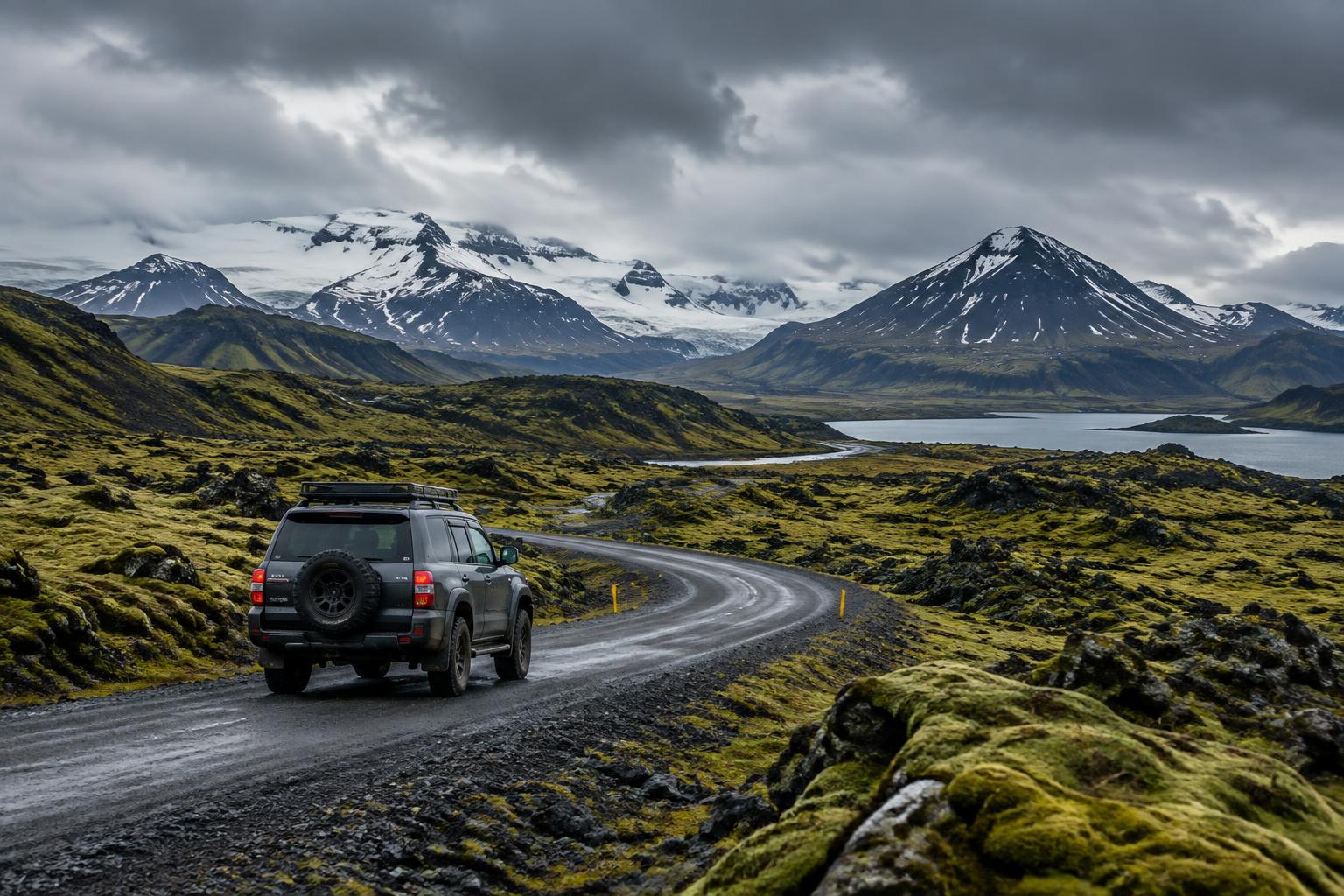
Iceland is one of the world's top destinations for adventure and nature lovers. The land of fire and ice, as it is often called, offers landscapes that resemble science fiction movie sets, with enormous glaciers, active volcanoes, roaring waterfalls, and otherworldly lava fields. Renting a car in Iceland is not just a convenience, but the only essential method to explore this unique island at your own pace, avoiding the limitations of tourist buses and organised groups.
The decision to hire a vehicle in Iceland is the first step towards an unforgettable journey. Most travellers collect their car immediately after arriving at Keflavík International Airport, which is about 45 minutes away from the capital, Reykjavík. The process is usually quick, as most companies have offices inside or very close to the airport. Rental costs vary significantly depending on the season and vehicle type, starting from €35 to €45 per day for a small car in the low season and reaching €150 or even €200 per day for a robust 4x4 vehicle during the summer months.
In this guide, we will analyse everything about driving and car rental in the country. We will look at what insurance is necessary to protect you from Iceland's unique conditions, such as strong winds and gravel, how to choose the right car for your needs, and which routes you shouldn't miss. Preparation is key to enjoying the freedom that Icelandic roads offer, so read the useful tips for car rental carefully before you start planning.
Exploring Iceland with Your Own Vehicle
Iceland's geography makes a car the most valuable tool for visitors. The island is traversed by the famous Ring Road, a central route approximately 1332 km long that circles the entire country. This route connects most major towns and key attractions, allowing travellers to witness the changing landscapes from the green south coast to the wild beauty of the eastern fjords and the volcanic scenery of the north. There are 7 reasons to visit Iceland, and the most important is the opportunity to find yourself in places where nature remains raw and imposing.
Driving in Iceland requires attention and respect for the environment. Distances may seem short on the map, but weather conditions can change in minutes, affecting travel time. For example, the drive from Reykjavík to Vik, one of the most popular stops in the south, takes about two and a half hours under normal conditions. However, frequent stops for photos at Seljalandsfoss and Skógafoss waterfalls will certainly double that time. A car gives you the flexibility to stop wherever you wish and spend as much time as you want at each spot, something impossible with organised tours.
One of the most significant advantages of having a car is access to the so-called F-Roads, mountain roads that lead into the interior of the country, the Highlands. These roads are only accessible by 4x4 vehicles and remain closed during winter. There you will encounter landscapes that resemble other planets, with colourful rhyolite mountains and hot springs at high altitudes. If you only plan to stick to the main road, a conventional car is sufficient for summer, but for any deviation into the interior, a 4x4 is legally mandatory and essential for your safety.
Furthermore, Iceland is a country with a very low population density outside the capital region. This means you might drive for hours without encountering another vehicle or settlement. The feeling of isolation and absolute tranquillity is part of the experience. It's important to always have a full tank, as petrol stations in some areas, especially in the north and east, can be many kilometres apart. Before you set off, it's a good idea to know 10 experiences you must have in South Iceland, as most visitors begin their adventure in this part of the country.
Where to Collect Your Car
The main pick-up point for car rental in Iceland is Keflavík International Airport (KEF). Almost all international visitors arrive there, and most rental companies have their offices either inside the terminal or in a dedicated zone very nearby, served by free shuttle buses. Airport collection is the most practical solution, as it saves you the cost of transport to the city, which can be quite high if you choose a taxi or public bus.
Alternatively, if you plan to spend your first few days exploring Reykjavík on foot, you can pick up your car from company centres in the city. Many companies also offer a hotel delivery service. However, you should bear in mind that parking in central Reykjavík can be difficult and expensive, so it might be preferable to hire the vehicle only for the days you intend to drive out of town. Significant pick-up points also exist in Akureyri, the largest town in the north, for those who choose to fly there domestically and explore the northern part of the country.
Rental Costs and Vehicle Categories
Car rental prices in Iceland fluctuate significantly depending on the season. Summer (June to August) is the period of highest demand, and prices are at their peak. Conversely, in winter you can find much lower prices, but you should be prepared for challenging driving conditions with snow and ice. Generally, to secure better prices, you should book several months in advance, as the vehicle fleet on the island is limited compared to the number of tourists. There are many reasons to book your holiday car early, with savings being the primary one.
| Car Category | Low Season (Daily) | High Season (Daily) | Suitable for |
|---|---|---|---|
| Small City Car (e.g. Toyota Aygo) | €35 to €55 | €70 to €100 | Couples, Ring Road in summer |
| Medium / Compact (e.g. VW Golf) | €50 to €75 | €100 to €140 | 3 people, comfortable journeys |
| SUV 4x4 (e.g. Dacia Duster) | €70 to €110 | €130 to €200 | Highlands, winter driving |
| Large 4x4 (e.g. Land Cruiser) | €120 to €180 | €250 to €400 | Larger groups, challenging F-Roads |
| Campervan (for 2 people) | €80 to €120 | €150 to €250 | Sleeping in nature, saving on hotels |
In addition to the rental, you should also factor in fuel costs, which in Iceland are among the highest in Europe. Most cars are manual, so if you prefer an automatic, you should state this beforehand and may have to pay a small extra charge. To reduce expenses, look for tips to save money, such as cooking your own meals if you've hired a campervan or sharing the car cost with friends.
Insurance and Essential Coverage
Insurance in Iceland is not a standard procedure like in other countries. Due to the unique weather and terrain conditions, there are specific types of coverage that are almost essential. Basic CDW (Collision Damage Waiver) is usually included in the price, but often comes with a very high excess amount, which can reach €1,500 to €3,000. Upgrading to Super CDW reduces this amount, but may still not cover everything.
A very important cover in Iceland is Gravel Protection (GP). Many roads, and even parts of the main road network, are gravel. Stones thrown up by preceding vehicles can easily cause cracks in the windscreen or damage to the bodywork. Also, Sand and Ash Protection (SAAP) is useful at certain times, as strong winds can kick up sand or volcanic ash that can damage the car's paintwork in minutes. Before signing the contract, study the 10 things to watch out for when renting a car to avoid unpleasant surprises.
Caution: Almost no insurance in Iceland covers damage caused by water when crossing rivers or damage to car doors from the wind. Winds in Iceland can be so strong that they can bend or tear off a door if you open it abruptly without holding it firmly. Also, off-road driving is strictly illegal and incurs huge fines, and no insurance will cover you in such a case.
Driving and Rules in Iceland
Driving in Iceland is on the right-hand side of the road. Speed limits are generally lower than in the rest of Europe: 50 km/h in built-up areas, 80 km/h on gravel roads, and 90 km/h on paved roads outside towns. There are many speed cameras, and fines are extremely steep, so adhering to limits is mandatory. Headlights must be on 24 hours a day, regardless of visibility or time of day.
A peculiar feature of Icelandic roads is single-lane bridges. When approaching such a bridge, the vehicle that arrives first has priority. You should slow down and make sure no other vehicle is coming from the opposite direction before entering. Also, watch out for animals, especially sheep, which roam freely in summer and often stand in the middle of the road. If you hit an animal, you must immediately notify the police and the owner.
F-Roads are a category unto themselves. These roads require a 4x4 vehicle and experience in driving on difficult terrain. They often include river crossings, where the water depth can change rapidly depending on rainfall or melting glaciers. Never attempt to cross a river if you are unsure of the depth and have not seen another vehicle successfully do so. For general information on the process, you can refer to the article on car rental which covers basic rules.
Suggested Road Trip Routes
Iceland offers some of the most beautiful routes in the world. The most famous is the Golden Circle, a route of approximately 250 kilometres that starts and ends in Reykjavík. It includes Thingvellir National Park, where the rift between the Eurasian and North American tectonic plates is visible, the Geysir hot spring, and the imposing Gullfoss waterfall. This route can easily be completed in a day with any type of car.
For those with more time, the south coast is essential. From Vik to the Jökulsárlón glacier lagoon, you will see black sand beaches, icebergs floating in the sea, and endless lava fields covered with moss. If you have 10 to 12 days available, you can complete a full circle of the island via the Ring Road. This will allow you to see the northern part as well, with Lake Myvatn and its hot springs, which is less touristy but equally impressive.
Another wonderful option is the Snæfellsnes peninsula in the west, also known as "Iceland in Miniature," as it concentrates all the country's characteristic landscapes in a small area. There you will find the iconic Kirkjufell mountain and the Snæfellsjökull glacier, which inspired Jules Verne for "Journey to the Center of the Earth." Whichever route you choose, your car will be your faithful companion on this discovery.
Tips for Economical Rental
Travelling in Iceland can be very expensive, but there are ways to save money on car rental. Firstly, avoid renting a GPS. You can use free apps on your phone or download maps for offline use. Secondly, pay attention to the fuel policy. Most companies deliver the car with a full tank and expect you to return it full. If you forget to fill it up, the company's charge per litre will be much higher than the price at the petrol station.
Also, check if your credit card offers car rental insurance. Some premium cards cover the excess in case of an accident, which can save you the cost of the extra insurance offered by the rental company. However, ensure that the cover applies specifically to Iceland and to the type of vehicle you have chosen. Finally, share the driving. Although some companies charge for an additional driver, on long journeys it is essential for your safety to have someone to relieve you.
Frequently Asked Questions about Car Rental in Iceland
Do I need an international driving permit for Iceland?
If you hold a Greek driving licence or one from any European Union country, you do not need an international permit. The standard European licence with Latin characters is perfectly acceptable. If your licence was issued in a country outside the EU and does not have Latin characters, then an international driving permit is mandatory.
Is a 4x4 car essential?
It depends on your itinerary and the season. For the Golden Circle and the Ring Road in summer, a simple 2WD car is sufficient. However, if you plan to drive on F-Roads in the Highlands or if you are travelling in winter where snow is common, a 4x4 is essential and often legally mandatory for accessing certain areas.
What is the age limit for car rental?
Most companies in Iceland require the driver to be at least 20 years old for small cars and 23 or 25 years old for larger 4x4 vehicles. You must also have held your licence for at least one year. Young drivers under 25 may be subject to an additional daily surcharge due to age.
How do I pay tolls in Iceland?
Iceland does not have many toll roads. The main exception is the Vaðlaheiðargöng tunnel near Akureyri in the north. There are no manned toll booths. You must pay electronically via the tunnel's official website within 24 hours before or after passing through; otherwise, the rental company will charge you the amount plus an administration fee.
Can I sleep in the car or campervan anywhere?
No, camping anywhere is prohibited by law in Iceland. Even if you have rented a campervan, you are required to stay overnight in organised campsites. This measure was implemented to protect the delicate natural environment and prevent pollution in areas without facilities.
What should I do in case of an accident or breakdown?
In case of an accident with injury, immediately call the emergency number 112. For a mechanical breakdown, contact the roadside assistance number provided by your rental company. It is important to always carry your rental agreement and the company's contact numbers with you, as mobile phone signal coverage is good in most parts of the country.
Where can I get information about road conditions?
The most reliable source is the website road.is, which provides real-time information on which roads are open, where there is ice, or strong winds. Also, the SafeTravel.is app is essential for every traveller, as it allows you to leave your travel plan so that you can be located in case of an emergency.

Η συντακτική ομάδα
Travelo Team
Συντακτική ομάδα του Travelo.gr
Πολυταξιδεμένη συντακτική ομάδα με πάνω από 15 χρόνια στον ταξιδιωτικό δημοσιογραφικό χώρο και περισσότερους από 45 προορισμούς σε Ελλάδα και Ευρώπη. Έχουμε διανυκτερεύσει σε εκατοντάδες καταλύματα — από μικρά οικογενειακά ξενοδοχεία και παραδοσιακούς ξενώνες μέχρι resorts 5 αστέρων — και δοκιμάζουμε προσωπικά περιοχές, μεταφορές και υπηρεσίες πριν προτείνει κάτι.
- 45+ προορισμοί επί τόπου
- 500+ καταλύματα σε αξιολόγηση
- 15 χρόνια ταξιδιωτικής αρθρογραφίας
Πώς δουλεύουμε: κάθε οδηγός βασίζεται σε επιτόπια εμπειρία, διασταύρωση αξιολογήσεων επισκεπτών και έλεγχο διαθεσιμότητας/τοποθεσίας κάθε καταλύματος. Ορισμένοι σύνδεσμοι είναι συνεργατικοί (affiliate) — αν κάνετε κράτηση μέσω αυτών, στηρίζετε το Travelo.gr χωρίς καμία επιπλέον χρέωση για εσάς, και δεν επηρεάζουν τις προτάσεις μας. Τελευταία ενημέρωση οδηγού: 26 Σεπτεμβρίου 2026.
Πού να μείνω — Επίσης