From Berlin Brandenburg Airport to the City Centre
How to get from Berlin Brandenburg Airport to the city centre by train, bus, taxi and private transfer, including costs and tips.
Από Travelo Team
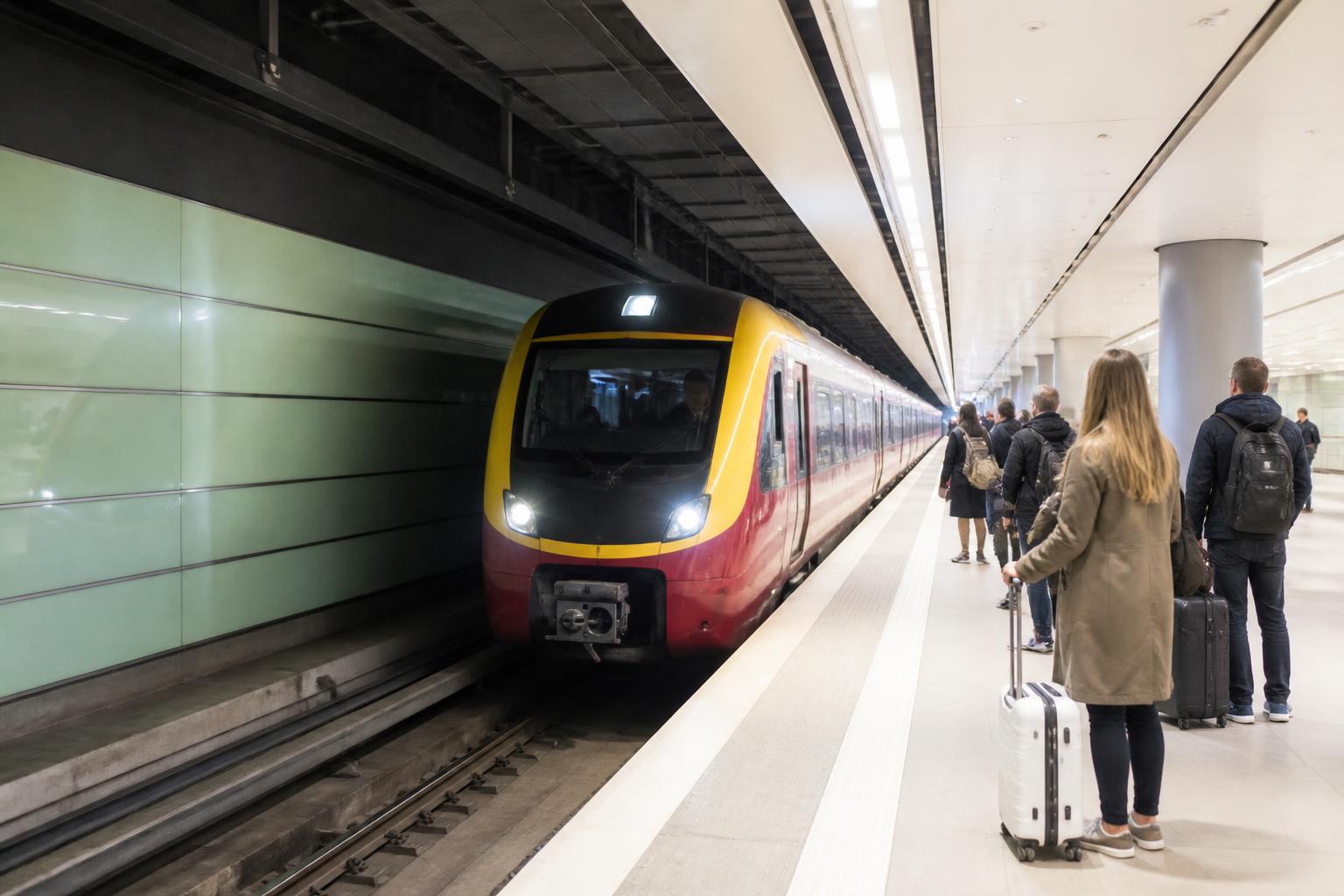
Berlin Brandenburg Airport is located approximately 20 km south of the city centre and features its own railway station beneath the main terminal. This makes the journey to the city centre quite straightforward compared to many other European airports. The majority of visitors reach the centre within 30 to 45 minutes without much hassle.
If you're travelling alone, the suburban railway (S-Bahn) or regional train is the fastest and most economical option. Couples seeking a little more flexibility often choose the train too, as the connection is so good that an alternative isn't necessary. Families with a lot of luggage might find a taxi or private transfer more convenient, while those arriving late at night should note that services become significantly less frequent after midnight.
Below, we break down all transport options from Berlin Brandenburg Airport to the city centre, with indicative durations, costs, and practical tips for every type of traveller.
Summary comparison of options
| Mode | Duration | Cost | Frequency | Hours |
|---|---|---|---|---|
| Regional train (RE / RB) | 25 to 30 minutes | 4 to 5 euros | every 10 to 15 minutes | approx. 04:30 to 01:00 |
| Suburban railway (S-Bahn) | 35 to 45 minutes | 4 to 5 euros | every 10 to 20 minutes | almost 24 hours, with sparser late-night services |
| Express bus | 40 to 60 minutes | 4 to 5 euros | every 20 to 30 minutes | morning to late evening |
| Taxi | 25 to 40 minutes depending on traffic | 45 to 65 euros | immediately available | 24 hours |
| Private transfer | 25 to 40 minutes | 50 to 80 euros per vehicle | by reservation | 24 hours |
Prices are as of September 2026, please check before your trip.
Train or underground from the airport
The airport railway station is located directly beneath the terminal, with direct access from arrivals via lifts and escalators. Both regional trains and S-Bahn lines operate from here, covering almost every point of interest in central Berlin.
Regional trains
Regional trains are the fastest option, making fewer intermediate stops and reaching central stations like Berlin Hauptbahnhof in approximately 25 to 30 minutes. They are ideal for those who want to get to their hotel quickly without transfers.
S-Bahn suburban railway
S-Bahn lines serve more intermediate stations and are slower, but offer greater flexibility if your destination is in a neighbourhood away from the main station. Services are frequent and reliable, with less frequent service only in the early morning hours.
Tickets and zones
The airport is located in a zone outside the main urban network, so you need a ticket that also covers this additional zone, not just the standard city centre ticket. Tickets can be purchased from machines at the station or via a mobile app, and must be validated before boarding using the validation machines located on the platform. The BVG app shows real-time departures and helps you avoid unnecessary waiting on the platform with your luggage.
Bus and express lines
There are also bus routes connecting the airport to city centre points, mainly useful when your final destination is not directly served by train. The journey duration is longer than by train, as it depends on traffic, especially during peak hours around the centre. The cost is the same as the train, as it's covered by the same city ticket system, so choosing the bus mainly makes sense for specific neighbourhoods without a direct rail connection. Buses have space for luggage near the doors, which is practical if you don't want to carry suitcases down the aisle.
Taxi from the airport
Taxis are found at a designated pick-up point outside arrivals and charge by meter. An indicative journey to the city centre usually costs between 45 and 65 euros, depending on traffic and the exact destination address. Luggage is generally not charged extra, but it's a good idea to confirm this with the driver. Apps like FreeNow work normally in Berlin and often provide a more predictable cost estimate before booking, which is useful if you want to avoid surprises. Payments are usually made by card directly in the taxi, so you won't need cash euros before your arrival.
Private transfer and shuttle
For families or small groups with a lot of luggage, a private transfer with a fixed price costs from 50 to 80 euros per vehicle, depending on the car type and number of passengers. Most companies monitor your flight and adjust the pick-up time in case of delays, usually offering free waiting time. This option is particularly useful when travelling with young children and wanting to avoid stairs and changes at the train station. Many companies offer free child car seats upon request, which is worth asking for when booking.
Before deciding on your mode of transport, it's also worth considering the weather for the period you're travelling. During heavy rain or snow, roads can become congested and taxi or bus journeys might be significantly delayed, making the underground or train more reliable options as they are unaffected by road traffic. Similarly, during morning and afternoon peak hours, traffic around the airport increases noticeably, which is worth factoring in if you have a connecting flight or a tight schedule.
Car rental, when is it worth it?
Renting a car from the airport is rarely worth it if you're staying in central Berlin, as the city has very well-organised public transport and parking in central areas can be difficult and relatively expensive. It's only worth considering if you plan excursions outside the city, for example to the lakes around Berlin or to other German cities, in which case you can pick up the vehicle directly from the airport.
Night arrival, children, luggage and accessibility
If you land late at night, regional trains and the S-Bahn continue to operate with less frequent services, while in some early morning hours, service is significantly reduced. In this case, a pre-booked taxi or private transfer is a safer option than waiting on an empty platform. The airport station has lifts and ramps, so it's accessible for wheelchairs and baby prams, though it can get crowded during peak hours. Families with young children often prefer a taxi or private transfer to avoid carrying luggage through the station.
It's also a good idea to carry a small amount of cash in local currency, even if you plan to pay mostly by card, as some automated ticket machines or smaller stations may not accept all cards or might have a temporary technical issue. Many transport apps and public transport websites also offer digital tickets via mobile, which saves time queuing, provided you have already downloaded the app and have an active data connection or local SIM card.
Total cost of travel
For a solo traveller, the train is the most economical option, costing around 4 to 5 euros. For two people, the combined cost of two train tickets remains significantly cheaper than a taxi, so the train is almost always worthwhile unless you have a lot of luggage. For a family of four with luggage, a private transfer or taxi often works out more convenient in terms of comfort, even though the total cost may seem higher compared to four train tickets.
Another point travellers often forget is insurance for luggage and personal belongings during transit from the airport. In busy stations and on crowded buses, it's worth keeping your bag or wallet close and secure, especially during peak hours when congestion is greater. It's also helpful to have photographed or noted your accommodation address in the local language, so you can easily show it to a taxi driver if needed.
Common mistakes travellers make
- Buying a standard city ticket without the additional airport zone and facing a fine during ticket inspection.
- Forgetting to validate their ticket at the platform machine before boarding the train.
- Choosing the S-Bahn instead of a regional train unnecessarily, losing valuable time on a longer journey.
- Not checking the sparse late-night schedule and being left without an easy transport option after midnight.
- Getting into an unofficial vehicle outside arrivals instead of going to the designated taxi rank.
Finally, if your trip includes a short stay before another flight or connection, it's worth allowing extra time for travel to and from the airport, especially if you're unfamiliar with the local transport network. A buffer of 30 to 45 minutes beyond the estimated journey time is usually enough to cover any minor delays, searching for a station or stop, and buying a ticket without stress.
Where to stay and what to read before your trip
If you plan to combine your trip with other German-speaking or Central European cities, see the detailed accommodation guide for Dresden, as well as the guide on where to stay in Cologne. The accommodation guide for Sofia is also useful for those continuing southeast, and the guide for Riga if you plan to head towards the Baltic. Families travelling with children can find ideas in the general guide for holidays with children before deciding where to stay in Berlin.
Frequently Asked Questions
What is the fastest way from Berlin Airport to the city centre?
The regional train is the fastest option, reaching central stations in about 25 to 30 minutes. If your final destination is better served by an S-Bahn line, the total journey might be a little slower but more convenient without an additional change of transport.
Do I need a special ticket for the airport?
Yes, the airport is in a zone beyond the basic urban ticketing network, so you need a ticket that covers this additional zone. Machines at the station automatically provide the correct option if you select a route to or from the airport.
Is the train or a taxi more worthwhile?
The train is almost always more economical, costing around 4 to 5 euros compared to 45 to 65 euros for a taxi. A taxi is mainly worthwhile when travelling with a lot of luggage, with young children, or when arriving very late at night with infrequent train services.
Does the train run 24 hours a day?
Not entirely. Regional trains and the S-Bahn operate from early morning until late evening, with significantly less frequent services in the early morning hours. Always check timetables before a night flight. The BVG app shows updated real-time schedules, which is useful especially in the early morning hours when frequency is reduced.
How much does a taxi from the airport to the city centre cost?
A taxi typically costs between 45 and 65 euros depending on traffic and the exact destination, as it charges by meter. A pre-booked private transfer with a fixed price might be a more predictable option for the same destination.
Is car rental worthwhile for central Berlin?
Rarely. Public transport is very well-organised and parking in the centre is difficult. Car rental is only worthwhile if you plan excursions outside the city and won't be using the car within Berlin. Major rental companies have offices within the terminal, so vehicle pick-up is without additional travel.
What if I arrive very late at night without a booking?
If trains are already running infrequently or have stopped, taxis operate 24/7 outside arrivals and are the safest solution, although more expensive than the train.
Conclusion
Berlin Brandenburg Airport stands out for its almost direct rail connection to the city centre, making the train the most logical choice for most travellers, regardless of budget. Taxis and private transfers remain useful alternatives for families with luggage or for night arrivals outside the main train operating hours.
Before your trip, check current timetables and ticket prices, especially if your flight arrives early in the morning or late at night, to avoid waiting. With a little planning, getting from the airport to central Berlin is one of the simplest processes compared to other European capitals.

Η συντακτική ομάδα
Travelo Team
Συντακτική ομάδα του Travelo.gr
Πολυταξιδεμένη συντακτική ομάδα με πάνω από 15 χρόνια στον ταξιδιωτικό δημοσιογραφικό χώρο και περισσότερους από 45 προορισμούς σε Ελλάδα και Ευρώπη. Έχουμε διανυκτερεύσει σε εκατοντάδες καταλύματα — από μικρά οικογενειακά ξενοδοχεία και παραδοσιακούς ξενώνες μέχρι resorts 5 αστέρων — και δοκιμάζουμε προσωπικά περιοχές, μεταφορές και υπηρεσίες πριν προτείνει κάτι.
- 45+ προορισμοί επί τόπου
- 500+ καταλύματα σε αξιολόγηση
- 15 χρόνια ταξιδιωτικής αρθρογραφίας
Πώς δουλεύουμε: κάθε οδηγός βασίζεται σε επιτόπια εμπειρία, διασταύρωση αξιολογήσεων επισκεπτών και έλεγχο διαθεσιμότητας/τοποθεσίας κάθε καταλύματος. Ορισμένοι σύνδεσμοι είναι συνεργατικοί (affiliate) — αν κάνετε κράτηση μέσω αυτών, στηρίζετε το Travelo.gr χωρίς καμία επιπλέον χρέωση για εσάς, και δεν επηρεάζουν τις προτάσεις μας. Τελευταία ενημέρωση οδηγού: 22 Σεπτεμβρίου 2026.