From London City to Central London: A Guide
A practical guide on how to get from London City Airport to Central London, including DLR, Elizabeth Line, taxis and private transfers, prices and timetables.
Από Travelo Team
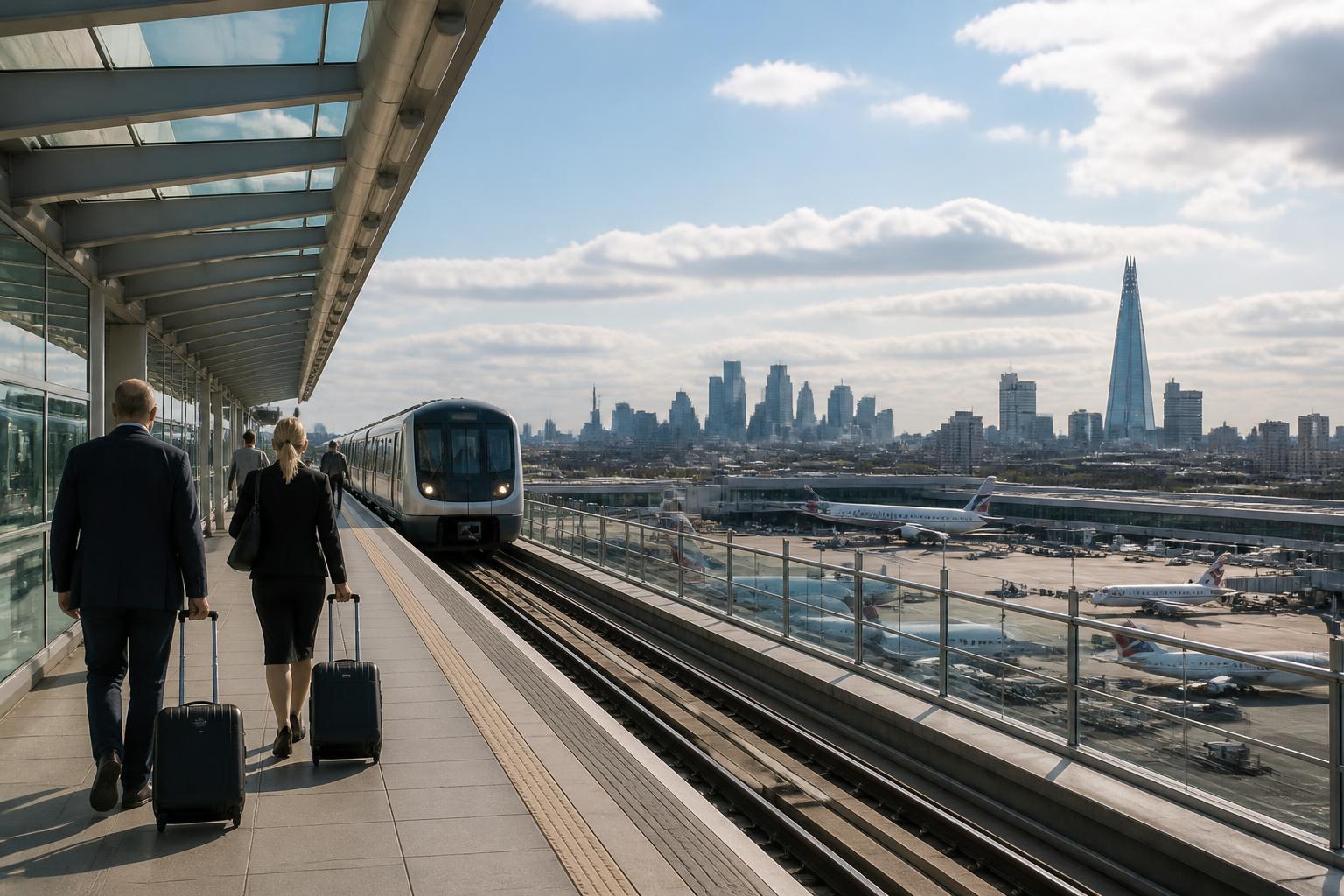
London City Airport is the closest airport to Central London, just 10 kilometres east, making it an ideal choice for business trips and short breaks. It is small and quick to navigate, without the queues often found at larger airports, and its connection to the city centre is primarily via the DLR, London's light railway.
If you are travelling alone with hand luggage, the DLR to Bank or Canary Wharf is fast and economical. Couples without much luggage can comfortably combine the DLR with a short change to the Underground or Elizabeth Line for their final destination. Families with children and luggage usually prefer a taxi or private transfer, as the DLR has stairs and lifts with limited capacity during peak hours. Those arriving late at night should pay particular attention to the timetables, as the airport and the surrounding lines do not operate 24 hours a day.
Below, we analyse all transfer options from London City to the city centre, with indicative durations, costs and practical tips, so you can choose the solution that best suits your trip.
Summary of options
| Mode | Duration | Cost | Frequency | Hours |
|---|---|---|---|---|
| DLR to Bank / Canary Wharf | 20 to 30 minutes | 3 to 6 euros | every 8 to 10 minutes | approx. 05:30 to 00:30, Sunday later morning |
| DLR with Elizabeth Line connection | 30 to 45 minutes | 4 to 8 euros | every 5 to 10 minutes | almost 24 hours, less frequent at night |
| Local bus (connecting to Underground) | 35 to 55 minutes | 2 to 4 euros | every 10 to 15 minutes | 24 hours on central routes |
| Taxi | 25 to 45 minutes depending on traffic | 35 to 60 euros | immediately available | 24 hours |
| Private transfer | 25 to 40 minutes | 45 to 75 euros per vehicle | with reservation | 24 hours |
Prices were valid as of September 2026, please check before travelling.
Train or Underground from the airport
London City's main connection to the rest of London is via the DLR, an automatic driverless light railway that serves East London and connects to many Underground lines. The station is located right next to the arrivals terminal, a short walk away.
DLR to Bank and Canary Wharf
The DLR from London City Airport station reaches Canary Wharf in a few minutes and Bank, in the heart of the City of London, in about 20 to 25 minutes. From there, there is direct access to many Underground lines to continue to other parts of the city.
Connecting with the Elizabeth Line
At Canary Wharf, you can change to the Elizabeth Line, which crosses London quickly from east to west, with stops such as Liverpool Street, Paddington and Heathrow. This connection is particularly useful if your final destination is in West London or if you are continuing your journey to another airport.
Tickets and cards
The DLR accepts Oyster card, contactless payment with a bank card and paper tickets from the station machines. A separate ticket is not needed from the rest of the Underground network, as fares are calculated based on zones, just like on the London Underground.
Frequency and operating hours
DLR trains run frequently, every 8 to 10 minutes for most of the day, but the service stops in the evening around 1 AM and starts again early in the morning. On Sundays, services start later, so if your flight arrives early on a Sunday morning, check the timetable before planning your journey.
Bus and express services
London City does not have a dedicated express bus service to the city centre, as is the case with other London airports, as the short distance and good connection with the DLR cover this need. However, there are local bus lines connecting the airport with neighbouring areas and Underground stations, useful mainly for those staying nearby or wanting a more economical alternative.
These local lines are cheaper than the DLR, but take longer and are not the practical choice if you are heading directly to the city centre. It usually only makes sense to use them if your destination is in an area better served by bus than by the DLR, for example, in a neighbourhood in East London without a nearby train station.
Taxi from the airport
Official taxis (black cabs) are located at a designated spot outside arrivals and charge by meter. Thanks to the short distance from the city centre, the journey is one of the cheapest compared to other London airports, with an indicative cost of 35 to 60 euros to central areas such as the City or the West End. Luggage is usually not charged extra, but it is a good idea to confirm this with the driver.
Apps like Uber and Bolt operate normally at London City, with a pick-up point near arrivals. During peak hours, especially on weekday mornings and afternoons, traffic around Canary Wharf and the City can extend the journey, so the DLR often remains a more predictable option for those with a specific appointment.
Private transfer and shuttle
For business trips or families with luggage, a private transfer at a fixed price offers comfort without transfers between stations. Most companies monitor your flight and adjust the pick-up time in case of delay, and also offer free waiting time. The cost ranges from 45 to 75 euros per vehicle, depending on the car type and number of passengers.
Due to the short distance, many business travellers heading directly to a meeting in Canary Wharf or the City prefer private transfer, as the cost difference compared to a taxi is small, while booking in advance ensures a fixed price without surprises from traffic.
Car hire, when it's worth it
Car hire from London City is almost never worth it if your destination is Central London, as driving and parking in the city are expensive and a congestion charge applies to a large part of the city centre on weekdays. The airport mainly serves short trips, so in most cases, the DLR or a taxi fully covers the need for transport without the hassle of driving.
However, if you need a car to continue your journey outside London, most rental companies do not have an office inside the small terminal, so you usually need a prior booking with pick-up at a nearby location outside the airport. Always check insurance and any additional charges before booking.
Night arrival, children, luggage and accessibility
London City has limited flight hours compared to other London airports, with the last arrivals earlier in the evening and no flights in the early hours of the morning, meaning the DLR usually manages to serve most passengers. However, if your flight is significantly delayed, check the DLR timetable before you arrive, as the service stops earlier on Saturday and Sunday evenings compared to weekdays. The station has lifts, but during peak hours there can be congestion, so families with prams or people with wheelchairs should allow a little extra time.
Families with small children and a lot of luggage usually prefer a taxi or private transfer, precisely because the short distance makes the cost affordable compared to other London airports. If you are travelling with an infant and need a car seat, inform the transfer company in advance, as it is not always provided automatically.
How much does the journey cost in total?
For one person with hand luggage, the DLR is by far the most economical option, costing just 3 to 6 euros depending on the destination. For two people, the sum of two DLR tickets remains clearly cheaper than a taxi or transfer, so the train is almost always more cost-effective unless you have a lot of luggage. For a family of four, a taxi or private transfer becomes a more attractive option, as the short distance keeps the total cost lower compared to other London airports, while gaining comfort and time.
Don't forget to factor in the return journey to the airport at the end of your trip. Because London City is so close to the centre, many travellers prefer to take a taxi or transfer for only one direction and use the DLR for the other, to reduce the overall cost without sacrificing comfort.
Common mistakes travellers make
- They look for an express bus to the city centre, whereas the practical solution from London City is almost always the DLR.
- They don't realise that the DLR stops earlier on Saturday and Sunday evenings compared to weekdays.
- They ignore the connection with the Elizabeth Line at Canary Wharf and end up making more changes on the Underground.
- They underestimate the traffic around Canary Wharf and the City during peak hours when choosing a taxi.
- They don't check if they need a car outside the airport for rental, as there is no office inside the small terminal.
Where to stay and what to read before your trip
Before booking accommodation, see in detail which areas of London suit you best depending on your arrival station, in our guide on where to stay in London. If you plan to combine your trip with another city in Britain, our accommodation guide for Manchester is also useful, as is the guide for Edinburgh if you intend to travel north to Scotland. For travellers continuing to Ireland, take a look at the accommodation guide for Dublin. Families travelling with children can get ideas from the general guide to holidays with children before deciding where to stay in London.
Frequently Asked Questions
What is the fastest way from London City to Central London?
The DLR is the fastest and most convenient option, with a journey of approximately 20 to 25 minutes to Bank, in the heart of the City. The station is located next to the terminal, so no additional transfer is needed to reach the platform.
Is the DLR or a taxi better value?
The DLR is almost always more economical, costing just a few euros. A taxi or private transfer is mainly worthwhile when travelling with a lot of luggage, with children, or when the DLR is not operating due to the time, especially late on weekend evenings.
Does the DLR operate 24 hours a day?
No. The DLR stops around 1 AM and starts again early in the morning, with a later start on Sundays. Always check the timetable before your flight, especially if you are arriving very late at night.
Can I use an Oyster card on the DLR from the airport?
Yes, the DLR accepts Oyster card, contactless payment with a bank card and paper tickets. Fares are calculated based on zones, just like on the rest of the London Underground network, without the need for a separate ticket.
How much does a taxi cost from London City to the centre?
An official taxi usually costs between 35 and 60 euros depending on traffic and destination, thanks to the short distance from the centre. It is one of the cheapest taxi journeys among London airports.
Is there a direct connection to the Elizabeth Line from the airport?
Not directly, but the connection is very easy. You take the DLR to Canary Wharf and change there to the Elizabeth Line, which quickly takes you to central stations such as Liverpool Street and Paddington.
Is car hire worth it for Central London from London City?
Almost never. Driving and parking in the centre are expensive, and a congestion charge applies on weekdays. The DLR or a taxi fully cover the short distance without the hassle of driving on unfamiliar roads.
Conclusion
London City is London's most convenient airport for quick access to the city centre, thanks to its short distance and the reliable DLR that reaches key destinations within minutes. For most travellers, especially those travelling alone or as a couple without much luggage, the train remains the obvious choice for both speed and low cost.
Those travelling with family, a lot of luggage, or arriving close to the DLR's operating hours limit, will find a taxi and private transfer an affordable alternative, precisely because the short distance keeps prices lower compared to other London airports. In any case, a little planning before the trip, checking timetables and comparing options, ensures a comfortable and stress-free arrival in the city centre.
Read also

Η συντακτική ομάδα
Travelo Team
Συντακτική ομάδα του Travelo.gr
Πολυταξιδεμένη συντακτική ομάδα με πάνω από 15 χρόνια στον ταξιδιωτικό δημοσιογραφικό χώρο και περισσότερους από 45 προορισμούς σε Ελλάδα και Ευρώπη. Έχουμε διανυκτερεύσει σε εκατοντάδες καταλύματα — από μικρά οικογενειακά ξενοδοχεία και παραδοσιακούς ξενώνες μέχρι resorts 5 αστέρων — και δοκιμάζουμε προσωπικά περιοχές, μεταφορές και υπηρεσίες πριν προτείνει κάτι.
- 45+ προορισμοί επί τόπου
- 500+ καταλύματα σε αξιολόγηση
- 15 χρόνια ταξιδιωτικής αρθρογραφίας
Πώς δουλεύουμε: κάθε οδηγός βασίζεται σε επιτόπια εμπειρία, διασταύρωση αξιολογήσεων επισκεπτών και έλεγχο διαθεσιμότητας/τοποθεσίας κάθε καταλύματος. Ορισμένοι σύνδεσμοι είναι συνεργατικοί (affiliate) — αν κάνετε κράτηση μέσω αυτών, στηρίζετε το Travelo.gr χωρίς καμία επιπλέον χρέωση για εσάς, και δεν επηρεάζουν τις προτάσεις μας. Τελευταία ενημέρωση οδηγού: 22 Σεπτεμβρίου 2026.