Where to stay in Jerusalem: areas and hotels
Old City, Mamilla, German Colony or King David? Find out where your accommodation in Jerusalem best fits.
Από Travelo Team
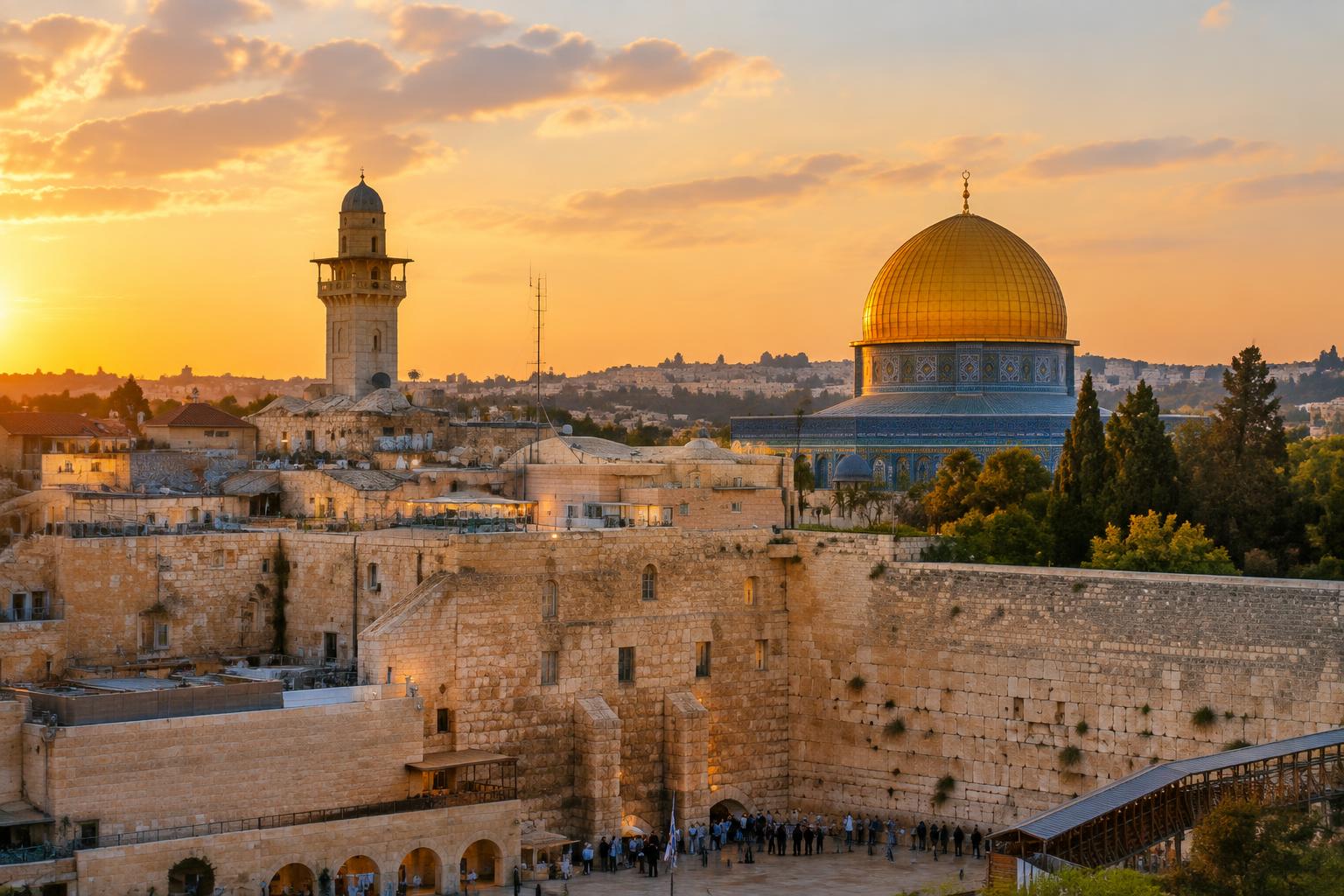
If you're visiting Jerusalem for the first time, the best base is the area around the Old City and Mamilla. Here you'll be just a few minutes' walk from the Western Wall, the Church of the Holy Sepulchre, and the Dome of the Rock, surrounded by restaurants, shops, and public transport links. If you're travelling on a limited budget, hotels within the Old City walls offer lower prices and an unforgettable experience, as you'll literally be sleeping amidst the alleyways trodden by pilgrims for centuries.
Couples usually prefer the German Colony, a neighbourhood with pedestrian streets, cafes, and old stone houses, quieter than the city centre but with easy access to it. Families are better off in apartments around King David Street or in Baka, where there's more space and prices are more reasonable than the luxury hotels in the centre. Mamilla, finally, remains the most convenient option for those who want to combine a central location with modern amenities, without reaching the cost of the King David Hotel.
Jerusalem isn't a large city, so the distance between the areas we suggest is usually a fifteen to twenty-minute walk. What's important isn't so much the distance in kilometres as how you want to wake up in the morning – steeped in the history of the Old City or in a more modern, quieter neighbourhood.
A few words about the city before you decide where to stay
Jerusalem was built on hills, and its history spans over three thousand years, something immediately felt as soon as you walk through the narrow alleyways of the Old City. Within its walls, it is divided into four quarters: Christian, Jewish, Muslim, and Armenian, and within a few square kilometres, you'll find three of the world's most important pilgrimage sites: the Western Wall, the Church of the Holy Sepulchre, and the Temple Mount area with Al-Aqsa Mosque. The city outside the walls developed mainly in the 19th and 20th centuries, with neighbourhoods like the German Colony, built by German Templars, still retaining its stone houses from that era.
The best time to visit Jerusalem is in spring, from mid-March to May, and in autumn, from late September to November, when temperatures range from around 20 to 25 degrees Celsius and rain is rare. In summer, the heat is intense but dry, while winter brings cold, rain, and occasionally a little snow, which completely transforms the city's appearance for a day or two each year. It's important to consider Saturday, as many shops, restaurants, and public transport in Jewish neighbourhoods cease operation from Friday sundown until Saturday evening. In contrast, the Old City and Arab neighbourhoods continue as normal, which is why many visitors plan their Saturday for a stroll in the Old City or on the Mount of Olives.
Getting around the city is mainly on foot in the Old City and the centre, while for longer distances there's a tram that runs through the city from the northern suburbs to the centre, as well as a bus network. Taxis are available but not always cheap, so if you're staying near the centre or the Old City, it's most practical to walk as much as possible. It's also worth knowing that many of the places you might want to visit, such as Bethlehem or the Dead Sea, are outside the city limits and require separate arrangements by bus or organised tour.
Old City: within the walls, in the heart of history
Staying within the Old City walls is an experience unlike any other area. You walk amidst stone alleyways that haven't changed much for centuries, hear the church bells alongside the call to prayer from the minarets, and are just a few steps from the city's most important pilgrimage sites. Most accommodations here are small, family-run hotels in old buildings, with simpler amenities than modern hotels but with a character rarely found elsewhere.
The advantage of this choice is obvious: you're at the centre of everything you came to see, with no need for morning commutes. The disadvantage is that the alleyways are narrow and often crowded, car access is difficult or impossible, and in the evening, the area is quieter than some travellers seeking nightlife might expect. It's an ideal choice for those who want to deeply experience the city's atmosphere and don't mind simple accommodation.
1. Jerusalem Hotel
Located in East Jerusalem, near the Damascus Gate, in an old mansion with stone walls and a courtyard. It has a restaurant serving local cuisine and staff who genuinely help guests organise their days in the Old City.
- Average cost: 90 to 130 € per night
- Ideal for: couples and travellers seeking atmosphere
2. New Imperial Hotel
Right next to the Jaffa Gate, in a historic 19th-century building. The stone corridors and wooden ceilings evoke the place's ancient history, while the price remains affordable.
- Average cost: 70 to 110 € per night
- Ideal for: those who want to stroll the Old City alleyways
3. Golden Walls Hotel
Near the Lion's Gate, a few minutes from the Via Dolorosa and the Dome of the Rock. A simple, functional hotel with a rich breakfast, a good choice for those who want to stay within the walls without great expense.
- Average cost: 75 to 115 € per night
- Ideal for: families and small groups on a moderate budget
4. Notre Dame Center
Opposite the New Gate, in an imposing building with views of the walls and the Mount of Olives from its rooftop. It operates under Catholic management but welcomes all travellers.
- Average cost: 95 to 150 € per night
- Ideal for: those seeking quiet accommodation with panoramic views
Mamilla and city centre: the most convenient base for most
The area around the pedestrianised Mamilla Avenue and Hillel Street is the most popular choice for visitors who want to combine a central location with modern amenities. You'll be five minutes' walk from the Jaffa Gate and the entrance to the Old City, while around you, you'll find shops, restaurants, and cafes open daily. This neighbourhood is suitable for both couples and travellers who want to feel like they're staying in a modern city, not just a historical centre.
The advantage is the balance: you have the Old City close by, as well as modern shops, banks, and transport links. The disadvantage is that prices here are among the highest in the city, especially in hotels like the Mamilla Hotel. If you want a central location with a lower cost, there are simpler options in the same area.
5. Mamilla Hotel
Designed by Moshe Safdie, it sits above the Mamilla shopping boulevard, with views of the Old City walls from its rooftop. Luxurious, with restaurants and a spa, ideal for those seeking comfort without sacrificing proximity to the Jaffa Gate.
- Average cost: 320 to 480 € per night
- Ideal for: couples and travellers seeking luxury
6. Brown JLM Mamilla, a member of Brown Hotels
A modern boutique hotel near the pedestrianised Hillel Street, with a rooftop bar and design that stands out from typical city hotels. Very close to cafes and restaurants.
- Average cost: 180 to 260 € per night
- Ideal for: younger travellers who want a central location
7. Mamilla View Urban HOTEL
On Shlomtzion HaMalka Street, a stone's throw from the Jaffa Gate and the Mamilla shopping centre. Simple rooms, good location, and more affordable prices than neighbouring luxury hotels.
- Average cost: 140 to 200 € per night
- Ideal for: those wanting a central base without excessive cost
8. Villa Mamilla Boutique suites
A villa with a garden and a rooftop terrace near Mamilla, with spaces that feel more like a traditional home than a hotel. A good choice for groups wanting to share a larger accommodation in the heart of the city.
- Average cost: 200 to 320 € per night
- Ideal for: families or groups of friends
German Colony and Baka: for a peaceful stay with character
South of the city centre, the German Colony and neighbouring Baka offer a completely different picture of the city. The stone houses built by German Templars in the 19th century have been transformed into cafes, small shops, and restaurants, and the main Emek Refaim Street is bustling with people at all hours of the day. The neighbourhood is quieter in the evening than the city centre, but has a vibrant local life, which differentiates it from the areas around the Old City.
The advantage is the atmosphere and more reasonable prices compared to the centre, as well as easy access to restaurants that are open on Saturdays. The disadvantage is that you'll need a fifteen to twenty-minute walk or a short bus ride to reach the Old City, which isn't convenient for those who want to be in an absolutely central location. It's ideal for families and couples who want quieter evenings.
9. The Templer Inn
A small, family-run accommodation in a historic German Colony house, with personal care from the owners and a generous breakfast. The neighbourhood has pedestrian streets with cafes and restaurants that are also open on Saturdays.
- Average cost: 110 to 160 € per night
- Ideal for: couples seeking a quiet, authentic neighbourhood
10. Villa Brown Moshava, a member of Brown Hotels
A boutique hotel in a stone building from the old colony, with an inner courtyard and rooms that combine tradition and modern design. It's a few minutes' walk from Emek Refaim Street.
- Average cost: 170 to 250 € per night
- Ideal for: couples seeking a boutique experience
11. Jerusalem Garden Home
An old building from the 1920s on Derech Beit Lechem Avenue, with a garden and breakfast served outdoors when the weather permits. A few minutes by bus from the Old City.
- Average cost: 90 to 140 € per night
- Ideal for: families who want space and tranquillity
12. Rafael Residence Boutique
In the Baka neighbourhood, near Emek Refaim, with simple but comfortable rooms and walking access to cafes and shops. A quiet area, good for those avoiding the noise of the city centre.
- Average cost: 100 to 150 € per night
- Ideal for: travellers seeking an affordable, quiet base
King David Street: luxury and comfort close to everything
King David Street connects the new city centre with the Old City and hosts some of Jerusalem's most historic hotels. The area is calmer than Mamilla, with grand buildings, gardens, and views towards the walls, while the walk to Jaffa Gate is approximately ten minutes. This choice suits those who desire spacious comfort, especially families looking for apartments rather than standard hotel rooms.
The advantage is the combination of a quiet neighbourhood with excellent access to all points of interest, as well as the availability of apartments with kitchens, which suits larger groups. The disadvantage is that luxury hotels here, such as the King David Hotel, have some of the highest prices in the city, while options for individual travellers on a small budget are fewer.
13. King David Hotel Jerusalem
A historic hotel from 1931 on the eponymous street, with gardens, a swimming pool, and views of the Old City walls. It has hosted heads of state and remains a benchmark for luxury accommodation in the city.
- Average cost: 400 to 600 € per night
- Ideal for: those seeking classic luxury with history
14. 104 King David Residence Jerusalem Rent
Apartments within a complex with a swimming pool, on the same street as the King David Hotel, ideal for groups who want more space and a kitchen. Walking distance from Mamilla and the Old City.
- Average cost: 150 to 220 € per night
- Ideal for: families with children or larger groups
15. 108 King David Residence Jerusalem Rent
A similar apartment complex on King David Street, with a reception, swimming pool, and a location that allows you to reach everything on foot. A good solution for those who want the comfort of an apartment in the city centre.
- Average cost: 140 to 210 € per night
- Ideal for: couples or families seeking independence
Area comparison at a glance
| Area | Ideal for | Price range/night | Distance from centre |
|---|---|---|---|
| Old City | First-timers, history lovers | 70 to 150 € | In the centre, zero |
| Mamilla and city centre | Comfort and central location | 140 to 480 € | 5 minutes' walk |
| German Colony, Baka | Families, quiet holidays | 90 to 250 € | 15 to 20 minutes' walk |
| King David Street | Luxury, families with apartments | 140 to 600 € | 10 minutes' walk |
Practical information for your stay
Jerusalem does not have its own large international airport, so most visitors arrive via Ben Gurion Airport near Tel Aviv, which is about forty-five minutes away by car or train. From there, there's a direct railway connection to Yitzhak Navon station in Jerusalem, as well as buses and taxis covering the same route. If you're interested in flights to the region, information on flights to European destinations might help you as a point of comparison when looking for connecting flights via Europe.
Within the city, the most convenient transport for medium distances is the tram, which passes close to the city centre and the Old City, while buses cover the remaining neighbourhoods. Accommodation prices vary significantly depending on the season, with spring around Easter and major Jewish holidays being the most expensive period, where prices can increase by thirty to fifty per cent compared to winter. In summer, prices remain moderate due to the heat, while winter, apart from holidays, offers the most economical accommodation options throughout the city.
If you plan to combine your trip with other destinations in the region, it's worth checking out a comprehensive guide to Egypt or a guide to Dubai, as many routes to Israel pass through Middle Eastern hubs. If you want to know what to expect before travelling to neighbouring countries with specific rules, the twelve things you need to know before travelling to Jordan are also useful, as many visitors to Jerusalem combine their trip with Petra.
For those planning a broader trip to multiple destinations throughout the year, a list of top destinations for New Year's Eve might be helpful, and if your trip includes a stop in Europe, see where to stay in Amsterdam or information on Lisbon, two cities that often serve as intermediate stops on flights to Israel. Finally, if you're interested in what to wear in more conservative destinations in the region, see what is recommended in the article what to wear in Jordan, as several recommendations also apply to visiting sacred sites in Jerusalem.
Frequently asked questions
What is the best area for a first-time visit to Jerusalem?
For a first-time visit, the best option is the Old City or the neighbouring area around Mamilla, as you'll have walking access to all the main attractions and won't need much planning for your commutes.
Where to stay in Jerusalem on a small budget?
The most affordable accommodations are found within the Old City, in small family-run hotels with prices starting around seventy euros per night, especially if you book outside of major Jewish holidays.
Which area is best suited for couples?
The German Colony and Mamilla are best suited for couples, as they combine a peaceful atmosphere, good restaurants, and easy access to the city's most important sites.
Where should I stay if I'm travelling with my family?
Families are better off in apartments around King David Street or in Baka, where there's more space, a kitchen, and tranquillity compared to the dense city centre.
How far is the airport from Jerusalem?
Ben Gurion Airport is about forty-five minutes away by car or train, with a direct railway connection to the city's central station.
What is the best time of year to stay in Jerusalem?
Spring and autumn offer the mildest temperatures and most stable accommodation prices, while major Jewish holidays significantly increase hotel costs.
Should I consider Saturday when booking accommodation?
Yes, on Saturdays many shops and public transport in Jewish neighbourhoods cease operation, so if you're staying outside the Old City, it's worth planning your movements accordingly.

Η συντακτική ομάδα
Travelo Team
Συντακτική ομάδα του Travelo.gr
Πολυταξιδεμένη συντακτική ομάδα με πάνω από 15 χρόνια στον ταξιδιωτικό δημοσιογραφικό χώρο και περισσότερους από 45 προορισμούς σε Ελλάδα και Ευρώπη. Έχουμε διανυκτερεύσει σε εκατοντάδες καταλύματα — από μικρά οικογενειακά ξενοδοχεία και παραδοσιακούς ξενώνες μέχρι resorts 5 αστέρων — και δοκιμάζουμε προσωπικά περιοχές, μεταφορές και υπηρεσίες πριν προτείνει κάτι.
- 45+ προορισμοί επί τόπου
- 500+ καταλύματα σε αξιολόγηση
- 15 χρόνια ταξιδιωτικής αρθρογραφίας
Πώς δουλεύουμε: κάθε οδηγός βασίζεται σε επιτόπια εμπειρία, διασταύρωση αξιολογήσεων επισκεπτών και έλεγχο διαθεσιμότητας/τοποθεσίας κάθε καταλύματος. Ορισμένοι σύνδεσμοι είναι συνεργατικοί (affiliate) — αν κάνετε κράτηση μέσω αυτών, στηρίζετε το Travelo.gr χωρίς καμία επιπλέον χρέωση για εσάς, και δεν επηρεάζουν τις προτάσεις μας. Τελευταία ενημέρωση οδηγού: 6 Σεπτεμβρίου 2026.