How much does an airline earn per flight?
Have you ever wondered about an airline's costs and profits on a routine flight? How much does the airline earn? How many airline tickets does it need to sell to make a profit and at what price percentage to cover its expenses? How much does a flight cost? We will try to answer the above question by creating a hypothetical…
Από Travelo Team
Have you ever wondered about an airline's costs and profits on a routine flight? How much does an airline earn? How many airline tickets does it need to sell to make a profit and at what price percentage to cover its expenses?
How much does a flight cost?
We will try to answer the above question by creating a hypothetical domestic flight Athens-Thessaloniki with 170 passengers. Each passenger paid a fare of 50€.
Every passenger's ticket on every flight accounts for something. Some passengers 'pay' for flight insurance and potential compensation, others pay for fuel, and others for aircraft maintenance. Everything you see on a plane and at an airport, as planes pay high taxes, is not free and of course requires corresponding payments.
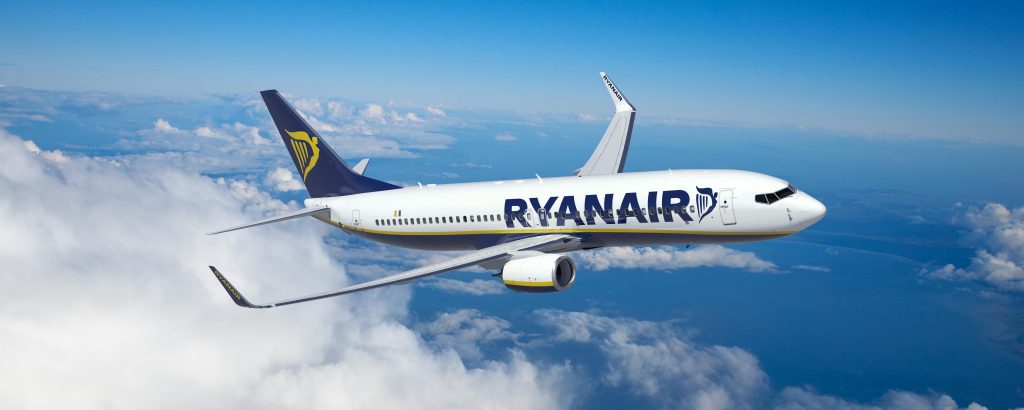
Fuel is by far the biggest cost for airlines. Although prices have fallen significantly in recent years, it still represents a major expense. For example, a Boeing 737-800 like those used by Ryanair, consumes approximately 3.60kg of jet fuel per kilometre of flight. The Athens-Thessaloniki route is 300 kilometres (as the crow flies), so it consumes approximately 1 tonne and 80 kg of fuel. Based on current prices (2017), one tonne of fuel costs approximately 480€.
So, we calculate the fuel cost for an Athens-Thessaloniki route at 520€.
From the 8,500€ collected by the company (150 people x 50€), we quickly subtract 520€, leaving us with 7,980€.
After fuel costs, there is the depreciation of the aircraft, the annual cost of leasing or ownership, and their maintenance. It has been estimated that about 20 people on a plane 'pay' for the maintenance and depreciation of the aircraft. We subtract another 1,000€, leaving a balance of 6,980€.
The next expense for an airline is the taxes paid at each airport. If we use Athens International Airport (Spata) as our basis, then the usage fees per passenger and aircraft are as follows:
Fees per passenger: 9.90€ for Schengen countries + 5€ security check + 1.92€ for baggage services (conveyor belt). There is also an additional charge for airlines amounting to 0.32€ per passenger. There is also the service upgrade fee which is 12€ per passenger. Children up to 5 years old, transit flights, 24-hour transfers, and crew members are exempt from this fee. Also, some routes to and from Athens (to small Greek islands – unprofitable routes) are also exempt from these service upgrade fees.
Total fees for an Athens-Thessaloniki flight: 29.14€ / passenger.
However, there are also fees charged for each aircraft, specifically for services to the plane, such as:
Landing fees: These are determined by the aircraft's take-off weight (MTOW). In the case of the Boeing 737-800, the cost is 174€ (Wikipedia MTOW values by aircraft).
Aircraft parking costs roughly the same. More specifically, if the aircraft parks at the main terminal (with jet bridge access), the cost is 1.90€ x MTOW (mentioned above). The final cost is therefore 368€. If the aircraft parks further away and boarding/disembarking is done by bus, then the cost is 259€.
Also, the provision of power to aircraft is highly charged. The cost for 50 minutes of electricity and air is 116€.
Finally, the general aviation fee is 300€.
You can find detailed usage fees on the official website of Athens International Airport (Spata).
So, the total cost for an aircraft with 170 passengers on an Athens-Thessaloniki route is: 4,371€ in fees for passengers and 849€ in fees for the aircraft.
Total: 5,220€
This is the cost of a single flight.
From the 'cash register' balance, we subtract this amount, leaving us with: 1,760€
This is the balance for an Athens-Thessaloniki flight with a Boeing 737-800 and 170 passengers.
This money must cover: crew salaries, complimentary meals (if any) and refreshments, as well as aircraft cleaning.
This is an average case, as on the one hand, airline tickets were calculated at 50€ (average price), while the aircraft was calculated with a 170-passenger occupancy (Ryanair's Boeing 737-800 has capacity for 192 passengers – 33 rows, excluding row '13', with 6 seats per row).
What is your opinion? How profitable are the Athens-Thessaloniki routes, where competition is enormous and prices drop sharply due to the coexistence of Aegean and Ryanair? This is good for travellers, but are all safety rules followed? Is there full maintenance on the aircraft or not due to cost cutting?
On travelo.gr you will find cheap flights as well as useful articles – travel guides.

Η συντακτική ομάδα
Travelo Team
Συντακτική ομάδα του Travelo.gr
Πολυταξιδεμένη συντακτική ομάδα με πάνω από 15 χρόνια στον ταξιδιωτικό δημοσιογραφικό χώρο και περισσότερους από 45 προορισμούς σε Ελλάδα και Ευρώπη. Έχουμε διανυκτερεύσει σε εκατοντάδες καταλύματα — από μικρά οικογενειακά ξενοδοχεία και παραδοσιακούς ξενώνες μέχρι resorts 5 αστέρων — και δοκιμάζουμε προσωπικά περιοχές, μεταφορές και υπηρεσίες πριν προτείνει κάτι.
- 45+ προορισμοί επί τόπου
- 500+ καταλύματα σε αξιολόγηση
- 15 χρόνια ταξιδιωτικής αρθρογραφίας
Πώς δουλεύουμε: κάθε οδηγός βασίζεται σε επιτόπια εμπειρία, διασταύρωση αξιολογήσεων επισκεπτών και έλεγχο διαθεσιμότητας/τοποθεσίας κάθε καταλύματος. Ορισμένοι σύνδεσμοι είναι συνεργατικοί (affiliate) — αν κάνετε κράτηση μέσω αυτών, στηρίζετε το Travelo.gr χωρίς καμία επιπλέον χρέωση για εσάς, και δεν επηρεάζουν τις προτάσεις μας. Τελευταία ενημέρωση οδηγού: 22 Σεπτεμβρίου 2026.