Where to stay in Pelion: the complete guide
Where to stay in Pelion: a complete guide to accommodation in Portaria, Makrinitsa, Vyzitsa, Agios Ioannis, and Southern Pelion, with seasonal prices, accommodation options, and FAQs.
Από Travelo Team
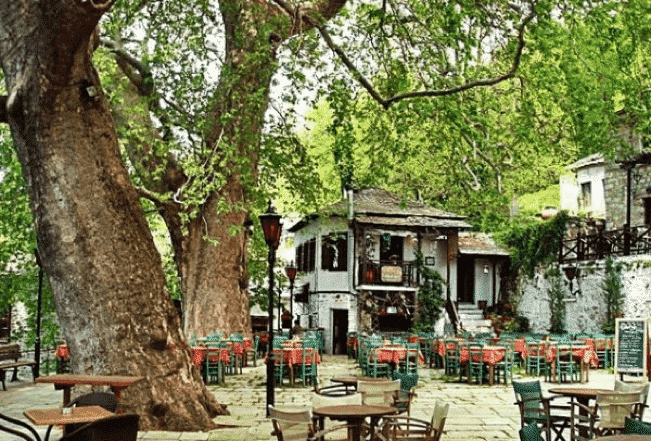
Pelion isn't just one destination. It's three or four distinct destinations glued onto the same mountain, and that's precisely why the question of "where to stay in Pelion" confuses so many people. You could wake up in the mist in a stone mansion with a fireplace, and by midday be swimming in a turquoise-water beach. The question isn't whether Pelion has good accommodation – it does, and plenty of it. It's about which side of the mountain suits your trip best.
In this guide, we divide Pelion into specific bases – Portaria, Makrinitsa, Vyzitsa and Pinakates, Tsagarada and Mouresi, Agios Ioannis and Papa Nero, Afissos and Kala Nera, Horto and Milina, Zagora and Horefto, Agria and Volos – and clearly state who each one works best for. Below, you'll find distances in kilometres, driving times, realistic seasonal prices, and specific accommodations you can book today.
A piece of advice before we start: in Pelion, distance in kilometres can be deceiving. Fifteen kilometres on winding roads above the Pagasetic Gulf is a thirty-minute drive, not ten. So don't choose a village based solely on the map. Choose based on what you plan to do each morning.
Quick answer: where to stay in Pelion depending on your trip
If you don't have time to read the whole guide, the table below does the job. It's the same logic we follow when a friend calls us asking, "Hey, three days in Pelion, where should I go?"
| Your trip | Best base | Why |
|---|---|---|
| First time in Pelion, winter | Portaria | 13 km from Volos, asphalt road, fireplaces, tavernas open all year |
| Romantic weekend break | Vyzitsa or Makrinitsa | 18th-19th century mansions, cobblestone streets, zero traffic |
| Summer with daily swimming | Agios Ioannis / Papa Nero | Organised beaches, accommodation 50 metres from the water |
| Family with young children | Kala Nera or Agria | Shallow waters, pedestrian walkway, supermarket, short distances |
| Quiet, low-key summer | Horto, Milina, Afissos | Southern Pelion, fish tavernas, fewer crowds |
| Hiking on the cobblestone paths | Tsagarada, Mouresi, Xourichti | Starting points for trails to Fakistra and Damouchari |
| Skiing in Hania | Portaria, Hania, Makrinitsa | 10–20 minutes from the ski centre |
| Without a car | Volos or Agria | Urban KTEL bus, train, day trips |
You'll also find all accommodations in Pelion gathered in one place, if you prefer to search yourself with date filters.
Pelion in 500 words: geography, character, and what to expect
Pelion is the mountain of the Centaurs, located in the Magnesia regional unit, stretching like a hook around the Pagasetic Gulf. Its highest peak, Pourianos Stavros, reaches 1,624 metres. From the peak to the sea, the distance is just a few kilometres in a straight line, and this compression explains everything else: the vegetation with its beech and chestnut trees, the cobblestone paths descending to beaches, the microclimate that changes every ten minutes of driving.
Practically, the mountain is divided into three zones. Western Pelion overlooks the Pagasetic Gulf and Volos: here are Portaria, Makrinitsa, Hania, Agios Lavrentios. The villages are close to the city, access is easy all year round, and the view from the balconies covers the entire gulf. Eastern Pelion faces the Aegean Sea: Zagora, Horefto, Makrirachi, Agios Dimitrios, Kissos, Mouresi, Tsagarada, Xourichti, Lampinou. This is where the famous beaches are found – Fakistra, Mylopotamos, Damouchari, Papa Nero – and this area also boasts the most greenery. Southern Pelion is milder and warmer: Afissos, Lefokastro, Horto, Milina, Platanias, Katigiorgis, Trikeri.
The character of each section differs significantly. In Western Pelion, you'll hear more Greek and see couples from Thessaloniki or Athens on a weekend trip – it's the classic winter destination with fireplaces, wine, and strolls on the cobblestones. In Eastern Pelion, especially from June to September, you'll see many foreigners, mainly British and Germans, holidaying for two weeks in guesthouses amidst the evergreen oak. In Southern Pelion, you'll find families who have been returning to the same room for decades, and fish tavernas that haven't changed their menu.
The distances that truly matter: Volos–Portaria 13 km (20 minutes), Volos–Makrinitsa 17 km (25 minutes), Volos–Hania 27 km (35 minutes), Volos–Tsagarada 55 km (1 hour 15 minutes), Volos–Agios Ioannis 62 km (1 hour 25 minutes), Volos–Afissos 27 km (35 minutes), Volos–Milina 45 km (55 minutes), Volos–Zagora 47 km (1 hour). From Athens to Volos is about 320 km and 3 hours 15 minutes via the Athens-Thessaloniki motorway; from Thessaloniki, it's 215 km and 2 hours 10 minutes.
And a truth no one tells you: it rains in Pelion. It is one of the wettest areas of mainland Greece, with mists that descend suddenly even in August in the high villages. Bring a windbreaker with you even in summer, and don't be surprised if at 800 metres the temperature is eight degrees lower than what you experienced on the beach. This alternation, ultimately, is the whole point.
Portaria: the safe choice for a first visit
If it's your first time and you don't want to overthink it, stay in Portaria. It's at an altitude of 600 metres, 13 kilometres from Volos, with a village square, plane trees, running water, and plenty of tavernas open even on a Tuesday in November. It has the best service network of all the mountain villages: a pharmacy, a nearby petrol station, ATM, doctor. It sounds mundane, but when you have a small child or are visiting out of season, these things count.
From Portaria, you're 10 minutes from Makrinitsa, 15 minutes from Hania and the ski centre, 20 minutes from Volos for ouzeries, and an hour from the Aegean beaches. In other words, it's a hub, not a dead end. The drawback? Precisely because it's convenient, it gets packed on winter weekends and the best accommodations are booked three to four weeks in advance.
Accommodation in Portaria
- Xenia Palace Portaria — the historic Xenia, renovated, with a swimming pool and postcard-perfect views of the Pagasetic Gulf. The choice for an anniversary.
- Pilion Terra Hotel — modern, cosy, with a spa and an excellent breakfast. Very good value for money in winter.
- Portaria Hotel & Spa — a classic hotel with an indoor pool, ideal for when it rains for three consecutive days.
- Archontiko Pantou — a traditional mansion, wood and stone, family-run.
- Despotiko Hotel — a small boutique hotel with attention to detail, good for couples seeking peace and quiet within the village.
- Valis Resort — towards Agria, with a pool and large rooms for families.
Makrinitsa: Pelion's balcony
Makrinitsa is the village of photographs. Built amphitheatrically at 500–700 metres, with no cars allowed within the settlement, featuring stone cobblestone paths winding up and down, and fountains with marble carvings. You leave your car in the car park at the entrance and continue on foot — and with your suitcases. This is the only serious drawback: if you're not steady on your feet or have a lot of luggage, ask the accommodation how many stairs there are before booking.
What you lose in convenience, you gain in atmosphere. The café in the square with Theofilos's frescoes, the view that at night turns Volos into a lake of lights, the shops selling herbs and tsipouro. A night here is worthwhile, even if you stay elsewhere for the rest of your trip.
Accommodation in Makrinitsa
- Archontika Karamarlis — one of the most beautifully restored mansions on the mountain, with fireplaces in the rooms.
- Thetis Makrinitsa — modern touches in a stone shell, excellent views from the balconies.
- Adam Hotel — a reliable choice, good breakfast, friendly family.
- Archontiko Repana — authentic, with wooden ceilings and an impressive living room.
- Archontiko Xantha — quiet, central, with very good value for money and experience.
- Santikos Mansion — for those seeking luxury in a historic building.
Vyzitsa and Pinakates: mansions and tranquility in south-western Pelion
Vyzitsa is Makrinitsa without the crowds. Stone mansions from the 18th and 19th centuries, cobblestone paths, a village square with a plane tree, and views of the Pagasetic Gulf. Nearby, Pinakates is even quieter – one of the few villages where at night you only hear water and cicadas. Both are 30–35 minutes from Volos and 15 minutes from the beaches of Kala Nera and Afissos, making them ideal for a trip that wants both mountains and sea without changing accommodation.
The area is also the starting point for Pelion's easiest hike: the cobblestone path from Vyzitsa to Agios Georgios Nilias, a half-hour downhill walk through plane trees. And it's the most convenient stop for the Pelion train from Ano Lehonia to Milies.
Accommodation in Vyzitsa, Pinakates and Milies
- Archontiko Blana — a classic Pelion mansion in Vyzitsa, cosy and well-maintained.
- Valeni Boutique Hotel — one of the best boutique hotels on the mountain, with a pool and a view.
- Stevalia Hotel & Spa — in Pinakates, with a spa and indoor pool for winter weekends.
- Archontiko Sakali — traditional, with a large garden and peace and quiet.
- 1910 Lifestyle Boutique Hotel — modern design in an old building, good for couples.
- Aleka's House — an affordable, clean, and cosy option for two.
Tsagarada, Mouresi and Kissos: green Eastern Pelion
Tsagarada is the village with the highest density of greenery in Pelion and home to the plane tree of Agia Paraskevi — a tree approximately a thousand years old with a trunk circumference of over 14 metres. The village doesn't have a single centre but rather four districts clustered around churches, so when booking accommodation, check which district it's in; the difference could be two kilometres uphill.
From Tsagarada and neighbouring Mouresi, you can descend in ten to fifteen minutes to Mylopotamos, Fakistra, and Damouchari. It's the best base for someone who wants to swim on wild beaches in the morning and enjoy the cool air at 500 metres in the evening. Kissos, higher up, is the most "forested" of all the villages — with the church of Agia Marina and its impressive carved wooden iconostasis.
The disadvantage of the area is the driving. The road from Volos passes through Portaria and Hania, has many bends, and requires caution at night or in fog. Allow 1 hour 15 minutes, without stops.
Accommodation in Tsagarada, Mouresi and surrounding areas
- 12 Months Luxury Resort — the most luxurious in the area, with a spa, pool, and Aegean views.
- Olga Hotel Mouresi — quiet, family-run, very good value for money.
- Archontiko Naoumidis — stone and wood, with a carefully prepared breakfast.
- Kritsa Hotel — tasteful, with an emphasis on local gastronomy.
- Leda Studios — self-contained studios with a kitchen, ideal for longer stays.
- Diplomat's Holidays — apartments for families and groups.
Agios Ioannis and Papa Nero: Pelion accommodation by the sea
If the question is "where to stay in Pelion in summer," the most honest answer for most people is Agios Ioannis. It is the most organised seaside settlement in Eastern Pelion: a coastal promenade, sunbeds, tavernas, mini-markets, water sports school, rooms literally on the water. It's not an untouched fishing village – it's touristy and knows it – but it solves the problem of "I don't want to get in the car for fourteen days."
Next door, separated by a hill and a ten-minute walk, Papa Nero is more relaxed: a large beach with pebbles and sand, a few tavernas, a small river at one end, camping. Many do the obvious – stay in Papa Nero and eat in Agios Ioannis.
A third place worth mentioning: Damouchari, ten minutes north, a tiny natural harbour with a Venetian castle and crystal-clear waters, where scenes from Mamma Mia were filmed. It has a few rooms and two or three tavernas, and it's the image you'll remember when you tell friends, "go to Pelion."
Accommodation in Agios Ioannis, Papa Nero and Damouchari
- Agapitos Villas & Suites — opposite the beach, with a garden and courteous service.
- Agapitos Guesthouses — a more affordable version, equally good location.
- Evripidis Hotel — a classic choice in Agios Ioannis, with a pool.
- Ammos Papanero — metres from Papa Nero beach, ideal for families.
- Sunrise Pelion Sea Villa — for groups of friends or two families together.
- Faros Milopotamos — above Mylopotamos, with a view that justifies every bend in the road.
- Akro Rooms — simple, clean rooms with excellent value for money and views.
Afissos and Kala Nera: Pelion for families with young children
On the western, "inner" side of the mountain, the Pagasetic Gulf is calmer than the Aegean. There are no waves, the water gradually deepens and warms up earlier. This is the whole point for parents with children under six.
Kala Nera is the most family-friendly settlement: plane trees over the beach, a pedestrian walkway with ice cream parlours, a supermarket, a pharmacy, and the Pelion train station just a stone's throw away. Afissos, fifteen minutes further south, is more picturesque and more uphill: the village stands above three beaches (Ambovos, Lagoudi, Kalyftaki) and the sunset from the square is one of the best in Pelion.
In between are Lehonia with its gardens and flowers, Plataniadia with beaches that fill up with Volos locals on weekends, and Koropi. This entire strip works well for unplanned holidays: you eat, swim, go up for coffee in Vyzitsa, then return.
Accommodation in Afissos, Kala Nera and Lehonia
- Portaria Apartments — self-contained apartments with kitchens, convenient for families.
- Aleka's House — a simple, affordable base for two or three.
- Valis Resort — a beachfront complex with a pool and children's facilities, on the Agria side.
- Leda Studios — studios with fridges and hobs, a solution for longer stays.
- Diplomat's Holidays — large accommodations for two families together.
Horto, Milina and Southern Pelion: quiet summer with fish tavernas
Southern Pelion is the area we recommend to anyone who says, "I want sea, but not crowds." Horto is a small harbour with pebbles and two or three tavernas. Milina, five minutes further down, has a coastal road with fish tavernas overlooking Alatas and the islet of Alatas. Platanias and Katigiorgis, at the tip of the peninsula, are the most remote spots in Pelion — and from there, boats depart for Skiathos.
The area also has a hidden gem: Trikeri and Old Trikeri, with the Monastery of Evangelistria, which you reach by boat from Agia Kyriaki. It's a day trip that almost no one takes, and it's one of the best.
Realistically, in Southern Pelion, you'll need a car and you'll have to accept that after ten at night, nothing happens. This is its characteristic, not a problem.
Zagora and Horefto: apples, forest and a large beach
Zagora is the largest village in Pelion and the most "lively" in the sense that it operates independently of tourism: apple cooperative, schools, shops, four districts. It's not a postcard like Makrinitsa, but it has authenticity and significantly cheaper accommodation. Six kilometres down is Horefto, with the largest organised beach in Eastern Pelion – sandy beach, waterslides, tavernas, bars.
The Zagora–Horefto combination is very good for ten-day family holidays on a medium budget. You stay cheaply high up or on the beach, you have Damouchari and Mylopotamos nearby for a change of scenery, and you don't pay Agios Ioannis' prices.
Agria and Volos: when you don't have a car
Many forget that you can experience Pelion without a car. Agria is essentially a suburb of Volos with a coastal promenade, cafes, and a regular urban bus every half hour. From Volos, KTEL Magnesias buses depart for Portaria, Makrinitsa, Zagora, Tsagarada, Afissos, and Milina, while the Pelion train runs the Ano Lehonia–Milies route on weekends.
Volos itself is worth a visit: the tsipouradika in Palaia, the Athanasakeion Archaeological Museum, the beachfront with bicycles. A night here at the beginning or end of your trip is not a waste.
Pelion winter accommodation: fireplaces, fog, and skiing in Hania
Winter is the high season for Western Pelion. The Agriolefkes ski centre is located in Hania, at an altitude of 1,200–1,500 metres, with five slopes, two lifts, and a chalet. It's not Parnassos, but for a day with the kids or for beginners, it's more than enough — and it's fifteen minutes from Portaria.
What to look for in winter accommodation in Pelion, in order of importance: a fireplace or wood-burning stove in the room (not just in the living room), good heating — stone buildings get cold, a location with step-free access if you're driving with snow chains, breakfast served until 11 am, and parking. The last one sounds like a minor detail until you're looking for a spot in Makrinitsa on a Christmas Saturday.
The dates with the highest demand are Christmas–New Year, Carnival, March 25th, and the Holy Spirit long weekend. For these, book two months in advance. For a regular weekend in January or February, two weeks in advance is enough, and prices drop significantly.
The most "wintery" choices
- Stevalia Hotel & Spa — indoor pool and spa in Pinakates.
- Portaria Hotel & Spa — for rainy days, with a pool and hammam.
- Archontika Karamarlis — fireplace, wood, views of the fog.
- Pilion Terra Hotel — warm rooms and a very good breakfast.
- Archontiko Blana — traditional Vyzitsa with a stove and tranquility.
Cheap accommodation in Pelion: where and when prices drop
Pelion has a reputation as an expensive destination, and to some extent, it justifies it: the boutique mansions of Makrinitsa and Vyzitsa are not cheap. But there are specific ways to stay well on a budget.
- Change village, not quality. Zagora, Makrirachi, Agios Dimitrios, Pouri, and Kissos have 30–40% lower prices than Portaria for similar accommodation.
- Change week. Mid-June and the second half of September: same sea, prices reduced by up to 45% compared to August.
- Book a studio with a kitchen. Over a ten-day period, breakfast and two meals a day for four people make a bigger difference than the room price.
- Stay Sunday–Thursday. In Pelion, the difference between weekend and mid-week prices can be up to 50% in winter.
- Choose free cancellation and re-check. Prices in Pelion fluctuate; book early with cancellation and re-evaluate three weeks prior.
| Season | Double room in guesthouse | Boutique / mansion | 4-person studio |
|---|---|---|---|
| January–March (midweek) | 45–65 € | 85–130 € | 60–85 € |
| Christmas / Carnival | 80–110 € | 150–260 € | 110–150 € |
| May–June | 55–80 € | 100–160 € | 75–110 € |
| July–August (beach) | 85–120 € | 170–300 € | 120–190 € |
| September–October | 55–85 € | 110–170 € | 80–120 € |
Prices are indicative, per night, with breakfast where offered, and change year by year. Use them to understand if what you see is a good deal or not.
The beaches of Pelion and how close they are to your accommodation
Since choosing accommodation in Pelion is usually determined by the beaches, it's worth knowing what's where. In Eastern Pelion, Fakistra is the most photogenic: pebbles, rocks, a cave, and a staircase descending from the road — it's completely unorganised, so bring water with you. Mylopotamos consists of two beaches connected by a hole in the rock, with steps, a canteen, and sunbeds. Damouchari is a small harbour with shallow, clear water, ideal for children too. Papa Nero is the large, comfortable everyday solution, while Horefto is the most organised sandy beach in the area. Further north, Agios Sarantis and Palia Trikeri reward anyone who drives there.
On the western side, the waters of the Pagasetic Gulf are warmer and calmer: Kala Nera, Plataniadia, Kato Gatzea, Ambovos and Kalyftaki in Afissos, Lefokastro. At the southern tip, Alata in Milina, Platanias with its large sandy beach, and Katigiorgis for fish after a swim.
The rule that helps with selection: if you want wild scenery and impressive photos, stay east. If you want comfort, shallow waters, and zero driving, stay west.
Food in Pelion: what to try and where
Pelion cuisine is one of the most distinctive in mainland Greece. Try spetzofai with country sausage and peppers, boiled goat, meat baked in parchment paper, frying pan dishes with tsipouro, and cheese pies with homemade filo pastry. In the mountain villages, autumn menus feature mushrooms and chestnuts from the forests of Zagora and Kissos. In the seaside areas, anchovies and sardines from the Pagasetic Gulf, grilled octopus, and sea urchin salad in Milina and Katigiorgis.
Two things you shouldn't miss: the tsipouradika of Volos in Palaia, where each tsipouro comes with a different meze and the table evolves on its own, and the Protected Designation of Origin Zagora apples, which you'll find in every grocery store along with jams, hilopites (traditional pasta), and mountain tea. Many mountain accommodations serve homemade breakfast with these products — if you're choosing between two rooms, the breakfast is a good indicator.
Cobblestone paths and activities, by base
Pelion has over 200 kilometres of marked trails, mostly old cobblestone paths that connected the villages before roads existed. Recommended routes: Tsagarada–Damouchari (approx. 1.5 hours downhill, the most popular), Mouresi–Fakistra (45 minutes), Makrinitsa–Portaria (1 hour, easy), Vyzitsa–Agios Georgios Nilias (30 minutes), Milies–Kala Nera (1 hour 15 minutes, parallel to the train tracks).
Other worthwhile activities that influence where you'll stay: the Pelion train from Ano Lehonia to Milies (near Kala Nera, Vyzitsa), skiing at Agriolefkes (near Portaria, Hania), kayaking and water sports in Agios Ioannis and Horefto, diving in Damouchari, horse riding in the Agios Lavrentios area, and boat cruises from Milina and Agia Kyriaki. Village enthusiasts will add Theofilos's museum, Makrinitsa's Folklore Museum, and Zagora's library with 18th-century manuscripts.
The five mistakes visitors make
- They book one accommodation to see "all" of Pelion. It's not possible. Western and Eastern Pelion are an hour apart on winding roads. Either choose two bases, or pick a side.
- They estimate driving time from a map. Add 40% to whatever the app tells you, especially with rain, fog, or children in the back seat.
- They go in August without a booking. Pelion has small accommodations, not large resorts. Places genuinely run out.
- They assume everything is open in winter. In coastal areas, many places are closed from November to March. Ask before booking tickets.
- They ignore the stairs. "Quaint mansion in the centre of Makrinitsa" means carrying suitcases uphill for ten minutes.
Our suggestion, in one paragraph
If you were to ask us today where to stay in Pelion, we'd say: in winter, two nights in a mansion in Makrinitsa or a spa hotel in Portaria; in summer, four nights in Agios Ioannis or Papa Nero and two in Tsagarada to see the higher villages; with children, one week in Kala Nera without changing accommodation; and for an anniversary, Vyzitsa in October, when the mountain turns red and there isn't a soul on the cobblestone paths. Whatever you choose, book with free cancellation, ask for a room with a view, and leave one day of your itinerary empty. In Pelion, the best things happen on the detours.
Villas, studios or guesthouse? What to choose
Pelion has three basic categories of accommodation, and the choice significantly alters the experience. A traditional guesthouse or mansion is the most "Pelion-esque" option: a few rooms, homemade breakfast, an owner who will tell you where to eat and which path is clear. Ideal for two or three nights and for couples. Studios and apartments with kitchens make sense for stays of four nights or more, especially with children – half the difference in holiday costs is hidden in breakfasts and dinners. Villas with private pools are the choice for two families or a group of six to eight people; per person, they often work out cheaper than rooms in a good hotel, provided you check how isolated they are and if a car is needed for every grocery run.
Two often-forgotten points: first, in mountain villages, heating costs money, and some accommodations charge for it separately in winter – ask. Second, bookings with free cancellation in Pelion are truly valuable, because the weather can change your plans: a rainy week in October changes whether you want a beach or a fireplace. Book early, maintain flexibility, and recheck prices two weeks beforehand.
Pelion with children: what works in practice
With children under six, stay on the western side – Kala Nera, Plataniadia, Agria, Afissos. Shallow waters, pedestrian areas where children can run around, pharmacies, and paediatricians within ten minutes. With children aged 7–14, Eastern Pelion becomes more fun: Horefto has an organised beach with water sports, Mylopotamos is an "adventure" with its cave connecting the two beaches, and the Tsagarada–Damouchari hike is just tiring enough to be memorable.
Practical tips that make a difference with children: ask for a ground-floor room in villages with cobblestone paths, check if the accommodation has a fridge, bring a car seat with good support because there are many bends (car sickness is the number one problem for children in Pelion), and allow an extra fifteen minutes for every journey for a stop. And one more: if your child goes to bed early, villages with central squares fill with noise until midnight in summer – ask for a room at the back.
Pelion for couples: romantic accommodations
Pelion is one of Greece's best romantic destinations because the setting does half the work: stone, fireplace, mist, mountains ending in the sea. For an anniversary or a marriage proposal, we'd choose a mansion in Vyzitsa or Makrinitsa in winter, or a villa with a private pool in Eastern Pelion in September.
- Valeni Boutique Hotel — design, pool, tranquility.
- Archontika Karamarlis — the classic romantic mansion of Makrinitsa.
- Santikos Mansion — for a special two-day break with luxurious details.
- 12 Months Luxury Resort — spa and Aegean views, away from everyone.
- 1910 Lifestyle Boutique Hotel — small, stylish, with personalised service.
- Xenia Palace Portaria — the most spectacular view of the Pagasetic Gulf.
How to get there and how to get around
By car from Athens: Athens–Lamia motorway, exit Velestino or Mikrothives, a total of 320 km and approximately 3 hours 15 minutes, with tolls around 17–19 € each way. From Thessaloniki: 215 km, 2 hours 10 minutes, tolls approximately 8–10 €. From Patras: 400 km, 4 hours, via Rio–Antirrio and Lamia.
By train there is a connection Athens–Larissa and then a local train to Volos, useful if you want to avoid driving. By KTEL bus from Athens, Volos is approximately 4 hours 30 minutes. The nearest airport is Nea Anchialos (30 minutes from Volos), which mainly operates charter flights in summer; alternatively Thessaloniki or Athens and then car rental. From Skiathos there is a ferry to Volos and Agia Kyriaki Trikeriou.
Within Pelion, driving requires patience. The roads are narrow with continuous bends, turns often lack protective barriers, and in winter there can be ice at higher altitudes. Don't blindly trust your GPS, as it might send you on forest roads to "save" five minutes. Inter-village routes that are worthwhile in themselves: Portaria–Hania–Zagora, Tsagarada–Lampinou–Afissos, and the coastal road Volos–Afissos–Milina.
Three ready-made accommodation itineraries
Winter two-day break with a fireplace
Two nights in Portaria or Makrinitsa. Saturday morning walk on the cobblestone streets of Makrinitsa, lunch in the square, afternoon coffee with a view, evening taverna with grilled meat. Sunday morning ascend to Hania — for skiing or sledging — and return via Agios Lavrentios. You don't need a second base.
Summer five-day break with swimming
Three nights in Agios Ioannis or Papa Nero, two nights in Tsagarada or Mouresi. Day 1 Papa Nero, Day 2 Damouchari and Fakistra, Day 3 Mylopotamos, Day 4 cobblestone path hiking and the villages of Kissos–Anilio, Day 5 Zagora and Horefto on the way back. The most compact itinerary that combines both sea and mountains.
One week with the children
Seven nights in Kala Nera, Agria, or Afissos, without changing accommodation. Two lazy days on the beach, one day on the Ano Lehonia–Milies train, one day in Volos with a museum and a tsipouradiko, one day trip to Vyzitsa and Pinakates, one day boat trip to Alata or Palio Trikeri, one day for improvisation.
When to go: month by month
January–February: snow in the highlands, cheap midweek prices, many coastal places closed. Western Pelion is better.
March–April: blooming trees, ideal for hiking, Easter with customs in Zagora and Trikeri.
May: the most underrated month – greenery at its maximum, sea still cold but you can swim in the shallow waters of the Pagasetic Gulf.
June: the best balance of price, temperature, and quiet.
July: busy but manageable; book by April.
August: peak season, especially August 10–20. Without booking months in advance, you'll be far from where you want to be.
September: our favourite choice – warm sea, empty beaches, prices down.
October–November: autumn colours, mushrooms, chestnuts, fireplaces. Coastal areas empty out.
December: festive atmosphere in Portaria and Makrinitsa, with the highest prices of the year during the holidays.
What to look out for before booking
- Stairs and access. In Makrinitsa, Vyzitsa, and Afissos, many accommodations are 50–200 stairs away from the car park.
- Parking. Explicitly ask if it's private. "Free parking nearby" might mean 300 metres uphill.
- Air conditioning in high altitudes. Many mountain accommodations don't have A/C because they don't need it. In coastal areas, it's essential.
- Heating with a stove. Charming, but ask if firewood is included.
- View. In Pelion, the difference between a room with a view and a room at the back is huge. It's worth the extra 15 €.
- Breakfast. In traditional guesthouses, it's often homemade and excellent; a reason not to just get a room.
- Pets. Several mansions accept dogs, but almost always with prior notice.
Frequently asked questions about accommodation in Pelion
Where should I stay in Pelion if it's my first time?
In Portaria. It's 13 kilometres from Volos, has easy access all year round, open tavernas and services, and is 10–20 minutes away from Makrinitsa, Hania, and the ski centre. If your trip is in summer and you want to swim every day, the equivalent "safe" choice is Agios Ioannis.
What is the best village in Pelion to stay in winter?
Portaria and Makrinitsa, with Hania for those who want to be right on the ski slope, and Vyzitsa or Pinakates for couples seeking absolute tranquility. All four options have accommodation with fireplaces and are accessible by asphalt road.
Pelion accommodation by the sea: where?
In Eastern Pelion, in Agios Ioannis, Papa Nero, Damouchari, Mylopotamos, and Horefto. On the western side, in Kala Nera, Plataniadia, Agria, and Afissos, where the sea is calmer and more suitable for young children. In Southern Pelion, in Horto, Milina, and Platanias.
Do I need a car in Pelion?
In the mountainous and Southern Pelion areas, yes — it is practically essential. Without a car, stay in Volos or Agria and use KTEL Magnesias buses and the small train for day trips, or choose Agios Ioannis, where everything is within walking distance.
How many days are needed for Pelion?
A three-day trip is enough for Western Pelion. To also see the Aegean beaches, you need four to five days, ideally with two different bases. For a relaxed holiday with children, a week in one accommodation works better than constant relocations.
How much does accommodation in Pelion cost?
As an indication, a double room in a guesthouse starts from 45–65 € midweek in winter and reaches 85–120 € at the peak of August near the beach. Boutique mansions range from 85 € to 300 €, with holidays and mid-August being at the higher end.
Where to stay in Pelion with a dog?
Pelion is one of the most pet-friendly destinations: many mansions and studios accept dogs, especially in Zagora, Mouresi, and Vyzitsa, while the trails and unorganised beaches are perfect for walks. Always declare your pet when booking.
What is the best time for swimming in Pelion?
From mid-June to mid-September. September offers the best compromise: the sea is at its warmest, the beaches are emptier, and accommodation prices drop by 25–40% compared to August.
Also read
Σύγκριση
Τα καταλύματα με μια ματιά
Τύπος καταλύματος
Τα φίλτρα σας αποθηκεύονται αυτόματα για αυτόν τον προορισμό.
| Κατάλυμα | Περιοχή | Τύπος | Τιμή από | Βαθμολογία | Λίστα |
|---|---|---|---|---|---|
| Southern Pelion | Accommodation in Portaria | Ξενοδοχείο | — | — | |
| Southern Pelion | Accommodation in Portaria | Ξενοδοχείο | — | — | |
| Southern Pelion | Accommodation in Portaria | Ξενοδοχείο | — | — | |
| Southern Pelion | Accommodation in Portaria | Ξενοδοχείο | — | — | |
| Southern Pelion | Accommodation in Portaria | Ξενοδοχείο | — | — | |
| Southern Pelion | Accommodation in Portaria | Ξενοδοχείο | — | — | |
| Southern Pelion | Accommodation in Makrinitsa | Ξενοδοχείο | — | — | |
| Southern Pelion | Accommodation in Makrinitsa | Ξενοδοχείο | — | — | |
| Southern Pelion | Accommodation in Makrinitsa | Ξενοδοχείο | — | — | |
| Southern Pelion | Accommodation in Makrinitsa | Ξενοδοχείο | — | — | |
| Southern Pelion | Accommodation in Makrinitsa | Ξενοδοχείο | — | — | |
| Southern Pelion | Accommodation in Makrinitsa | Ξενοδοχείο | — | — | |
| Southern Pelion | Accommodation in Vyzitsa, Pinakates and Milies | Ξενοδοχείο | — | — | |
| Southern Pelion | Accommodation in Vyzitsa, Pinakates and Milies | Ξενοδοχείο | — | — | |
| Southern Pelion | Accommodation in Vyzitsa, Pinakates and Milies | Ξενοδοχείο | — | — | |
| Southern Pelion | Accommodation in Vyzitsa, Pinakates and Milies | Ξενοδοχείο | — | — | |
| Southern Pelion | Accommodation in Vyzitsa, Pinakates and Milies | Ξενοδοχείο | — | — | |
| Southern Pelion | Accommodation in Vyzitsa, Pinakates and Milies | Ξενοδοχείο | — | — | |
| Southern Pelion | Accommodation in Tsagarada, Mouresi and surrounding areas | Ξενοδοχείο | — | — | |
| Southern Pelion | Accommodation in Tsagarada, Mouresi and surrounding areas | Ξενοδοχείο | — | — | |
| Southern Pelion | Accommodation in Tsagarada, Mouresi and surrounding areas | Ξενοδοχείο | — | — | |
| Southern Pelion | Accommodation in Tsagarada, Mouresi and surrounding areas | Ξενοδοχείο | — | — | |
| Southern Pelion | Accommodation in Tsagarada, Mouresi and surrounding areas | Ξενοδοχείο | — | — | |
| Southern Pelion | Accommodation in Tsagarada, Mouresi and surrounding areas | Ξενοδοχείο | — | — | |
| Damouchari | Accommodation in Agios Ioannis, Papa Nero and Damouchari | Ξενοδοχείο | — | — | |
| Damouchari | Accommodation in Agios Ioannis, Papa Nero and Damouchari | Ξενοδοχείο | — | — | |
| Damouchari | Accommodation in Agios Ioannis, Papa Nero and Damouchari | Ξενοδοχείο | — | — | |
| Damouchari | Accommodation in Agios Ioannis, Papa Nero and Damouchari | Ξενοδοχείο | — | — | |
| Damouchari | Accommodation in Agios Ioannis, Papa Nero and Damouchari | Ξενοδοχείο | — | — | |
| Damouchari | Accommodation in Agios Ioannis, Papa Nero and Damouchari | Ξενοδοχείο | — | — | |
| Damouchari | Accommodation in Agios Ioannis, Papa Nero and Damouchari | Ξενοδοχείο | — | — | |
| Afissos | Accommodation in Afissos, Kala Nera and Lehonia | Ξενοδοχείο | — | — |
Οι τιμές είναι ενδεικτικές, όπως αναφέρονται στο άρθρο, και αλλάζουν ανά εποχή. Η λίστα σας αποθηκεύεται τοπικά στη συσκευή σας. Οι σύνδεσμοι είναι affiliate links, χωρίς επιπλέον χρέωση για εσάς.

Η συντακτική ομάδα
Travelo Team
Συντακτική ομάδα του Travelo.gr
Πολυταξιδεμένη συντακτική ομάδα με πάνω από 15 χρόνια στον ταξιδιωτικό δημοσιογραφικό χώρο και περισσότερους από 45 προορισμούς σε Ελλάδα και Ευρώπη. Έχουμε διανυκτερεύσει σε εκατοντάδες καταλύματα — από μικρά οικογενειακά ξενοδοχεία και παραδοσιακούς ξενώνες μέχρι resorts 5 αστέρων — και δοκιμάζουμε προσωπικά περιοχές, μεταφορές και υπηρεσίες πριν προτείνει κάτι.
- 45+ προορισμοί επί τόπου
- 500+ καταλύματα σε αξιολόγηση
- 15 χρόνια ταξιδιωτικής αρθρογραφίας
Πώς δουλεύουμε: κάθε οδηγός βασίζεται σε επιτόπια εμπειρία, διασταύρωση αξιολογήσεων επισκεπτών και έλεγχο διαθεσιμότητας/τοποθεσίας κάθε καταλύματος. Ορισμένοι σύνδεσμοι είναι συνεργατικοί (affiliate) — αν κάνετε κράτηση μέσω αυτών, στηρίζετε το Travelo.gr χωρίς καμία επιπλέον χρέωση για εσάς, και δεν επηρεάζουν τις προτάσεις μας. Τελευταία ενημέρωση οδηγού: 22 Σεπτεμβρίου 2026.
Πού να μείνω — Επίσης