Car Hire in Larnaca: The Ultimate Guide to Cyprus
Discover Larnaca and Cyprus with the convenience of a rental car. Learn everything about prices, insurance, driving on the left, and the best routes.
Από Travelo Team
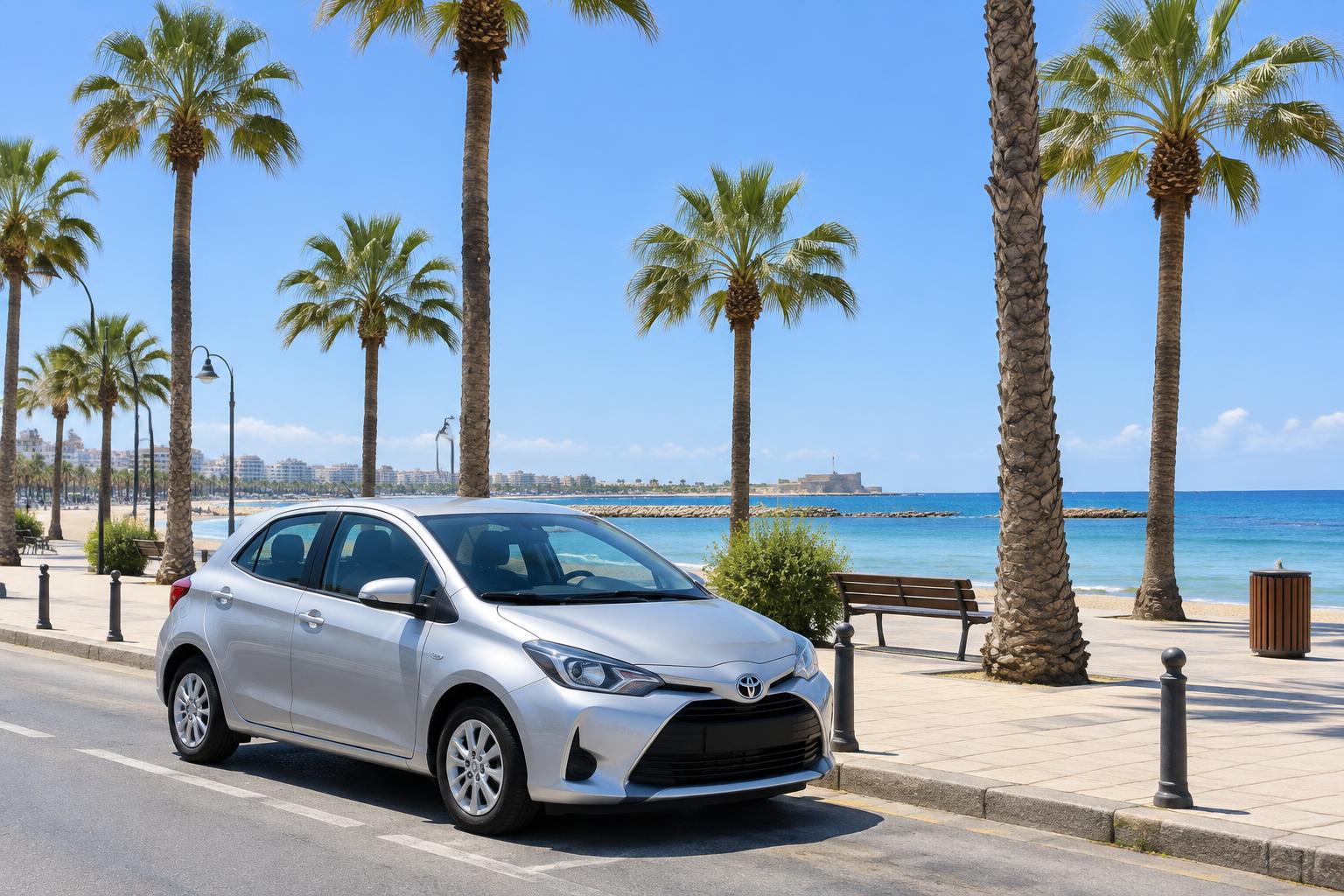
Larnaca is the main entry point for most visitors to Cyprus, as it hosts the island's largest international airport. The decision to hire a car in Larnaca is not just a matter of convenience, but the most essential way to explore the beauty of the island at your own pace. From the sunny beaches of Ayia Napa to the cool peaks of the Troodos mountains and the picturesque villages of mountainous Larnaca, a car gives you the freedom to move without the limitations of local public transport, which, although improved, does not cover every corner of the island.
The pick-up point is usually Larnaca Airport, where all major international and local companies maintain offices, allowing you to start your journey as soon as you land. Alternatively, many choose pick-up from the city centre or near the Finikoudes area, especially if they plan to spend their first few days relaxing on the beach. The cost for an economy vehicle typically ranges from 20 to 35 euros per day during the low season, while in the summer months prices can reach 50 to 70 euros, depending on availability and how early you book. It is important to search for cheap flights in advance, so you can save money to spend on a better vehicle category.
Despite driving on the left side of the road, adaptation is quick for most drivers, thanks to the excellent road network and clear signage. Car hire allows you to avoid the hassle of waiting and gives you full control of your schedule, making stops at places that buses simply pass by. In this guide, we will analyse every detail you need to know about car rental, from the necessary documents and insurance coverage to the most captivating routes you can take from Larnaca.
Getting to know Larnaca and the surrounding areas
Larnaca is a city that uniquely combines thousands of years of history with modern tourist infrastructure. Built on the ruins of ancient Kition, the city offers a relaxed atmosphere that makes it popular with both families and couples. The heart of the city beats along the Finikoudes promenade, a road lined with tall palm trees, cafes, and restaurants overlooking the sea. A little further on, the medieval charm of the old town and the impressive Church of Saint Lazarus remind visitors of the area's deep historical past. If you have already found accommodation in Larnaca, you will find that distances within the centre are short, but using a car becomes essential once you decide to venture outside the city limits.
Just a stone's throw from the city centre is Larnaca Salt Lake, a protected wetland that hosts thousands of flamingos in winter. Next to the Salt Lake stands the Hala Sultan Tekke mosque, one of the most important monuments of the Islamic faith, surrounded by a beautiful garden. With your car, you can reach it in less than ten minutes from the centre. A little further south, Mackenzie Beach offers a livelier atmosphere with beach bars and restaurants, and is the ideal spot to watch planes landing seemingly just above your head.
Larnaca's geographical location makes it the ideal base for excursions across the island. The motorway connects the city directly to Ayia Napa and Protaras to the east (approximately 35 to 45 minutes drive), Limassol to the west (approximately 50 minutes), and Nicosia to the north (approximately 40 minutes). The roads are modern, with two lanes in each direction, and traffic is usually smooth, except during peak hours at the entrances to large cities. If you plan to visit the capital, it is good to consider some suggestions for accommodation in Nicosia if you wish to spend more than one day there.
Beyond the cities, mountainous Larnaca hides treasures that you can only discover with your own transport. The village of Lefkara, famous for its embroidery and silversmithing, is about 30 minutes from Larnaca and offers an authentic experience of Cypriot hospitality. The streets are narrow and picturesque, so a smaller car might prove more practical for such routes. Also, the Stavrovouni Monastery, perched on top of a steep hill, offers breathtaking panoramic views, although access requires careful driving on winding roads.
Hiring a car also allows you to explore the more secluded beaches of Cape Greco or reach the Tower of Rigena and other archaeological sites scattered throughout the province. Distances in Cyprus are short compared to other countries, meaning that starting from Larnaca, you can see a large part of the island within a few days, provided you have the flexibility that your own vehicle offers.
Car hire process in Larnaca
The process for hiring a vehicle in Larnaca is simple and follows international standards. However, there are some specifics you should pay attention to in order to avoid unpleasant surprises. There are many useful tips for car rental that can save you unnecessary expenses and stress. First and foremost, booking online is almost always cheaper than showing up directly at a company's counter. Furthermore, it ensures that you will find the type of car you want, as demand is huge during the peak tourist season.
Pick-up and drop-off points
The most popular point is Larnaca International Airport (LCA). Company offices are located immediately after exiting the baggage claim area, while cars are parked a short distance away, accessible on foot or by small shuttle buses from each company. If you are already staying in the city, you can request delivery to your hotel or pick up the vehicle from offices located on Athenon Avenue (Finikoudes) or in the port area. Many companies also offer the option to pick up the car in Larnaca and drop it off in Paphos, although this usually incurs an additional charge for one-way rental.
Prices and vehicle categories
Prices fluctuate greatly depending on the season. During the winter months (November to March), you can find a car for less than 20 euros per day. In spring and autumn, prices rise to 30 to 40 euros, while in July and August the average price for an economy car often exceeds 50 euros. Below is an indicative cost table per vehicle category:
| Car Category | Low Season (Daily) | High Season (Daily) |
|---|---|---|
| Mini (e.g. Kia Picanto) | 15 to 25 € | 40 to 55 € |
| Economy (e.g. Toyota Yaris) | 20 to 30 € | 50 to 65 € |
| Compact (e.g. VW Golf) | 25 to 40 € | 60 to 85 € |
| SUV / Crossover | 35 to 60 € | 80 to 130 € |
| Luxury / Convertible | 70+ € | 150+ € |
It is important to consider the advantages of car rental in relation to your needs. If you are two people, a Mini is sufficient. For families with luggage, a Compact or SUV category is more appropriate.
Insurance and deposit
When you hire a car in Larnaca, basic insurance (CDW - Collision Damage Waiver) is usually included in the price, but it comes with an excess amount, which can range from 500 to 1500 euros. This means that in case of damage, you are liable up to this amount. To put your mind at ease, you can opt for Full Damage Waiver (FDW) which reduces the excess to zero. Before signing, read carefully what the insurance covers, as tyres, mirrors, and the underside of the vehicle are often excluded. Also, the deposit is usually blocked on a credit card, so make sure your card's limit is sufficient. There are also options for rental without a deposit with some local companies, but the terms may differ.
Driving and rules in Cyprus
The biggest challenge for visitors from Greece or the rest of Europe (excluding the UK and Malta) is driving on the left side of the road. This is a legacy of British rule on the island. Although it seems strange at first, most drivers get used to it within the first hour of driving. A good tip is to always follow the flow of traffic and remember that the driver is always towards the centre of the road.
Traffic rules are strict. Seatbelt use is mandatory for all passengers and using a mobile phone without hands-free is strictly prohibited. Speed limits are 100 km/h on motorways (with a minimum of 65 km/h), 80 km/h on rural roads, and 50 km/h in residential areas, unless otherwise indicated by signs. In Larnaca, as in other cities, there are many traffic cameras, so adhering to the limits is essential to avoid hefty fines.
Parking in Larnaca is relatively easy compared to other European cities. There are large municipal car parks near Finikoudes and the port, where the cost is approximately 2 to 3 euros for a few hours. On the streets, pay attention to the yellow lines. A single yellow line means stopping for drop-off is allowed but not parking, while a double yellow line prohibits even stopping. If you find free parking in an unmarked spot, make sure you are not obstructing traffic or access to residences.
Rental cars in Cyprus are easily distinguishable by their red number plates. This helps local drivers show more understanding if you make a mistake due to left-hand driving. However, do not rely solely on this and always remain focused, especially at roundabouts, where priority belongs to those approaching from the right and already moving within the roundabout.
Suggested driving routes
With the car key in hand, your options are limitless. Here are three routes starting from Larnaca that will offer you unique sights:
- East Coast - Ayia Napa and Cape Greco: Follow the A3 motorway eastwards. In less than 40 minutes, you will find yourself on the white sandy beaches of Ayia Napa. Continue towards Cape Greco National Forest Park to see the sea caves and the Love Bridge. The route is easy, and the view of the blue sea will reward you.
- Mountainous Larnaca and Lefkara: An inland route that will bring you into contact with tradition. Visit Pano Lefkara, walk its cobbled streets, and then drive to Kato Drys village. The area is full of vineyards and small wineries you can visit.
- Route to Troodos: If you want to escape the heat of the coast, drive to the mountains. The drive from Larnaca takes approximately 1 hour and 30 minutes. You will pass through pine forests and reach Troodos Square, from where nature trails begin. On the way back, make a stop in Omodos village to taste local wine and arkatenos rusks.
Before embarking on any route, it is good to read some tips before hiring a car, to ensure that the vehicle you have chosen meets the needs of your journey. For example, for Troodos, an engine with more horsepower will make the ascent more comfortable.
Tips for economical car hire
Car hire doesn't have to be an expensive affair. The first and most important tip is to book early. The sooner you book your car, the better prices you will find. Also, avoid renting directly from the airport if you don't need it for all your days. You can take a bus to the centre and hire a car only for the days you plan excursions. There are always 10 things to watch out for in a rental to avoid extra charges, such as the fuel policy. The "full-to-full" policy is usually the fairest, as you only pay for the fuel you actually consume.
Also check if your credit card offers insurance coverage for car hire, which could save you the cost of additional insurance offered by companies. Finally, pay attention to pick-up and drop-off times. Most companies charge on a 24-hour basis. If you pick up the car at 10 am and return it at 12 pm the next day, you will probably be charged for two full days.
Frequently asked questions about car hire in Larnaca
What documents do I need to hire a car?
You will need a valid driving licence, your passport or ID card, and a credit card in the main driver's name for the deposit. Drivers from the EU do not need an international driving permit, but if your licence was issued in a non-EU country, it is advisable to also have an international driving permit.
What is the age limit for car hire in Cyprus?
The minimum age limit is usually 21, and the driver must have held their licence for at least three years. Many companies impose an additional charge for "young drivers" under 25, as well as for drivers over 70 or 75.
Is driving on the left difficult?
No, most drivers adapt quickly. The key is patience and concentration, especially at turns and roundabouts. Rental cars have red number plates, so other drivers know that you may not be familiar with the roads.
Can I take the rental car to the occupied territories?
While you can technically pass through the checkpoints, most rental companies explicitly prohibit it in their contract terms. Furthermore, the insurance you have in Larnaca is not valid there, and you will need to purchase additional basic insurance at the border, which, however, does not fully cover the vehicle in case of serious damage.
What about fuel and its prices?
Fuel prices in Cyprus are usually slightly lower than the European average. There are many petrol stations throughout Larnaca and on the main roads. Many stations operate with automated dispensers during the night, so it is a good idea to have a card or cash with you.
What is the best time to visit Larnaca by car?
Spring (April - May) and autumn (September - October) are the ideal seasons. The weather is pleasant, the roads are less crowded than in summer, and rental prices are more affordable. If you visit the island in summer, make sure the car's air conditioning works perfectly.
Are there tolls on Cyprus's motorways?
No, the use of motorways in Cyprus is completely free. There are no tolls or vignettes you need to buy, which makes travel between cities very economical and fast.

Η συντακτική ομάδα
Travelo Team
Συντακτική ομάδα του Travelo.gr
Πολυταξιδεμένη συντακτική ομάδα με πάνω από 15 χρόνια στον ταξιδιωτικό δημοσιογραφικό χώρο και περισσότερους από 45 προορισμούς σε Ελλάδα και Ευρώπη. Έχουμε διανυκτερεύσει σε εκατοντάδες καταλύματα — από μικρά οικογενειακά ξενοδοχεία και παραδοσιακούς ξενώνες μέχρι resorts 5 αστέρων — και δοκιμάζουμε προσωπικά περιοχές, μεταφορές και υπηρεσίες πριν προτείνει κάτι.
- 45+ προορισμοί επί τόπου
- 500+ καταλύματα σε αξιολόγηση
- 15 χρόνια ταξιδιωτικής αρθρογραφίας
Πώς δουλεύουμε: κάθε οδηγός βασίζεται σε επιτόπια εμπειρία, διασταύρωση αξιολογήσεων επισκεπτών και έλεγχο διαθεσιμότητας/τοποθεσίας κάθε καταλύματος. Ορισμένοι σύνδεσμοι είναι συνεργατικοί (affiliate) — αν κάνετε κράτηση μέσω αυτών, στηρίζετε το Travelo.gr χωρίς καμία επιπλέον χρέωση για εσάς, και δεν επηρεάζουν τις προτάσεις μας. Τελευταία ενημέρωση οδηγού: 26 Σεπτεμβρίου 2026.