Athens to Kalamata: 235 km, tolls €14.60 2026
The Athens to Kalamata route is 235 km and takes approximately 2 hours 45 minutes to drive. Tolls cost €14.60 for a single journey. Here's a detailed breakdown of fuel costs, toll stations, and where to stay.
Από Travelo Team
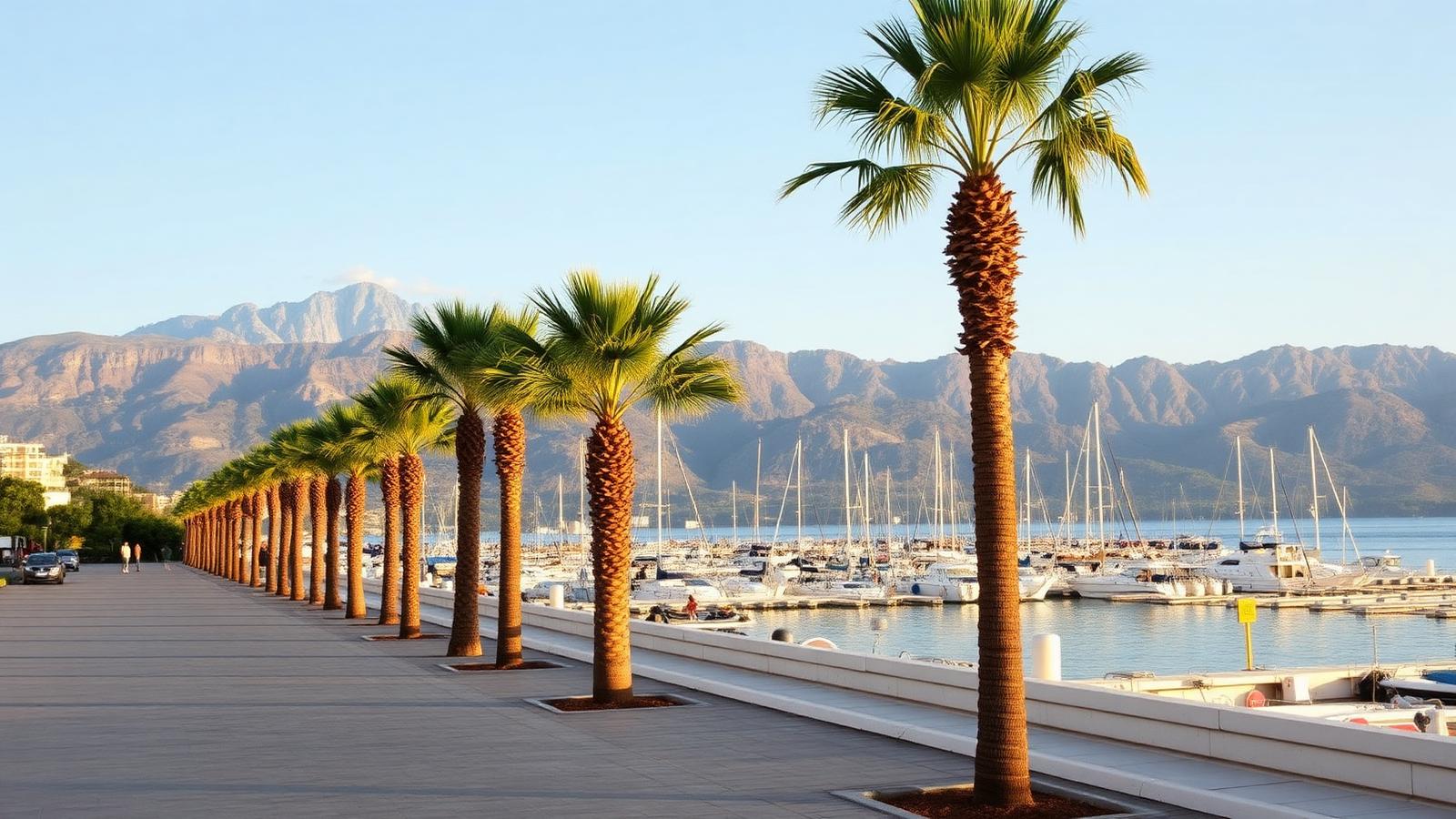
Quick answer: The distance from Athens to Kalamata is 235 km, with a driving time of approximately 2 hours 45 minutes without stops, and tolls costing €14.60 for a single journey. Prices are updated as of September 2026.
The Athens to Kalamata route is one of the most frequent on the Greek road network, and the first question is always the same: how many kilometres, how long does it take, and how much will it cost in tolls and fuel. Here you'll find all the figures collected, along with the route, worthwhile stops, and accommodation suggestions for when you arrive.
Athens to Kalamata: distance, time, and cost at a glance
| Item | Price |
|---|---|
| Distance | 235 km |
| Driving time (without stops) | 2 hrs 45 mins |
| Tolls (single journey) | €14.60 |
| Fuel cost (single journey) | approx. €32 |
| Total single journey | approx. €47 |
| Total return journey | approx. €94 |
| Toll stations | 6 |
Calculations are based on an average consumption of 7 litres per 100 km and a fuel price of €1.92 per litre. Toll prices are periodically updated by concessionaires; consider these figures as a realistic estimate, not an official price list.
Cost per person
With four people in the car, the return cost drops to approximately €24 per person, a sum that for most routes is cheaper than the bus and clearly more affordable than flying. With two people, we're talking about €47 each. If the car is diesel or hybrid, subtract 25-35% from the fuel cost.
The route step by step
Follow the Attiki Odos or the National Road towards Corinth and continue on the Corinth-Tripoli-Kalamata motorway (A7), which is modern throughout its length.
Previously, the route was via Megalopoli and the old Taygetus road; today it is only used as a scenic route to Sparta.
Toll stations along the route
You will encounter 6 stations: Elefsina, Isthmos, Zevgolatio, Nestani, Spathovouni, Arfara. Keep coins handy or use an electronic transponder; e-pass lanes are significantly faster on weekends and public holidays.
Worthwhile stops
- Corinth Canal at Isthmos
- Ancient Nemea or Tripoli for coffee
- Hania Taygetou if you choose the old route
The rule for long journeys is to make one stop every two hours of driving, even if you don't feel tired. Fifteen minutes of walking and a coffee are enough to regain concentration.
How much it costs by other means: a comparison
Driving isn't always the cheapest solution, especially when travelling alone. The table shows realistic prices and times for the Athens to Kalamata route, so you can compare based on how many people you are.
| Means | Time | Cost per person | Advantage |
|---|---|---|---|
| Car (2 people) | 2 hrs 45 mins | approx. €47 | Freedom of movement at destination |
| Car (4 people) | 2 hrs 45 mins | approx. €24 | The most economical scenario |
| KTEL (bus) | approx. 3 hrs 35 mins | €13-€19 single journey | Zero driving fatigue |
| Diesel / Hybrid | 2 hrs 45 mins | approx. €37 for two | 25-35% less fuel |
The car is worthwhile when you are travelling with two or more people and when you plan to travel around the destination. KTEL has a fixed cost and saves you fatigue, but leaves you without transport afterwards. The train, where there is a connection, is the most relaxing solution and often the cheapest for a single passenger.
For distances under 430 kilometres, driving almost always wins in terms of overall cost and flexibility, which is why it is the most popular choice for this route. See also our guides for cheap flight tickets.
What to see in Kalamata
Kalamata has changed radically over the last decade: a four-kilometre seafront, a cycle path, a renovated historic centre, and an airport with international flights.
It serves as a natural base for the whole of Messinia: Stoupa, Kardamyli, Pylos, and Voidokilia are all within 40-70 minutes.
The local cuisine, with its gounopoula (roast pork), lalangia (fried dough strips), and Kalamata olives, alone justifies a visit.
Where to stay in Kalamata
If your journey ends with an overnight stay, the following options are conveniently located and have been checked one by one:
- Central Rooms, near the centre and main attractions
- ASO Hotel - Historic Raisin Warehouse 1928, near the centre and main attractions
- IRA - ΗΡΑ Hotel, near the centre and main attractions
- VASILIKON Hotel 1888 the past is present HISTORICAL PRESERVATION MONUMENT, near the centre and main attractions
- TAYS Hotel, near the centre and main attractions
- Grand Hotel Kalamata, near the centre and main attractions
- Pharae Palace, near the centre and main attractions
- Hotel Fotini, near the centre and main attractions
Prices vary significantly by season: during high season, expect to pay €90-€160 per night for a double room in a good four-star hotel, while off-season the same options drop to €60-€100. If you are travelling on a Friday, book at least two weeks in advance.
For a detailed breakdown by area, see our guide: where to stay in Kalamata.
When to make the journey
The same journey can take an hour more or less, depending on the day and time. The busiest times are Friday afternoons, long weekend mornings, and Sunday returns between 5 PM and 9 PM. If you have the flexibility, start on Saturday morning or return on Monday morning.
The route is short enough to be comfortably done even as a day trip, with a coffee stop in the middle. In winter, always check the weather: in the mountainous sections of the network, fog and frost are more common problems than snow.
In summer, conversely, the main issues are temperature and traffic towards the ports. Start before 8 AM or after 8 PM, check tyre pressure, and allow extra time at the exits of large cities.
Tips for the road trip
- Start before 8 AM or after 11 AM to avoid peak traffic at the Athens exits.
- Sunday returns after 5 PM have the heaviest traffic; prefer earlier or late at night.
- Fill up with fuel off the motorway; the price difference can be up to 8-10 cents per litre.
- In winter, check weather conditions in mountainous areas, especially in Brallos and the mountains of Epirus.
- Keep to the speed limit: cameras and police patrols on the A1 and Olympia Odos are now frequent.
Driving with children and pets
With children, the golden rule is a stop every ninety minutes, even if you lose time: a ten-minute walk at a service station prevents half the hassle of the journey. Always carry water, fruit, and something savoury, because prices at service stations are double. For babies, prefer to depart at nap time so that most of the journey is done without tears.
If you are travelling with a pet, the journey requires a special cage or safety harness for dogs; this is mandatory by the Road Traffic Code. Stop every two hours for water and needs, never leave the animal in a closed car in summer, and check before booking a room that the accommodation accepts pets, as policies vary greatly.
How to book accommodation at the right price
Accommodation prices in Greece are dynamic, so booking time matters more than the choice itself. The rule that works: for summer islands, book February to April; for mountainous destinations, October to November; and for long weekends, at least six weeks in advance, because demand skyrockets then.
Always read recent reviews, not just the overall rating. An accommodation with an 8.6 and recent comments about cleanliness and a quiet room is a better choice than a 9.2 with three-year-old reviews. Focus on three points: soundproofing, breakfast, and parking; these are the three that don't show up in photos.
Finally, choose an option with free cancellation even if it's a few euros more expensive. On road trips, the weather often changes plans, and flexibility is worth more than the small discount of a non-refundable rate.
Parking and getting around at your destination
In most Greek destinations, parking is the first practical problem upon arrival. In historic centres and traditional settlements, cars are usually left in peripheral car parks, and access is on foot, so it's worth asking the accommodation in advance if they have a space or a partnership with a car park.
In cities, expect to pay €5-€10 per day for organised parking and avoid free spaces in narrow streets, where fines are common. In islands and mountainous areas, conversely, a car is essential: distances between beaches, villages, and monasteries cannot be covered by public transport.
Before starting excursions within your destination, download an offline map. Signal can easily be lost in gorges, mountain passes, and small coastal roads, and an offline map is the difference between a beautiful detour and an hour of pointless driving.
When is the best time to go?
Spring, from mid-April to mid-June, is the ideal period for almost any Greek destination: temperatures of 20-27 degrees, lush green landscapes, fewer crowds, and prices significantly lower than in August. Autumn, especially September and the first half of October, offers the same balance with warm sea.
July and August have the most vibrant life but also the highest demand: bookings months in advance, prices at their highest, and crowded roads on long weekends. If you go then, plan your movements for early morning or late afternoon and avoid the mid-August weekends.
Winter has its own charm, with warm tavernas, fireplaces, heated pools, and destinations almost empty of tourists. Prices are the lowest of the year outside of holidays, while Christmas, New Year's, and Carnival are exceptions with premium pricing and mandatory multi-day bookings.
Five mistakes most people make
The first mistake is an overly ambitious itinerary. Three destinations in two days means you'll mostly see roads. Choose one base and make excursions up to forty minutes around it. The second is booking accommodation based solely on price: a €15 difference per night for a better location saves time and fuel every day.
The third mistake is arriving late at night in small settlements, where kitchens close at 10:30 PM and reception isn't 24/7. The fourth is ignoring local weather: in mountainous and island destinations, conditions change within hours, and strong winds (meltemia) can cancel itineraries.
The fifth and most common: not asking the locals. The best taverna, the uncrowded beach, and the time an attraction is less busy are pieces of information not found on lists, but freely given in a chat at reception or a local coffee shop.
Frequently asked questions
How many kilometres is Athens to Kalamata?
The distance is approximately 235 kilometres from city centre to city centre, following the fastest route.
How long does the Athens to Kalamata journey take?
Without stops, approximately 2 hours 45 minutes. With a stop for coffee and fuel, allow an additional 20-30 minutes.
How much do tolls cost from Athens to Kalamata?
Approximately €14.60 in each direction, meaning around €29.20 for a return trip, across 6 stations.
How much does fuel cost for the journey?
For a medium-sized petrol car, approximately €32 for a single journey and €64 for a return trip, at a price of €1.92 per litre.
Is there a route without tolls?
There is almost always an alternative via the old national road or provincial roads, but it adds from 45 minutes to up to two hours. It's only worthwhile if you want the scenic route.
What is the best departure time?
Early in the morning for long journeys and outside of peak hours on Fridays and Sundays, when the exits and entrances of Athens become congested.
How much does it cost by KTEL (bus) instead of car?
A ticket is around €13-€19 for a single journey, and the travel time is approximately 3 hours 35 minutes. For one person, it's cost-effective; for three or four, the car works out cheaper.
Can I pay tolls with a card or e-pass?
Yes, all stations accept cards, and there are electronic toll lanes. With a transponder, you save time and often get discounts on frequent passages.
Is it worth staying a night along the way?
It's not essential, as the journey can easily be done within half a day, but an overnight stay at the destination completely changes the experience.
Read also
Σύγκριση
Τα καταλύματα με μια ματιά
Τύπος καταλύματος
Τα φίλτρα σας αποθηκεύονται αυτόματα για αυτόν τον προορισμό.
| Κατάλυμα | Περιοχή | Τύπος | Τιμή από | Βαθμολογία | Λίστα |
|---|---|---|---|---|---|
| approximately €24 per person | Where to stay in Kalamata | Ξενοδοχείο | — | — | |
| approximately €24 per person | Where to stay in Kalamata | Ξενοδοχείο | — | — | |
| approximately €24 per person | Where to stay in Kalamata | Ξενοδοχείο | — | — | |
| approximately €24 per person | Where to stay in Kalamata | Ξενοδοχείο | — | — | |
| approximately €24 per person | Where to stay in Kalamata | Ξενοδοχείο | — | — | |
| approximately €24 per person | Where to stay in Kalamata | Ξενοδοχείο | — | — | |
| approximately €24 per person | Where to stay in Kalamata | Ξενοδοχείο | — | — | |
| approximately €24 per person | Where to stay in Kalamata | Ξενοδοχείο | — | — |
Οι τιμές είναι ενδεικτικές, όπως αναφέρονται στο άρθρο, και αλλάζουν ανά εποχή. Η λίστα σας αποθηκεύεται τοπικά στη συσκευή σας. Οι σύνδεσμοι είναι affiliate links, χωρίς επιπλέον χρέωση για εσάς.

Η συντακτική ομάδα
Travelo Team
Συντακτική ομάδα του Travelo.gr
Πολυταξιδεμένη συντακτική ομάδα με πάνω από 15 χρόνια στον ταξιδιωτικό δημοσιογραφικό χώρο και περισσότερους από 45 προορισμούς σε Ελλάδα και Ευρώπη. Έχουμε διανυκτερεύσει σε εκατοντάδες καταλύματα — από μικρά οικογενειακά ξενοδοχεία και παραδοσιακούς ξενώνες μέχρι resorts 5 αστέρων — και δοκιμάζουμε προσωπικά περιοχές, μεταφορές και υπηρεσίες πριν προτείνει κάτι.
- 45+ προορισμοί επί τόπου
- 500+ καταλύματα σε αξιολόγηση
- 15 χρόνια ταξιδιωτικής αρθρογραφίας
Πώς δουλεύουμε: κάθε οδηγός βασίζεται σε επιτόπια εμπειρία, διασταύρωση αξιολογήσεων επισκεπτών και έλεγχο διαθεσιμότητας/τοποθεσίας κάθε καταλύματος. Ορισμένοι σύνδεσμοι είναι συνεργατικοί (affiliate) — αν κάνετε κράτηση μέσω αυτών, στηρίζετε το Travelo.gr χωρίς καμία επιπλέον χρέωση για εσάς, και δεν επηρεάζουν τις προτάσεις μας. Τελευταία ενημέρωση οδηγού: 22 Σεπτεμβρίου 2026.